In a nutshell
- 🌟 Aluminium foil reflective mulch scatters light that confuses aphids, whiteflies and thrips, delivering a near-overnight drop in landings, especially at dawn and dusk.
- 🛡️ Soil-level foil collars create a slippery barrier that stops cutworms girdling stems; bury 1–2 cm and keep gaps around stems to prevent rot.
- 🧰 Practical use: lay strips shiny side up in beds, fit pot discs, and hang light “tinsel” in greenhouses; do not wrap foliage and leave space for beneficial insects to access plants.
- ⚖️ Know the limits: strongest against flying sap‑feeders; mixed results on slugs/snails; pair with IPM—sticky cards, soft soap, pruning, and predator habitat—while avoiding heat stress.
- ♻️ Cost‑savvy and greener: reuse and recycle clean foil; consider durable reflective mulches or Mylar; interplant with marigolds and alyssum to bolster natural enemies.
Gardeners swear by strange tricks. Few are as simple as a roll of kitchen foil. Lay or fashion aluminium foil into the right shapes and, almost overnight, you can blunt the advance of sap‑sucking insects and crawling culprits. The sheen acts as a reflective mulch, bouncing light into the canopy and confusing pests that navigate by contrast and silhouette. It also serves as a physical collar at soil level, stopping cutworms in their tracks. Results aren’t magic, but they can be startlingly quick. Used carefully, foil deters pests without chemicals and gives seedlings a fighting chance. Here’s how to make it work, what it stops, and when to use something else.
Why Aluminium Foil Repels Pests Overnight
Most garden invaders don’t rely on smell alone. They use light, shade and shape to find hosts. The mirrored surface of aluminium foil scatters those cues, creating a flicker that disorients aphids, whiteflies and thrips as they attempt to land. At dusk and dawn—prime feeding windows—reflections are strongest, so the effect is immediate. You’ll often see fewer insects beneath leaves the very next morning. In greenhouses and polytunnels, where light bounces around already, the confusion is amplified.
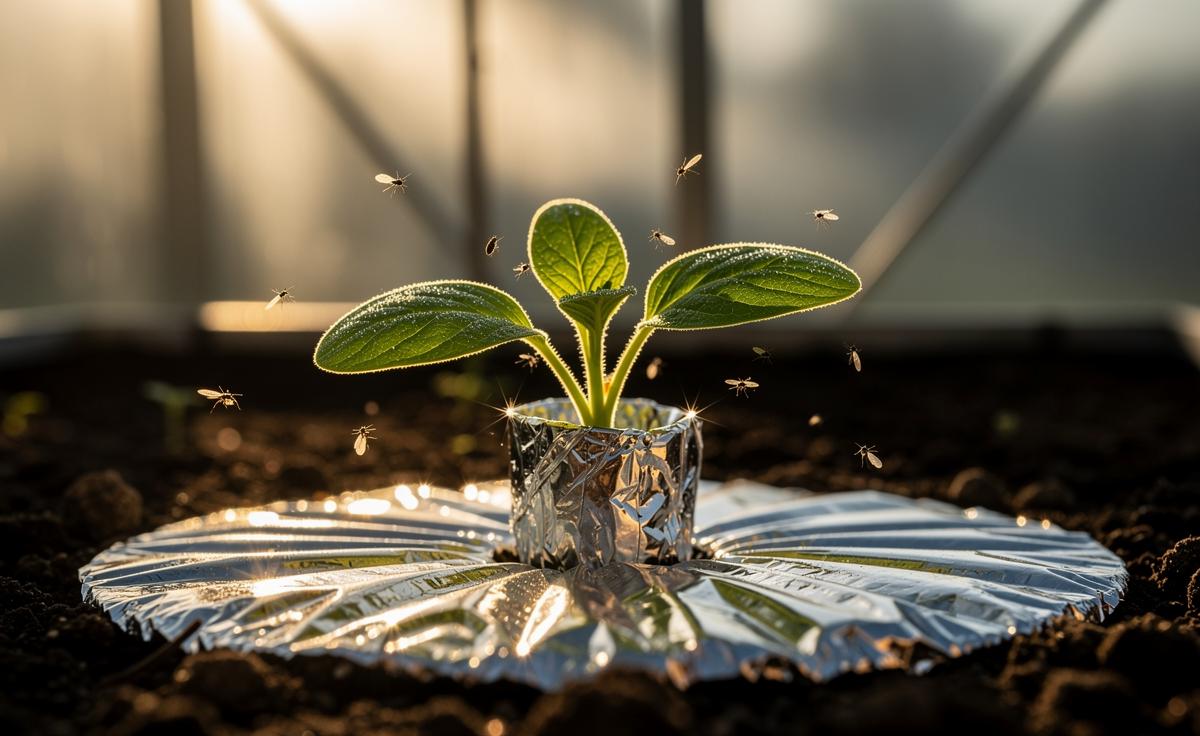
There’s also a mechanical win. Form a snug foil collar around a seedling and you build a slippery, crinkle-edged barrier that stops cutworms and other stem‑girdling larvae from circling and chewing. The same collar lifts foliage away from damp soil, reducing spore splash. Birds and mice dislike sudden glare and noise; the rustle can startle them off freshly sown beds. Do not wrap foliage. Heat and abrasion damage leaves. Instead, keep foil at soil level or as a mulch beneath the canopy, shiny side up for maximum reflection. The two faces differ little in chemistry; the brighter side simply reflects more light.
How to Use Foil in the Garden, Pots, and Greenhouses
For beds, tear foil into broad strips and lay them shiny‑side up around plant bases, leaving a 5–8 cm gap from the stem so water can infiltrate and soil can breathe. Secure with pebbles or U‑pins to prevent flapping. In pots, cut a disc of foil, slit to the centre, and fit it around the stem like a keyhole collar. Press it flat so it reflects light upwards under leaves where whiteflies and aphids probe. In greenhouses, run narrow ribbons along bench edges; movement and light scatter discourage lingering pests.
To block crawlers, form a cuff: wrap a 3–4 cm tall band of foil around each seedling, burying the lower edge 1–2 cm into soil. That lip stops cutworms at night. Water normally. The collar won’t dissolve or leach; it simply holds shape. Replace when torn. For climbing frames or fruit trees, twist long strips into light “tinsel” and hang loosely—enough to glitter, not enough to snag. Always check that beneficial insects—ladybirds, hoverflies—can still reach plants. Leave gaps and avoid full‑bed coverage that would hinder predators or trap heat on scorching days.
What Works, What Doesn’t: Pests Affected, Plant Safety, and Limits
The wins are clear but specific. Reflective mulch is strongest against flying sap‑feeders—notably aphids, whiteflies and thrips—during the critical early weeks of growth. Foil collars reliably blunt cutworm damage. You may also see fewer fungus gnats in pots as the reflective, drier surface becomes less inviting. Slugs and snails? Mixed. Foil is not copper; it lacks the mild electrical deterrent. It still helps as a physical obstacle around tight collars but won’t protect lush borders on its own. Think of foil as part of Integrated Pest Management (IPM), not the whole plan.
| Pest | How Foil Helps | Placement | Notes |
|---|---|---|---|
| Aphids/Whiteflies/Thrips | Reflective glare confuses landing | Mulch beneath canopy | Best early season or under cover |
| Cutworms | Collar blocks stem access | Soil-level cuffs | Bury 1–2 cm for reliability |
| Fungus gnats | Drier, bright surface deters | Pot discs | Combine with reduced overwatering |
| Birds/Mice | Glare and rustle startle | Hanging strips | Reposition weekly to maintain effect |
| Slugs/Snails | Minor obstacle only | Tight collars | Use copper or traps as well |
Safety matters. Don’t cover entire beds on hot days; scorching and water runoff can stress plants. Keep mulch away from stems to prevent rot. Foil won’t fix heavy infestations alone—pair it with sticky traps, targeted sprays like soft soap, and habitat for predators. Remove or loosen foil after peak pressure to avoid constricting growth.
Eco Considerations and Cost-Saving Tips
Foil’s appeal is its price and reusability. One kitchen roll can serve an entire raised bed if cut smartly. Rinse and reuse sheets; crinkles do not reduce reflectivity, they enhance it. When spent, recycle clean foil with aluminium cans—check your council rules. For larger areas, consider purpose‑made reflective mulches or Mylar sheeting; pricier upfront, but durable for seasons. Old crisp packets (inside out), reflective tape and unwanted CDs offer similar scatter for allotment scare lines, though they’re messier aesthetically.
Balance shine with biodiversity. Interplant with marigolds and sweet alyssum to draw in hoverflies that hunt aphids. Water in the morning so reflective surfaces dry before nightfall, when mold risks rise. In greenhouses, raise the foil slightly on pegs to let heat dissipate. Never rely solely on glare; rotate tactics. If the pest shifts—say thrips in hot spells—tweak the setup, add blue sticky cards, and prune infested growth. The best metric is new growth staying clean within 48 hours of laying foil. If not, escalate.
This simple, shiny trick earns its keep because it buys time. Time for seedlings to toughen. Time for predators to arrive. Used with care, aluminium foil keeps vulnerable plants off the menu and does it without a drop of pesticide. It won’t end every outbreak, yet it can halt one before breakfast. Will you try a reflective ring around your next sowing and, if you do, what will you pair it with to build a resilient, low‑chemical defence in your own patch?
Did you like it?4.5/5 (28)