In a nutshell
- 🌿 Cinnamon’s antifungal compounds—cinnamaldehyde and eugenol—disrupt pathogens behind damping-off, giving young plants a stronger start.
- 🛠️ Practical methods: a light surface dusting, filtered “cinnamon tea” mist with a tiny drop of wetter, and a careful paste dab for stem lesions—always paired with clean kit, base watering, and airflow.
- ⚖️ Dosage and safety: aim for a “cappuccino dusting”; use 0.5–1 tsp per 500 ml steeped and filtered; avoid phytotoxicity by testing first and keeping powder away from eyes and lungs.
- 🧪 Evidence and limits: lab data shows suppression of Pythium, Rhizoctonia, Fusarium, and Botrytis; results depend on compost, temperature, and humidity, so treat cinnamon as part of low-impact disease management.
- 🐜 Smart pairings: mild deterrence of fungus gnats; amplify benefits with a thin sand/vermiculite top-dress, wider spacing, morning watering, quarantine of newcomers, and tapering use as seedlings harden.
On many a damp British windowsill, seedlings succumb to a stealthy killer: damping-off. Stems pinch. Leaves flop. Entire trays are lost overnight. In response, gardeners are rediscovering an old ally hiding in the spice rack. Ground cinnamon—cheap, aromatic, and remarkably effective—can slow the fungi that prey on young plants. It isn’t magic. It’s chemistry. The bark’s essential oils disrupt fungal growth at the surface of compost and around tender roots. Used judiciously, this culinary staple can tip the odds in favour of your seedlings. Cinnamon won’t replace clean pots, fresh compost, and decent airflow—but it strengthens that foundation. Here’s how and why it works.
Why Cinnamon Works Against Seedling Disease
Cinnamon’s punch comes from volatile oils, notably cinnamaldehyde, plus eugenol and linalool. These compounds interfere with fungal cell membranes and enzyme systems, making it harder for pathogens to germinate or penetrate delicate tissue. In practical terms, that means fewer outbreaks of damping-off, often caused by species such as Pythium, Rhizoctonia, and some Fusarium. The spice creates a hostile microfilm at the soil interface, exactly where seedlings are most vulnerable. Results can be surprisingly swift.
To be clear, this is a broad-spectrum nudge, not a silver bullet. Fungi vary; environmental pressure matters. Yet by nudging spore viability down and complicating hyphal growth, cinnamon buys time for seedlings to develop tougher cuticles and sturdier stems. Think of it as an early-game defence that reduces risk while roots and immunity catch up. Its low cost and kitchen-safe handling make it ideal for home growers who prefer low-impact disease management before escalating to harsher measures.
Practical Ways to Use Cinnamon in the Propagation Stage
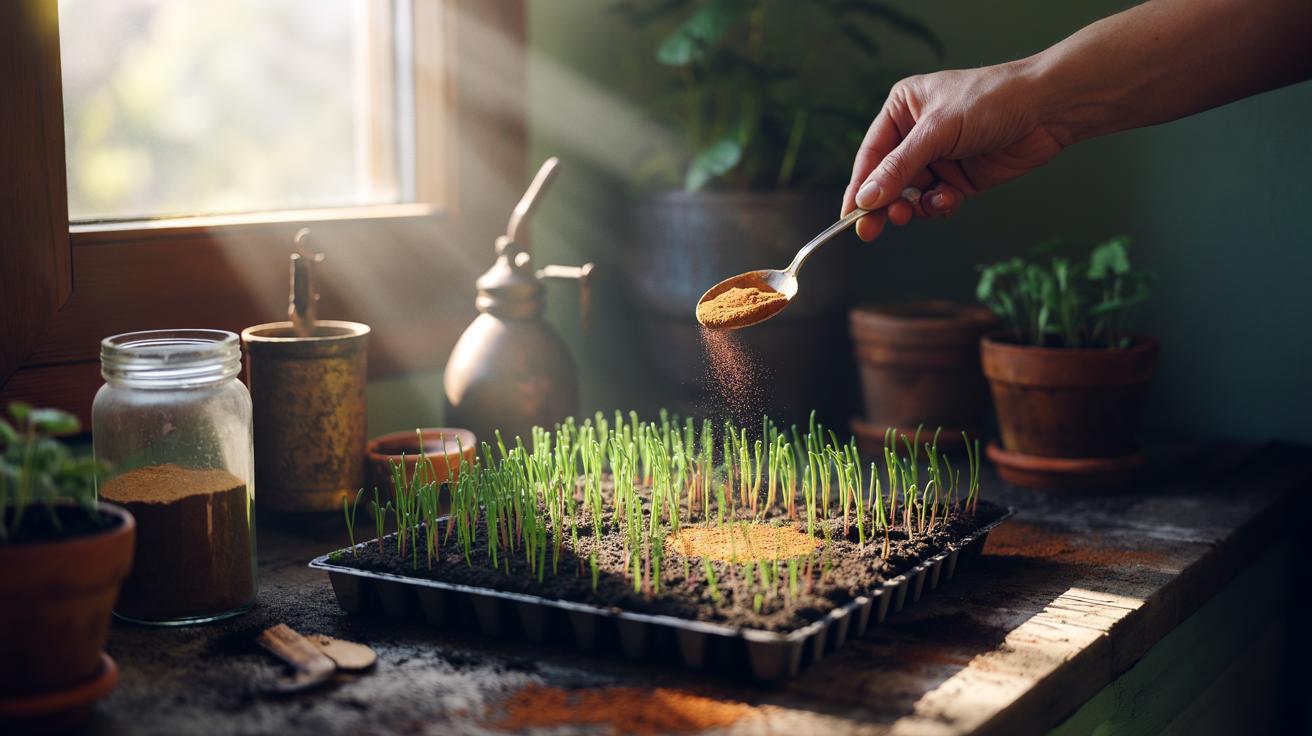
A light dusting is the classic method. Sprinkle a whisper-fine veil of ground cinnamon across freshly sown trays or around the base of pricked-out seedlings. You want tint, not thickness; heavy layers can cake and repel water. Another tactic: stir half a teaspoon into a jam-jar of warm water, leave overnight, then strain through a coffee filter. This “cinnamon tea” can be misted over the compost surface to dampen fungal ambition without drowning roots. Add a drop of mild, unscented washing-up liquid as a wetter so droplets spread rather than bead.
For tiny stem lesions, a fingertip dab of cinnamon-and-water paste can help keep the area dry while it scars. Avoid smothering leaves. Always test on a single plug or corner of a tray before treating the lot. Pair the spice with textbook hygiene: sterilise tools, space seedlings generously, and water from the base so stems stay dry. Cinnamon works best inside a broader routine that controls moisture and encourages airflow. Used weekly in cool, wet spells—and then reduced as plants harden—it’s simple, cheap, and tidy.
| Use Case | How Cinnamon Helps | Suggested Method | Frequency |
|---|---|---|---|
| Damping-off risk | Inhibits spore germination | Light dusting on compost surface | After sowing; repeat lightly weekly |
| Stem base softness | Drying and antimicrobial effect | Thin paste dab at lesion base | Once; reassess in 48 hours |
| High humidity trays | Suppresses surface fungi | Filtered cinnamon “tea” mist | Every 7–10 days as needed |
Dosage, Safety, and What Science Says
Use as little as achieves coverage. For dusting, think “cocoa on a cappuccino”, not a sand dune. In sprays, half to one teaspoon per 500 ml warm water, steeped and filtered, is a sensible ceiling for tender cotyledons. Overdoing it risks phytotoxicity—leaf scorch, slowed growth, or clogged media. When in doubt, dilute and test. Keep powder away from eyes, and avoid inhaling fine dust; a simple face covering helps during application. Cinnamon is pet-safe in tiny incidental amounts, but keep curious noses out of trays.
Laboratory studies regularly report antifungal action of cinnamaldehyde and eugenol against horticultural pathogens, including Botrytis cinerea and various Fusarium species. Field translation is nuanced: compost composition, temperature, and humidity all influence outcomes. Still, gardeners see consistent gains in early-stage survival when cinnamon is paired with clean techniques. It’s an evidence-aligned, low-risk intervention that scales from a windowsill to a small greenhouse without special kit. Keep perspective, though—if disease pressure remains high, adjust watering, improve ventilation, and consider rotating other benign controls.
Beyond Fungus: Side Benefits and Smart Pairings
There’s a bonus: the spice’s aroma can make media less attractive to wandering fungus gnats searching for moist egg-laying sites. It won’t erase a gnat infestation, yet a drier, cinnamon-dusted surface slows the cycle while sticky traps and better drainage do the heavy lifting. Seedling rooms also smell pleasant, which is no small morale booster during grey, drizzly weeks when mould thrives.
Blend strategies for resilience. Top-dress with a millimetre of horticultural sand or vermiculite to keep the crown dry; dust a fractional amount of cinnamon over that layer for a two-pronged barrier. Water in the morning so surfaces dry by night. Quarantine new plants. Clean labels and trays between batches. The real power lies in stacking small, low-cost safeguards that collectively starve fungus of its favourite conditions. As seedlings gain leaves, taper off spice use and transition to stronger airflow, full-spectrum light, and regular feeding. You’ll raise sturdier plants and reduce losses without resorting to heavy chemistry.
Cinnamon won’t turn a soggy propagator into paradise, but it can meaningfully reduce early losses while seedlings toughen up. Its antifungal oils disrupt spores exactly where trouble begins, and its low price invites regular, careful use. Keep applications light, keep hygiene high, and treat it as one tool among many. The result is calmer propagation, stronger growth, and fewer heartbreak trays. How might you fold cinnamon into your own seed-starting routine this season, and which small changes—airflow, spacing, watering—could amplify its quiet strength?
Did you like it?4.5/5 (25)