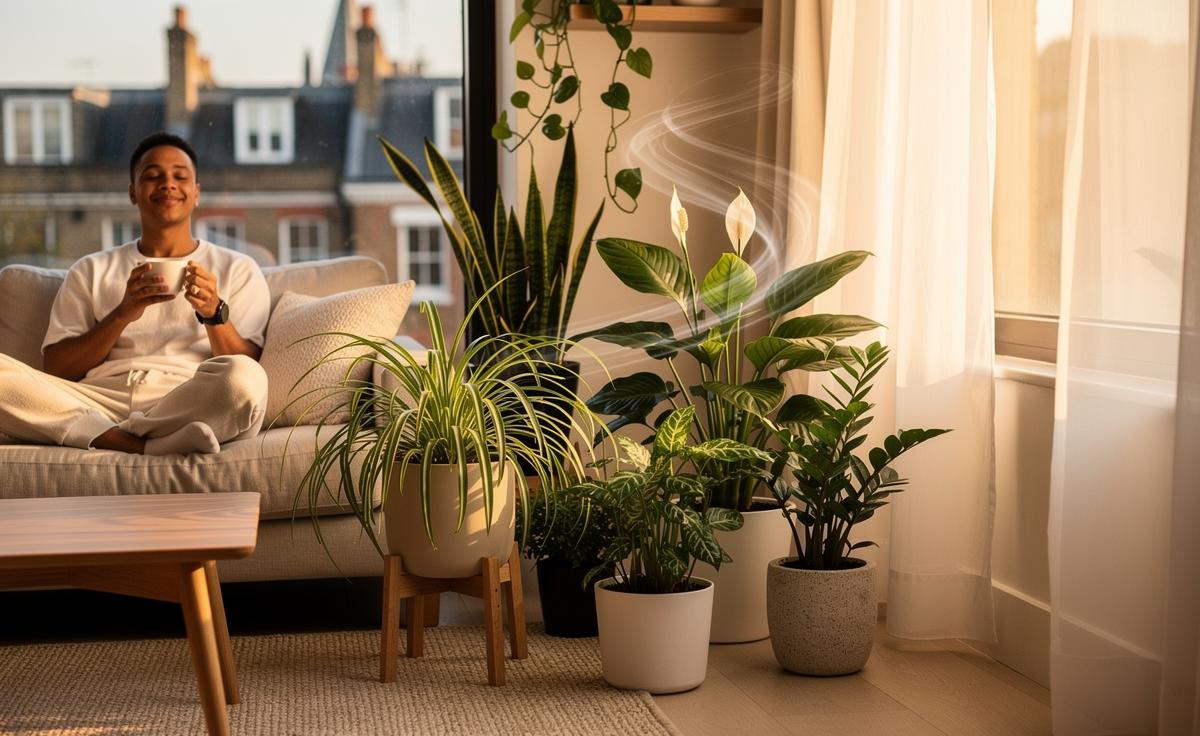
In a nutshell
- 🌿 Air quality gains are real but modest: leaves capture dust, stomata and soil microbes nibble at VOCs, and transpiration lifts humidity—yet ventilation remains the main driver of clean indoor air.
- 🧠 Stress reduction is tangible: biophilic cues, “soft fascination,” and care micro-rituals ease tension and improve focus, offering a low-tech counterweight to digital overload.
- 🪴 Smart choices multiply benefits: pick resilient species (spider plant, peace lily, snake plant, pothos, ZZ plant), use peat-free compost, clean leaves monthly, and check pet safety and room light before placing.
- ⚖️ Why more isn’t always better: overwatering can lead to mould and pests; some plants are allergenic or toxic. For rapid particle removal, a HEPA purifier and open windows outperform foliage.
- 🏠 Actionable setup for UK homes: aim for 2–3 medium plants per lived-in room, give honest light, water thoughtfully, and pair greenery with steady airflow for balanced, long-term gains.
You don’t need a rainforest to breathe easier at home. A few well-chosen houseplants can act as quiet allies, subtly improving indoor air and softening the edges of a busy day. The science is nuanced: plants won’t replace your extractor fan, but they do offer measurable, layered benefits. From leaf surfaces that snag dust to soil microbes that nibble at pollutants, and from the calming colour of chlorophyll to the ritual of watering, the gains stack up. In my London flat, the difference is less “wow” and more “ah”—a shift you feel across a working week. Plants are helpers, not miracles, and that’s precisely why they work in real homes.
How Houseplants Clean the Air: Beyond the NASA Myth
The appealing claim that plants are natural air purifiers stems from a famous space-agency experiment, but it’s often misread. In sealed chambers, certain species reduced volatile organic compounds (VOCs) such as benzene and formaldehyde. Homes, however, are leaky systems with constantly changing air. That means plants won’t overhaul your indoor air like an HVAC unit. Yet they still contribute in meaningful, cumulative ways. Leaf surfaces trap fine dust; waxy cuticles and stomata exchange gases; and crucially, microbes in potting mixes help break down some airborne chemicals that settle into the soil. Add gentle transpiration, and you can nudge a too-dry room towards comfort.
Here’s the practical bottom line: ventilation remains king for air quality, but pairing airflow with a few resilient plants creates a more forgiving environment—less dust, steadier humidity, and the incremental nibbling away of certain pollutants. I’ve found that cleaning leaves monthly dramatically improves their “filter” effect; dusty foliage is simply less effective. Think of plants as slow, steady maintenance rather than a silver bullet. The sweet spot for small UK flats is two or three medium plants per lived-in room, placed where light is honest (a bright sill or a metre back from a south-facing window) and watering is consistent.
| Plant Mechanism | What It Targets | What It Means at Home |
|---|---|---|
| Leaf surface capture | Dust and some particles | Cleaner-looking surfaces, slightly less airborne dust |
| Stomatal gas exchange | Trace VOCs | Modest VOC reduction over time in lived-in spaces |
| Soil microbe action | Settled VOCs, organic residues | Biological “polishing” if soil stays healthy, not waterlogged |
| Transpiration | Indoor dryness | Slight humidity boost, often welcome in heated winters |
The Psychology of Green: Why Leaves Lower Stress
Even when the chemistry is subtle, the psychology is striking. Humans exhibit a deep-seated biophilic response to nature’s cues: fractal leaf patterns, shifting light, the soft movement of stems. Studies in workplaces and homes show small but reliable drops in self-reported stress and modest improvements in attention when greenery is present. Green signals safety and abundance to a very old part of the brain. In practice, a plant by your monitor creates “soft fascination”—just enough to rest fatigued attention without yanking you off task. Over weeks, this supports better focus and gentler recovery between meetings.
In the newsroom, I noticed the cactus-and-spider-plant brigade clustered instinctively near high-pressure desks. The plants didn’t change deadlines; they changed the room’s tone. Tiny rituals—turning a pot for even growth, checking moisture, wiping leaves—become micro-breaks that puncture stress loops. There’s also the home-maker’s satisfaction of stewardship: things improve under your care. Layer that with colour psychology (green’s association with calm) and the tactile relief of living textures against the hard lines of screens and furniture, and you’ve a credible, low-tech coping tool. No app pings, no batteries—just incremental calm, day after day.
- Attention restoration: brief glances at plants help reset overloaded focus.
- Micro-rituals: simple care tasks interrupt stress spirals.
- Sensory contrast: soft, organic forms offset hard, digital environments.
Choosing and Placing Plants for Maximum Benefit
Start with light, not looks. Most flats offer bright shade rather than full sun, which suits stalwarts like spider plant (Chlorophytum comosum), peace lily (Spathiphyllum), and snake plant (Dracaena trifasciata). These forgive the odd missed watering and stay respectable through winter. Group plants to raise local humidity slightly and simplify care, but keep a few centimetres between pots for airflow. Use peat-free compost, water thoroughly then let the top inch dry, and feed lightly during spring and summer. Clean leaves monthly with a damp cloth; you’ll boost both photosynthesis and dust capture.
Match plants to rooms. In bedrooms, go for low-fragrance, low-mess species. In kitchens and home offices, a trailing pothos (Epipremnum aureum) or robust ZZ plant (Zamioculcas zamiifolia) can thrive under forgetful regimes. If pets or toddlers are about, check toxicity and place plants out of reach. Pair plants with ventilation: crack a window when cooking or after showering; use the extractor; let the greenery handle the slow work. A few well-placed plants outperform a cluttered jungle you can’t maintain.
- Low-light heroes: Snake plant, ZZ plant, pothos.
- Air-and-care balance: Spider plant for dustier corners; peace lily for brighter, humid spots.
- Pet-aware picks: Opt for non-toxic options or elevate plants beyond reach.
- Care rule: When in doubt, underwater slightly; overwatering breeds problems.
Why More Plants Isn’t Always Better
Piling in dozens of pots won’t transform your air, and it may backfire. Overwatering invites mould and fungus gnats; dense foliage can block light and airflow. Some popular species are mildly toxic to pets; others shed pollen that irritates sensitive noses. Plants complement ventilation and cleaning; they don’t replace them. A decent HEPA purifier will beat foliage for rapid particle removal during a smoky cooking session, and a cracked window will dilute VOCs far faster than any philodendron. Your goal is balance: choose a handful of resilient species you’ll actually care for, then keep them thriving.
Costs matter too. Pots, compost, and replacements add up, and neglected plants become clutter. Schedule care with the same seriousness you’d give to wiping counters: a monthly leaf clean, a fortnightly watering check, an occasional repot. If a plant sulks, move it before you bin it; light and draft adjustments often rescue “failing” specimens. Above all, be wary of miracle claims. Clean habits—ventilate, dust, minimise harsh cleaners—plus a modest green cast create the healthiest home. Plants are the supportive cast, not the star.
- Pros: Aesthetic lift, modest VOC and dust reduction, humidity nudge, stress relief.
- Cons: Potential allergens, pests if overwatered, pet safety issues, ongoing maintenance.
- Smart fix: Fewer, healthier plants + good airflow beats more, neglected plants.
In short, houseplants help in quiet, compounding ways: they slightly tidy the air, they gently tune humidity, and they decisively take the edge off stress. Paired with everyday ventilation and cleaning, they’re an affordable, humanising upgrade to UK homes of all sizes. For me, the win isn’t a lab metric; it’s the way a peace lily softens a Monday and a spider plant brightens a winter window. Small rituals, steady benefits—that’s the promise. Which plant will you try first, and where in your home could it make the biggest difference to how you feel?
Did you like it?4.6/5 (20)