In a nutshell
- 🌿 Magnesium drives chlorophyll, photosynthesis, and phloem loading, pushing sugars to the carrot taproot at night for rapid root expansion.
- ⚖️ Epsom salt helps when there’s true Mg deficiency or K antagonism in sandy soils, but won’t fix compaction, drought, poor N–P–K, or forking.
- 🧪 Apply via foliar spray (15 g/4 L at dusk) for fast uptake, or a soil drench (15–30 g/4 L) for sustained correction; avoid over-application.
- 📊 Use a soil test to confirm need; in acidic beds plan with dolomitic limestone; start small, observe, and manage EC in containers.
- 🚿 Pair Mg with steady watering, fine tilth, thinning, and balanced N–P–K; smart timing is key to any “overnight” gains.
Gardeners chasing straighter, thicker carrots often hear whispers about a thrifty fix: Epsom salt. The mineral behind the tip, magnesium sulphate, feeds a nutrient that carrots crave in small but crucial doses. Carrots store energy below ground, so anything that speeds the flow of sugars to the taproot can translate into visible size gains. Foliar sprays can act quickly. Soil drenches work more steadily. Apply it well and leaves may green up fast, while roots quietly push deeper overnight. Apply it poorly and you risk salty soil, limp tops, and wasted effort. Here’s the evidence-led way to use it.
Why Magnesium Fuels Carrot Root Expansion
Magnesium (Mg) is the central atom in chlorophyll, the pigment catching light for photosynthesis. Better light capture equals higher carbohydrate production, and carrots redirect that energy to their taproot. Mg also activates enzymes for phloem loading, the process moving sugars from leaves to roots. That matters at night. Plants shuttle day-made sugars downward after dusk, so an evening Mg top-up can sharpen the overnight flow. Applied at the right moment, magnesium can tighten the link between daylight photosynthesis and nocturnal root growth.
The sulphate half plays a supporting role. Sulphur is needed for amino acids and root enzyme systems, helping fine feeder roots proliferate and explore soil pores. Carrots are sensitive to nutrient imbalance, yet they respond quickly when a genuine Mg shortfall is corrected. You may see greener leaflets within a day or two, a sign that photosynthetic capacity has rebounded. Greener tops today often foreshadow stronger root expansion tomorrow. That’s the biological logic behind the “overnight” claim: not magic, but faster mobilisation of sugar to storage tissue.
When Epsom Salt Works — And When It Doesn’t
Epsom salt shines when soils are low in magnesium or when high potassium inputs have antagonised Mg uptake. Classic deficiency symptoms include pale interveinal areas on older leaves, sluggish growth, and poor root fill. In sandy beds or containers, Mg can leach, making a timely foliar spray an elegant rescue. If your carrots show true Mg hunger, a light Epsom solution can deliver a visible lift by morning.
But it’s not a cure-all. If your issue is compaction, drought, or poor N–P–K fertility, magnesium won’t fix it. Nor will it straighten forking caused by stones or fresh manure. Excess Mg can skew the calcium and potassium balance, raising salinity and suppressing structure. Always think context. Do a soil test or use a handheld EC/ppm meter in containers. If levels are adequate, skip it. Use Epsom salt as a targeted tool, not a routine tonic. Reserve applications for cool evenings during active vegetative growth, when foliage can absorb without scorch.
How To Apply: Drench Versus Foliar For Overnight Uptake
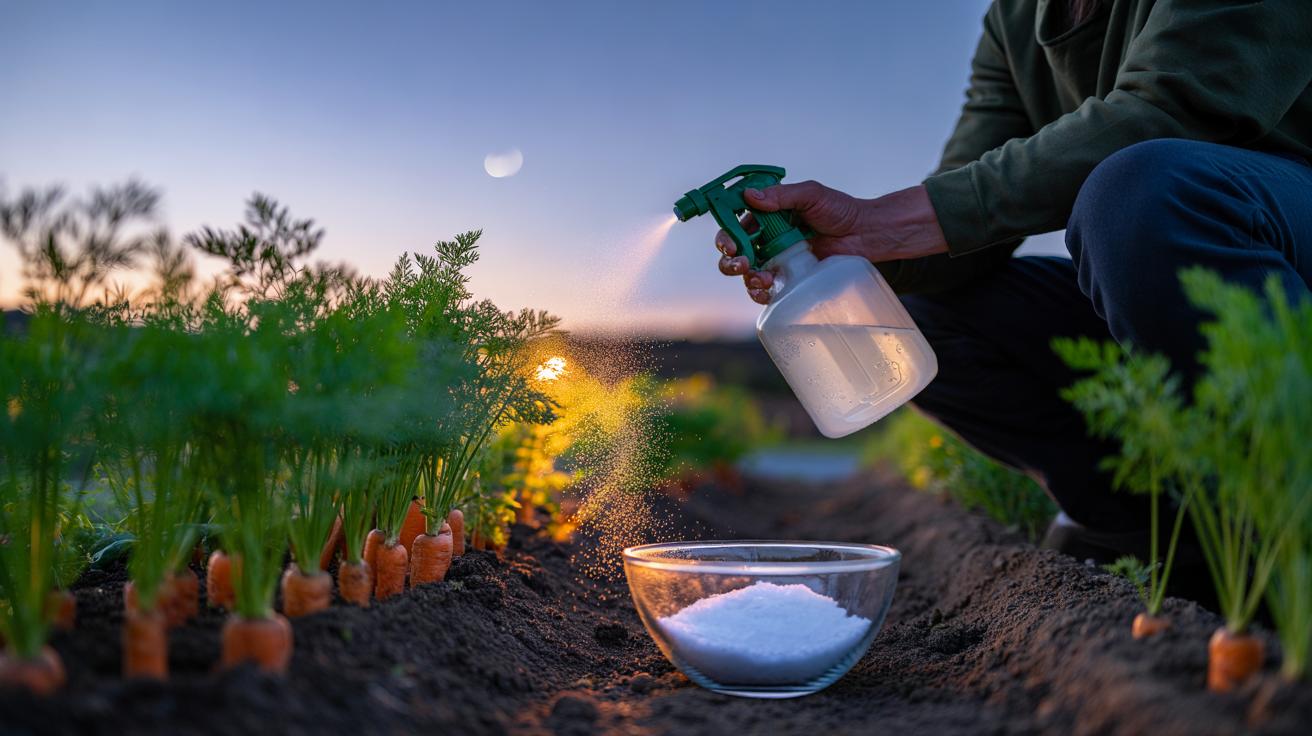
Two routes work, each with a niche. A foliar spray offers speed. Dissolve 1 tablespoon (about 15 g) of Epsom salt per 4 litres of water for established carrots; mist until leaves glisten, not drip. For containers, you can go to 20 g per 4 litres if deficiency is clear. Spray at dusk for maximal uptake and minimal leaf burn. Expect perkier colour within 24–48 hours.
A soil drench suits beds where magnesium is chronically low. Mix 1–2 tablespoons (15–30 g) in 4 litres and water around the row, roughly 1–2 litres per linear metre, keeping solution off foliage. Repeat no more than monthly in light soils. Pair either method with even moisture and consistent thinning to unlock the full benefit. Remember: Epsom salt adds Mg and sulphur only. You still need balanced N–P–K feeding and a crumbly seedbed for straight, fast-filling roots.
| Method | Mix Rate | Best Timing | Response Window | Notes |
|---|---|---|---|---|
| Foliar spray | 15 g in 4 L water | Dusk, calm weather | 12–48 hours | Rapid green-up if Mg deficient; avoid midday sun |
| Soil drench | 15–30 g in 4 L water | After watering-in seedlings or during steady growth | 3–10 days | Targets root zone; don’t overdo on heavy soils |
Smart Doses, Soil Tests, And Safety
Carrots prefer steady nutrition, not shocks. Start small, observe, then adjust. If a soil test shows Mg below roughly 50–100 mg/kg, consider a drench, or use dolomitic limestone at planning stage to lift both Mg and pH if your soil is acidic. In neutral containers, a foliar approach is gentler. Less is more when chasing overnight results. The goal is to remove the bottleneck, not flood the plant.
Watch interactions: excessive magnesium can compete with calcium at the root interface, softening tissues and subtly increasing disease susceptibility. It can also nudge electrical conductivity higher in pots, stressing seedlings. Rinse leaves with plain water if you overspray, and pause feeding during heat spikes. Rotate beds yearly, keep soil loose, and water evenly; these cultural basics amplify any benefit that Epsom salt can deliver. Combined wisely, the package helps sugars move, meristems divide, and the orange core thicken on schedule.
Used with intent, Epsom salt can be the nudge that pushes photosynthetic gains into the carrot’s core, especially when real magnesium shortages stall growth. Timing is everything: evening sprays, modest doses, and follow-up observation. Pair it with balanced fertiliser, fine tilth, and reliable watering, and your rows respond quickly, sometimes strikingly by the next morning. Ignore context and you invite disappointment. The choice sits with the grower. How will you test, tailor, and time your next magnesium boost to turn healthy tops into heavier, straighter roots?
Did you like it?4.5/5 (26)