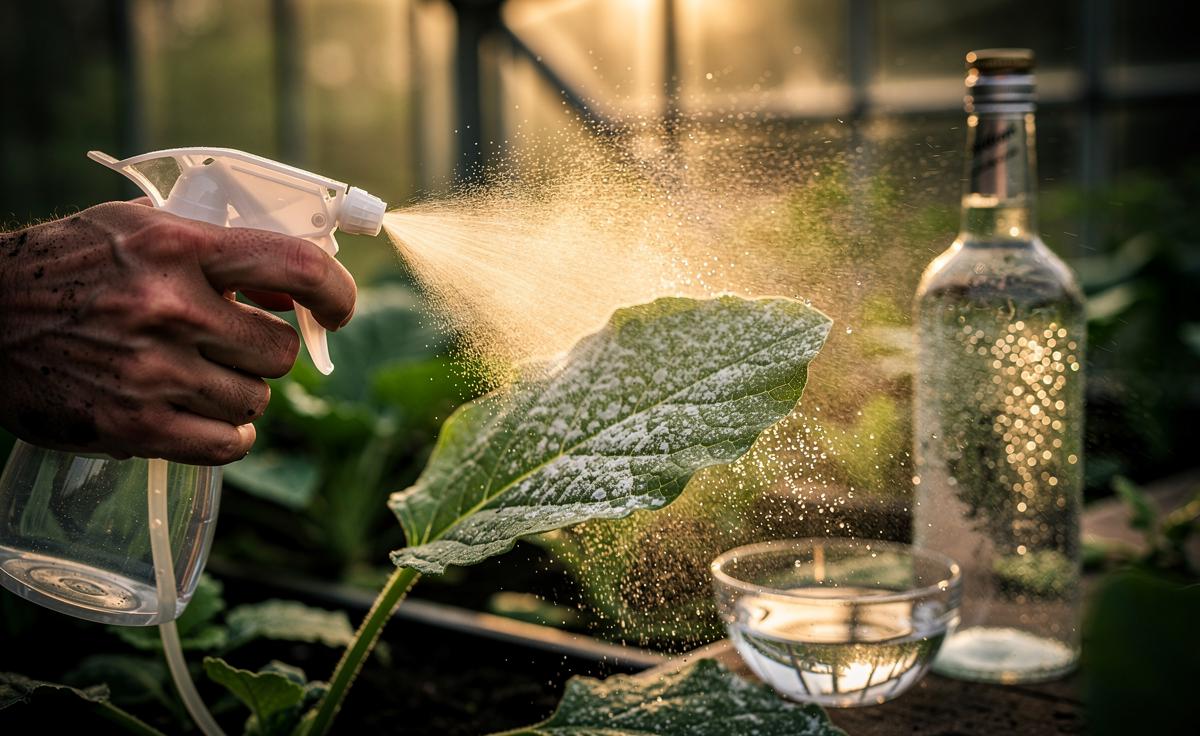
In a nutshell
- 🔬 Mechanism: Ethanol in vodka denatures fungal proteins, disrupts membranes, and dries spores; it’s a contact knock-back that halts germination—a brake, not a cure—best on early, light infections.
- 🧪 Dilution: Use plain 40% ABV vodka at 1:3 (~10%), 1:2 (~13%), or 1:1 (~20%) depending on leaf toughness; add a drop of mild surfactant, spot-test first, and avoid spraying in full sun.
- 🌿 Application: Mist both leaf surfaces until they glisten, not drip; repeat every 3–5 days during outbreaks, then monitor weekly; boost airflow, water at the base, and remove heavily dusted leaves; never mix with bleach or peroxide.
- 🚫 Limits: Skip on drought-stressed or very tender foliage and recognise it won’t fix downy mildew; for sensitive plants, choose potassium bicarbonate or horticultural oils; on edibles, let spray fully evaporate and rinse.
- 🧰 Strategy: Fold vodka into an integrated approach—pruning, spacing, sanitation (disinfect pruners), resistant varieties, and rotation—to halt infection growth while encouraging clean new growth.
It sounds like a pub story, but gardeners across Britain swear by it: a mist of vodka to stop powdery mildew in its tracks. This isn’t old wives’ lore dressed up in novelty. It’s chemistry, applied with a sprayer. The alcohol in vodka—plain ethanol and water—can denature fungal proteins, disrupt membranes, and rapidly dry spores before they spread. Results come fast. Damage won’t reverse, yet the outbreak often stalls within days, buying time to prune, ventilate, and strengthen plants. Used carefully, vodka becomes a nimble, low-cost tool in an integrated plant health kit. Here’s how spraying halts infection growth, when it works, and where to tread lightly.
How Vodka Works on Mildew
Powdery mildew is a surface-dwelling fungus that parasitises leaves, sending shallow threads into the epidermis while dusting plants with a tell-tale white bloom. Because it lives on the surface, it’s vulnerable to contact treatments. Enter ethanol. Alcohol dissolves lipids, denatures proteins, and collapses the water balance inside fungal spores. The effect is quick, localised, and highly dependent on coverage. You are not curing the plant; you’re stopping spore germination and knocking back infectious growth. Think of vodka as a brake, not a time machine.
Vodka works best on early or light infections, especially on ornamentals and herbs with moderately robust leaves. The typical UK vodka sits at 37.5–40% ABV. Diluted, it yields a spray in the sweet spot—usually 10–20% ethanol—potent enough to damage fungal structures while limiting scorch on foliage. Evaporation helps too. As alcohol flashes off, it wicks moisture from the leaf surface, leaving a drier microclimate where mildew struggles to rebound.
There are limits. Downy mildew, a water-mould with deeper tissue involvement, is far less susceptible to simple contact sprays. Severely infected leaves won’t recover, and tender plants may show stippling or burn if concentrations are too high. Always test on one leaf and wait 24 hours before treating the whole plant. Used judiciously, though, this humble spirit delivers a sharp, targeted punch to a common foe.
Mixing and Spraying: Safe, Effective Ratios
Use plain, unflavoured vodka. No sugars, no botanicals, no colours. Start mild and scale only if needed. A practical range runs from 1:3 (vodka:water) for tender foliage to 1:1 for tough, waxy leaves. Add one drop of mild, unscented washing-up liquid per 500 ml as a surfactant to break surface tension and boost coverage. Shake well. Mist both sides of leaves until they glisten, not drip. Do not spray in full sun or when leaves are hot; aim for evening or an overcast morning to reduce scorch and prolong contact time.
| Vodka ABV | Dilution (Vodka:Water) | Approx. Ethanol % in Spray | Leaf Sensitivity & Use |
|---|---|---|---|
| 40% | 1:3 | ~10% | Good starting point; tender herbs, young leaves |
| 40% | 1:2 | ~13% | Moderate infections; most ornamentals |
| 40% | 1:1 | ~20% | Sturdy leaves only; spot-test essential |
Frequency matters. Spray every 3–5 days during active outbreaks, then switch to weekly checks. Pair with airflow improvements: prune crossing stems, space pots, water at the base, avoid evening overhead watering. Remove heavily dusted leaves and bin them—don’t compost, or you’ll recycle spores. Let the spray dry on the plant; no rinsing needed. If you’re treating edible crops, wait for full evaporation, then a light rinse before harvest keeps flavours honest. Never mix alcohol with bleach, peroxide, or other chemicals. Simple is safer—and more effective.
When to Use Vodka and When Not To
Reach for vodka when you spot the first powdery bloom on roses, courgettes, cucumbers, sage, or mint, especially in stuffy greenhouses or on windowsill herbs. It’s ideal as a rapid response after humid spells, a bridge while you tweak cultural conditions. It’s also handy indoors, where proprietary fungicides may be overkill or undesirable. For community gardens and allotments, the simplicity is appealing: a small bottle, a sprayer, five minutes’ work.
Hold back if foliage is already scorched, if plants are drought-stressed, or if you’re dealing with downy mildew on brassicas and grapes—different beast, different tactics. Young seedlings and hairy, silvered leaves (think sage or lamb’s ear) can be sensitive; dilute more, or switch to potassium bicarbonate or horticultural oils. If a test leaf blackens or puckers within 24 hours, stop and reconsider. On edibles, common sense applies: allow full drying before harvest and rinse. If you follow organic standards, note that vodka isn’t an approved pesticide; treat it as a home remedy rather than a regulated input.
Big outbreaks demand a broader plan. Thin growth to improve light, stake plants to separate damp leaves, and increase morning ventilation. Water early, at soil level. Sanitation counts: disinfect pruners with alcohol between cuts. For season-long pressure, choose resistant varieties and rotate beds. Combine these with targeted vodka sprays to halt infection growth quickly while longer-term measures take hold.
Used with care, vodka is a sharp, surprising ally against powdery mildew. It acts fast, it’s inexpensive, and it slots neatly into a gardener’s integrated toolkit, provided you respect plant sensitivity and keep concentrations in check. Results are visible within days as the white film stalls and fresh growth emerges clean. The trick is precision: right dilution, right timing, right leaves. Will you try a small test on your most mildew-prone plant this season—and if you do, what dilution delivers the sweetest balance between stopping power and leaf safety in your garden?
Did you like it?4.6/5 (21)