In a nutshell
- ⏱️ A two-minute baking soda paste gently polishes surface stains; its low abrasivity and alkaline pH help lift colour without harming enamel.
- 🪥 Method: mix 1 tsp baking soda + 2 tsp water to a smooth paste, use a soft-bristled brush with light circles, stop at two minutes, rinse, then brush with fluoride toothpaste.
- 🧪 Safety: limit to 1–2 times weekly, use gentle pressure, avoid acids like lemon juice and DIY peroxide; if sensitivity occurs, pause and consult a dentist.
- ⚠️ Expectations: it polishes external stains; it does not bleach intrinsic colour. For deeper discolouration, consider professional whitening or veneers.
- 📊 Quick-reference: measure, mix, polish, finish—an effective pre-event refresh that protects enamel when strokes are light and you finish with fluoride toothpaste.
A brighter smile can be as simple as a kitchen staple. With baking soda, a quick, no-fuss paste can gently polish away the day’s coffee or tea tints in around two minutes, revealing a cleaner, lighter look. It’s not magic. It’s chemistry and technique. The mild abrasivity lifts surface stains; the alkaline pH helps neutralise acids that roughen enamel. Used correctly, it’s swift and budget friendly. Used carelessly, you risk irritation and unnecessary wear. Here’s how the method works, what to expect, and the smart guardrails that keep your enamel safe while you chase that whiter, camera-ready grin.
What Makes Baking Soda a Gentle Polisher
At the heart of the hack is sodium bicarbonate. It’s a very fine, soft mineral that functions as a low-abrasive polishing agent. In dentistry, abrasivity is often measured as RDA (Relative Dentin Abrasivity). Baking soda sits extremely low on that scale—far below many whitening toothpastes—so it can dislodge surface pigments without gouging enamel. That matters. Enamel doesn’t grow back. This method removes external stains; it does not bleach the intrinsic colour of teeth.
There’s more than grit. Baking soda is alkaline. When it meets acidic plaque by-products or the after-effects of citrus and fizzy drinks, it helps raise the pH, which reduces the conditions that soften enamel and make stains stick. That chemical nudge, combined with light mechanical action, is what delivers visible brightness after a short polish. Expect a cleaner feel first, then a modest but noticeable lift in shade.
Results vary. Heavy smokers or red-wine devotees may see incremental improvements rather than dramatic change in one go. Consistency and restraint are key. Gentle pressure, not scrubbing, is the rule. Think of it as restoring the gloss you already own rather than repainting the wall.
Two-Minute Paste: Step-by-Step Method
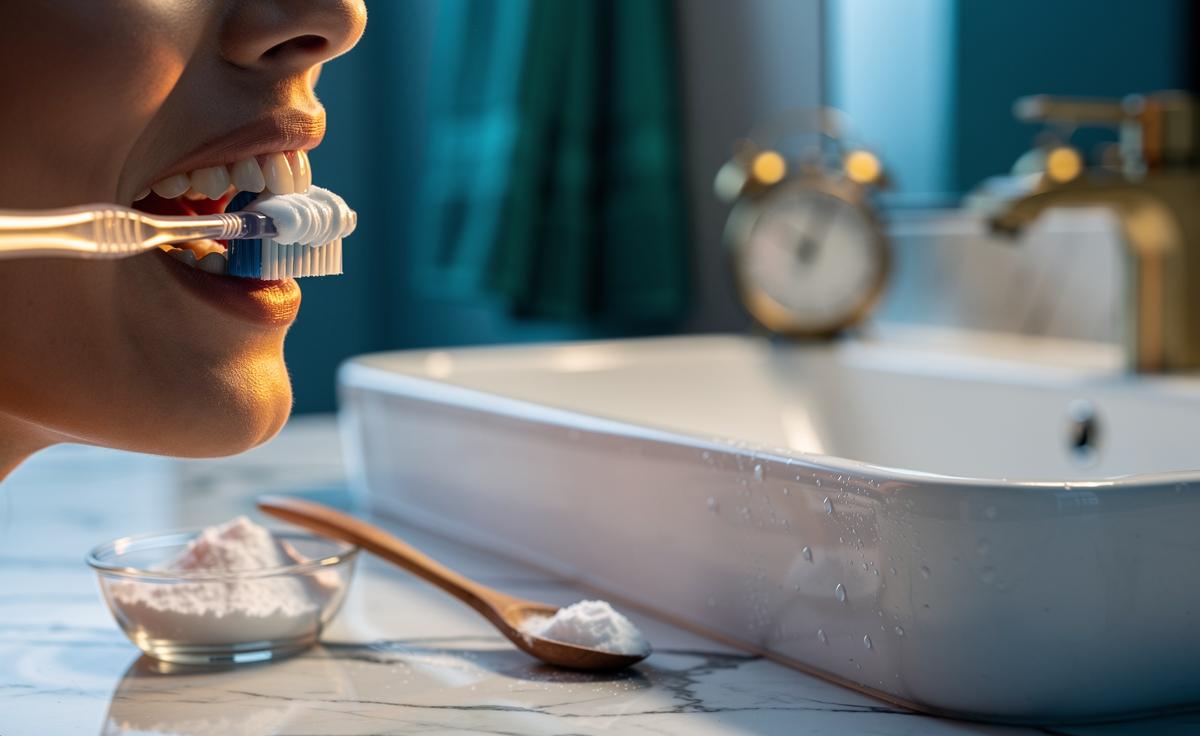
Start with freshness. Use a soft-bristled brush and new, lump-free baking soda. In a small dish, mix about one part baking soda with two parts water to form a silky, spreadable paste—no gritty clumps. You want a texture that clings to bristles without dripping. Alternatively, dampen the brush and dab it into a light sprinkle of powder, but avoid loading the head. Less is plenty.
Apply in small circles along the front teeth first, then the sides you show when you smile. Keep the pressure feather-light. Target stain-prone areas—near the gumline and edges—without scouring. Set a timer. Do not exceed two minutes. When time’s up, rinse thoroughly, then brush with a fluoride toothpaste to round off the clean and support remineralisation. Spit, don’t swallow, and give it a final rinse.
Use this as a quick polish before a meeting, a shoot, or a night out. It’s fast. It’s cheap. And when you keep the strokes light, it can be surprisingly effective at reviving lustre.
| Step | What to Do | Time |
|---|---|---|
| Measure | 1 tsp baking soda + 2 tsp water | 15 seconds |
| Mix | Stir to a smooth, clingy paste | 20 seconds |
| Polish | Gentle circles with soft brush | Up to 2 minutes |
| Finish | Rinse, then brush with fluoride toothpaste | 1 minute |
Safety, Frequency, and Who Should Avoid It
Used sparingly, the method is kind to enamel. Keep it to one or two polishes a week, not daily. That cadence respects the tooth surface and gums while still tackling surface stains. If you notice sensitivity, step back. Allow a fortnight off and switch focus to a gentle, high-fluoride routine. Pain, bleeding, or persistent sensitivity is a signal to stop and see a dentist.
A few red lines. Don’t combine baking soda with acids like lemon juice; you’ll soften enamel, then abrade it. Skip aggressive hacks such as charcoal pairings or coarse salt. Avoid adding hydrogen peroxide at home—concentrations vary and can irritate tissues. If you have active gum disease, exposed dentine, newly bonded composites, or complex dental work, seek personalised advice first. Children should be supervised and taught to spit, not swallow.
Expectations matter. Baking soda polishes; it doesn’t “bleach” the internal shade like professional whitening. For deeper discolouration from tetracycline staining, fluorosis, or age-related enamel thinning, consult your dentist about trays, in-surgery whitening, or veneers. The right tool depends on the type of stain. For everyday coffee or curry marks, though, this two-minute paste can be a tidy, low-cost fixer between check-ups.
In short, a two-minute baking soda paste is a practical way to refresh brightness fast, provided you respect the clock, keep the pressure gentle, and finish with fluoride toothpaste. It tidies up the surface so light reflects better, delivering that just-polished look without faff. Use it judiciously, avoid harsh add-ins, and listen to your teeth. Your enamel is precious; treat it that way. What’s your next move—will you try the quick polish this week, or book a professional clean to benchmark your results first?
Did you like it?4.5/5 (29)