In a nutshell
- 🏋️ Prioritise power training after 60: improve rate of force development with brisk lifts (3–5 reps, 3–5 sets, full rests); walking is necessary but insufficient for strength, speed, and stability.
- ⚖️ Fall-proof with the balance–gait–reaction triangle: daily micro‑drills and targets like 10‑m walk > 1.0 m/s, single‑leg stance 20–30 sec, and 5× sit‑to‑stand < 12 sec.
- 🍳 Recover smarter: aim for 1.2–1.6 g/kg/day protein (25–35 g per meal), consider creatine 3–5 g/day, hydrate, and sleep 7–8 hours; HIIT isn’t always better if it blunts power work.
- 🗓️ Follow the six‑week plan: power blocks (box squats, step‑ups, wall presses) paired with balance drills, gradual load/density progression, and non‑gym days of brisk walking plus mobility.
- 📊 Track progress with 10‑m walk speed and 5× sit‑to‑stand; deload if they regress, and expect real‑world wins—like improved stair confidence and faster chair stands.
Many Britons over 60 are logging their steps and counting gardening hours as exercise. It’s a great start, but experts are blunt: walking alone won’t preserve the speed, strength, and stability that keep you independent. The missing ingredient is power—the ability to produce force quickly—supported by balance practice and smart protein timing. Power drops almost twice as fast as raw strength with age, narrowing your margin for safe stair-climbing or correcting a stumble. Here’s the evidence-based blueprint: brief, high-quality resistance work performed with intent; daily micro-doses of balance and mobility; and recovery fuel that matches your training. Your post‑60 plan needs this—practical, progressive, and safe intensity.
Why Power Training Beats Endless Cardio After 60
Cardio protects your heart, but it rarely trains rate of force development (RFD), the split‑second quality that helps you rise from a chair or clear a curb. Studies repeatedly show that after 60, power declines faster than strength, largely due to losses in fast‑twitch fibres and slowed neural drive. That’s why experts emphasise power training: controlled lifts moved with intent on the way up, then lowered smoothly. Think “as fast as safe, as slow as controlled”. Two to three brief sessions per week outperform extra miles when the goal is fall resistance, stair confidence, and carrying shopping without wobble.
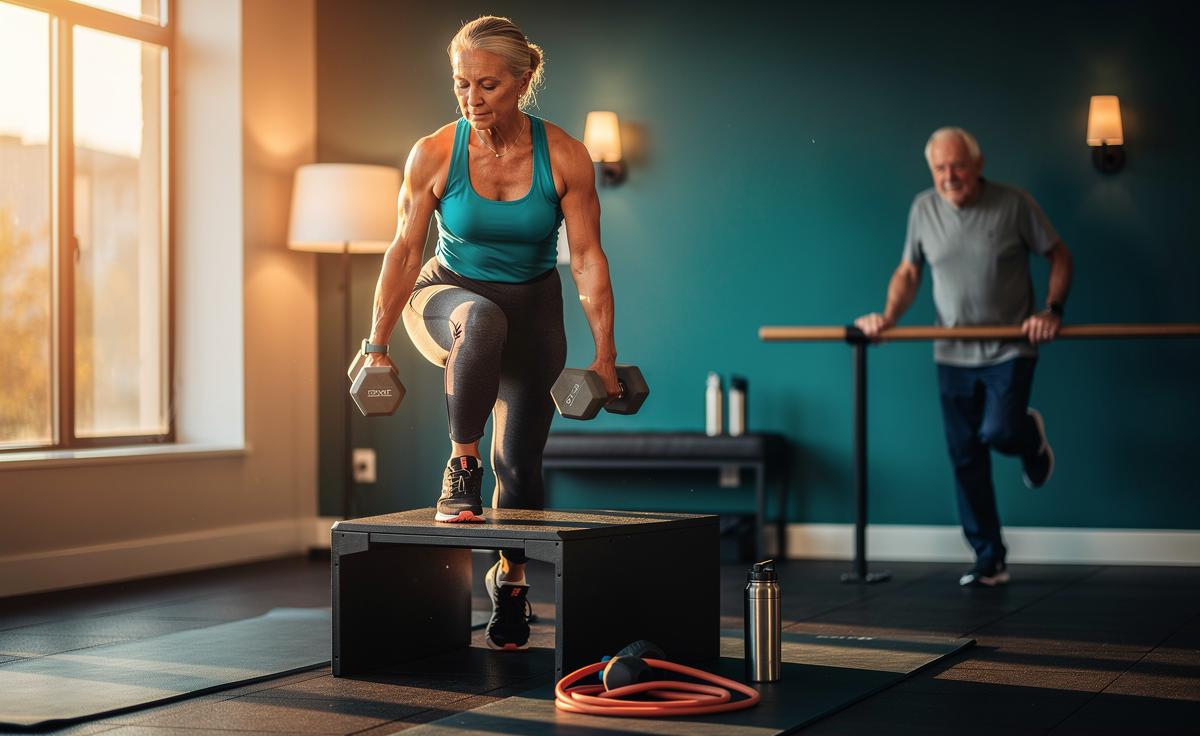
What it looks like in practice: moderate loads (about 40–60% of your best) moved briskly for 3–5 reps, 3–5 sets, with full rests. You can do this with dumbbells, resistance bands, or a cable machine. Even bodyweight drills—sit‑to‑stands, step‑ups, wall presses—become power training when you focus on a crisp drive up and a calm return. Walking is necessary but insufficient; power is the keystone that makes daily life feel lighter.
- Pros: boosts gait speed, stair ascent, and reaction time; time‑efficient; pairs well with walking.
- Cons: demands attention to technique, adequate rest, and gradual progression.
- Why more isn’t always better: chasing fatigue undermines velocity; stop sets when speed drops.
Balance, Gait, and Reaction Time: The Fall-Proofing Triangle
Falls are multi-factorial, but three modifiable pillars dominate: balance, gait speed, and reaction time. Gait speed below roughly 1.0 m/s flags higher risk of hospitalisation; balance limits show up when you turn quickly or reach side‑on. The fix is daily micro‑practice: 5–10 minutes of single‑leg stance near a support, gentle head‑turn walks, and lateral steps to train side‑to‑side stability. Little and often beats long and irregular. Pair these with power moves and you’ll see faster chair stands and steadier stair descents within weeks.
I’ve seen it firsthand. Patricia, 67, from Leeds, swapped two long walks for one walk plus 10 minutes of balance and short step‑ups. In six weeks her 5× sit‑to‑stand time dropped by 22%, and she reported “no handrail” confidence on stairs. The takeaway is simple: train control in the directions you’re likely to fall—forward and sideways. Add a gentle cognitive layer—counting backwards while you balance—to sharpen reaction time under real‑life distraction.
| At-Home Screen | Good Target | How to Improve |
|---|---|---|
| 10‑m Walk Test | > 1.0 m/s | Power step‑ups, brisk short walks |
| Single‑Leg Stance | 20–30 sec/leg | Heel‑to‑toe holds, eyes‑forward |
| 5× Sit‑to‑Stand | < 12 sec | Box squats with fast rise |
Protein, Creatine, and Recovery: The Underrated Half of Training
Your muscles adapt in the kitchen as much as the gym. Research suggests older adults need 1.2–1.6 g/kg/day of protein, spread across meals with 2–3 g leucine each time to trigger repair. Aim for 25–35 g protein at breakfast, lunch, and dinner. This might be Greek yoghurt with seeds, eggs on wholegrain toast, or a lentil‑tuna salad. Add resistance training and you amplify the signal. Many specialists also support creatine monohydrate (3–5 g/day) to aid power and cognition; it’s well‑studied and inexpensive for older adults with healthy kidneys.
Hydration and sleep complete the picture. A good rule is a glass of water with each meal plus one after training, and a wind‑down routine that protects 7–8 hours. Why HIIT isn’t always better: high‑intensity intervals can be useful, but if they blunt your power sessions or aggravate joints, they’re poorly placed. Build capacity first, then sprinkle intervals. Budget‑friendly UK protein picks: sardines, eggs, skimmed milk, red lentils, and frozen edamame.
- Quick plate idea: 2 eggs, beans, mushrooms, wholegrain toast (~28 g protein).
- Snack: Greek yoghurt, oats, mixed seeds (~20–25 g).
- Post‑session: Milk or soy shake plus fruit (fast, digestible).
A Six-Week Power Plan You Can Start Tomorrow
This template blends power, balance, and recovery. Keep reps snappy, rests generous, and progression modest. If a rep slows or form slips, stop the set. Day spacing matters: alternate hard and easy days to respect recovery. Warm up with 5 minutes of easy marching, ankle rocks, and shoulder rolls.
Core power session (2–3 days/week): 3–5 sets of 3–5 reps at a load you could lift 8–10 times if needed. Move up fast, down controlled. Pair each power move with a complimentary balance drill.
- Block A: Box squat to stand + single‑leg stance near support.
- Block B: Step‑up (knee height you control) + side‑steps with band.
- Block C: Wall or incline press + tandem walk (heel‑to‑toe).
| Week | Focus | Progression Cue |
|---|---|---|
| 1–2 | Technique and speed | Stop before fatigue; master tempo |
| 3–4 | Small load bump | +2 kg or thicker band if all reps stay fast |
| 5–6 | Density | Add one extra set or a second block day |
On non‑gym days, take a brisk 20–30‑minute walk and 10 minutes of balance and mobility. Track two markers weekly: 10‑m walk speed and 5× sit‑to‑stand. If either regresses for two weeks, deload by 20% for five days. Consistency beats intensity sprints you can’t sustain.
Your 60s can be your strongest, steadiest decade yet if you prioritise the quality that age erodes fastest: power. Add daily balance snacks, target protein at each meal, and recover like an athlete. Start light, move fast, and progress slowly. In six weeks, you’ll feel it on stairs, in the garden, and on longer walks—lighter, quicker, steadier. The plan isn’t complicated; the art is showing up and keeping reps crisp. What upgrade will you make first: power sessions, balance micro‑doses, or protein at breakfast—and what will you track to prove it’s working?
Did you like it?4.7/5 (20)