In a nutshell
- 🛏️ Replace most mattresses every 7–10 years, tightening to 6–8 years with heavy use or allergies; warranties don’t equal lifespan—sleep quality is the real clock.
- 🔍 Key replacement signs: 2–3 cm body impressions, creaks or roll-together, waking hot, and persistent morning aches or allergy flare-ups despite good sleep habits.
- 🧪 Materials age differently: latex lasts longest, hybrids and high-density memory foam are mid-to-long, while budget innersprings fatigue faster; choose sturdy coils and dense foams.
- 🧼 Hygiene and sustainability: use a zippered breathable protector, ventilate and dehumidify, act fast on spills; opt for recycling/take-back schemes when replacing.
- 🛠️ Care tips that extend life: rotate every 2–3 months, ensure a supportive base, manage bedroom heat and humidity, and replace when two bad weeks persist despite good routines.
How long should a mattress last in 2026? It’s a deceptively simple question that touches comfort, health, and sustainability. While marketing often promises a decade of dreamy sleep, real-world usage tells a more nuanced story. Households are spending more time in bed—reading, working, recovering—which accelerates wear. Add humidity, body weight, and material science to the mix, and timelines shift again. Sleep experts suggest watching your body and the bed, not just the calendar. When your mattress stops supporting natural spinal alignment or begins to trigger allergy symptoms, the clock has effectively run out. Here’s what the latest guidance says, and how to decide—confidently—when to replace.
What the 2026 Consensus Says About Mattress Lifespan
Broadly, experts converge on a simple rule of thumb: replace most mattresses every 7–10 years. That range flexes once you factor in material type, build quality, and how you actually use the bed. Heavier bodies, nightly co-sleeping, and warmer bedrooms compress foams faster and stress springs sooner. By contrast, high-density memory foam and natural latex can hold shape longer, while budget innersprings age quicker. Warranties mislead here. They protect against manufacturing defects, not sag from normal use. If your hips dip, your shoulders ache, or you wake to numb hands, the practical lifespan has ended—no matter what the paperwork says.
2026 brings another nuance: hygiene horizons. Dust mites, skin cells, and moisture build steadily, even with diligent care. Many sleep clinicians suggest an upper limit of eight years for allergy-prone sleepers, particularly in humid homes. Use matters too. If your mattress doubles as a daytime workstation or recovery zone, expect accelerated wear and consider a tighter 6–8 year window. Rotating every two to three months helps even compression. A breathable protector slows spills and sweat from reaching the core. But maintenance slows ageing; it doesn’t stop physics. The right replacement point is when your sleep quality dips for more than two weeks despite good sleep habits.
Signs Your Mattress Needs Replacing
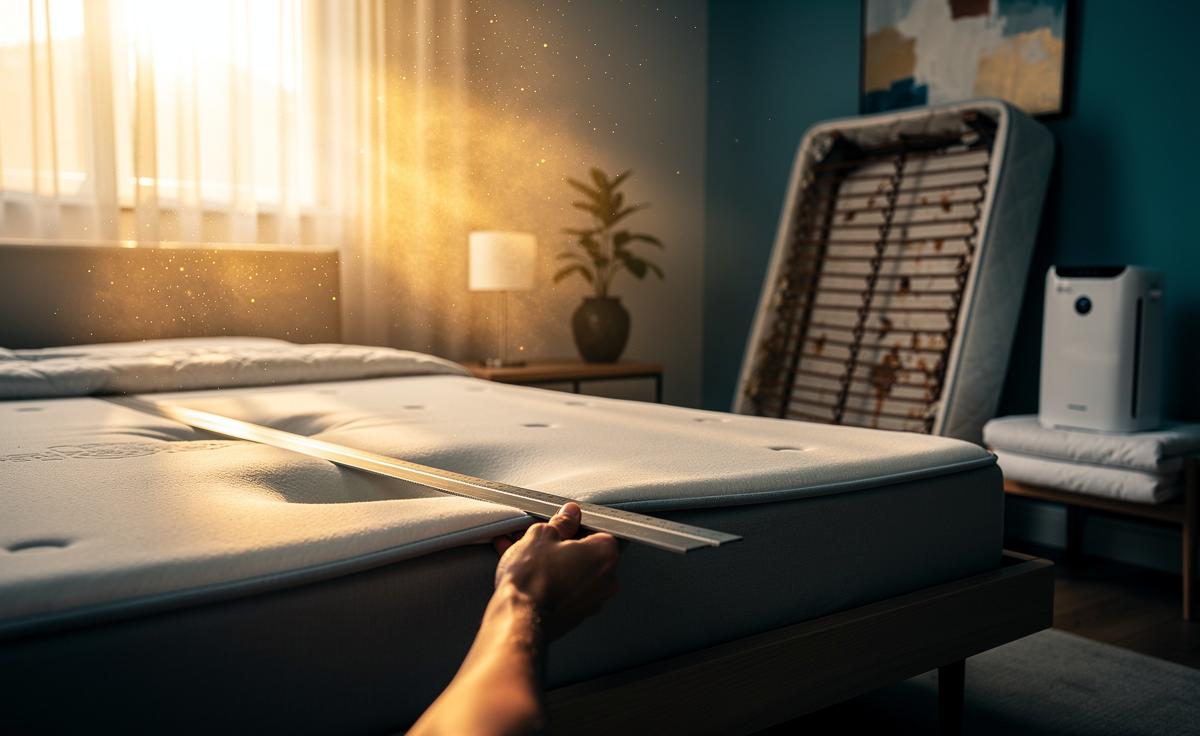
Start with the surface. Run a straightedge across the middle and sides. If you can see a trough or measure a body impression deeper than roughly 2–3 cm, support is compromised. Springs that creak when you shift are another flag; they’re losing resilience and transferring motion. Temperature shifts matter as well. If you suddenly sleep hot on the same bedding, the comfort layer may be compacted and airflow blocked. Similarly, if you find yourself rolling toward the centre at 3am, structural fatigue has arrived. Your body is the most sensitive diagnostic tool you own.
Morning outcomes tell the truth. Persistent lower-back tightness that fades by mid-morning suggests overnight misalignment. Shoulder pressure, tingling in arms, or hip soreness hint that comfort layers have thinned. Allergy flares—morning congestion, itchy eyes, cough—can indicate elevated dust mite load or trapped moisture, especially in older foam. Consider your calendar too. If the mattress is past seven years and needs frequent pillow gymnastics to feel “just okay,” replacement is more cost-effective than stacking toppers. A topper can buy time for a guest bed; it rarely fixes a worn-out main mattress. Listen to recurring discomfort, not isolated bad nights. Two miserable weeks, despite routine and room dialled-in, is your cue.
How Different Mattress Types Age
Not all beds tire alike. Material science dictates feel, support trajectory, and how gracefully a mattress declines. Innerspring units tend to feel bouncy and breathable early on but can lose evenness as coils fatigue and comfort foams compress. Hybrid designs blend coils with foam or latex for contour and stability; quality of the foam stack and coil gauge determines lifespan. Dense memory foam offers deep pressure relief; lower densities can soften prematurely, while higher densities resist impressions. Natural latex is robust, elastic, and often the durability leader, though it can feel firmer. Adjustable air systems may last well if components are replaceable and serviced. Care routines—rotation, ventilation, protector use—extend useful years regardless of type.
| Mattress Type | Typical Replacement Window | Telltale Ageing Signs | Care Tips |
|---|---|---|---|
| Innerspring | 5–7 years | Edge collapse, creaks, roll-together | Rotate; avoid jumping; use solid base |
| Hybrid | 7–9 years | Shallow dips, warmer sleep over time | Rotate; breathable protector; good airflow |
| Memory Foam | 6–8 years | Body impressions, slow rebound | Rotate; manage room heat; protect from spills |
| Latex | 9–12 years | Subtle softening, slight height loss | Rotate; keep dry; ventilated base |
| Air/Adjustable | 8–10 years | Leaks, uneven chambers | Service components; check seals |
| Futon/Sofa Bed | 3–5 years | Thin spots, lumps | Limit daily use; flip if possible |
Quality matters. A premium build with high-density foams and tempered coils will outlast a bargain alternative in the same category. So will a mattress paired with a supportive base—slats closely spaced, or a solid platform. If you share the bed or have a larger body frame, consider a model engineered for higher loads. Buying once and buying well often proves cheaper than serial “fixes”.
Hygiene, Allergies, and Sustainability Considerations
Sleep isn’t just about support. It’s also about what builds up inside a mattress over years. Dust mites thrive in warm, humid interiors. Their allergenic droppings accumulate and can aggravate asthma and rhinitis. Use a zippered, breathable protector and launder bedding hot weekly to slow the load. Ventilate your bedroom daily; moisture evaporates faster in moving air. If you live in a damp home, a dehumidifier can be transformative. Spot spills immediately and dry deeply to deter mould. If a musty odour persists after thorough airing, retire the mattress.
Sustainability counts in 2026 purchasing decisions. Look for models with modular parts (zippable covers, replaceable toppers) and certifications for emissions and materials. When it’s time to move on, arrange a retailer take-back or council bulky-waste collection, and favour mattress recycling where available to divert steel, foam, and fibres from landfill. Charities may accept newer, clean mattresses with fire-safety labels intact; many won’t take older items. Buying better reduces churn: durable latex, robust coils, and high-density foams mean fewer replacements. And yes, keep a topper for guests; it can extend a spare-room mattress without masking faults in your main bed. Clean, dry, supported mattresses last longer—and keep you healthier.
Replacing a mattress isn’t about chasing a date on the calendar. It’s about reading the signals—your body, the surface, the air you breathe—and acting before small aches become nightly pain. Set a reminder to rotate, keep the room dry, and choose materials that match your sleep profile. When the signs stack up, don’t hesitate. Better sleep is worth decisive action. As you look ahead to 2026, what signs are you noticing today that will guide your next mattress decision?
Did you like it?4.5/5 (20)