In a nutshell
- 📱 Blue light delays melatonin and shifts the circadian rhythm, especially within 90 minutes of bedtime; brightness and timing matter as much as Night Mode.
- 🔔 The notification–arousal loop fragments sleep; even silent pings raise alertness, undermining sleep continuity and morning refreshment.
- 🌙 Pros vs. cons: guided breathing and sleep stories can soothe, but autoplay, doomscrolling, and late emails fuel cognitive stimulation and time drift.
- 🧰 Evidence-based fixes: set a digital sunset, use Focus modes, go audio-only, move the charger out of reach, and pre-plan a calm 3 a.m. routine.
- 📊 Track and tailor: log screen-off times and next-day energy to find your levers; aim for predictability, not perfection, to reclaim rest.
It’s the glowing companion on your nightstand, the last thing you touch before sleep, and often the first thing you reach for at dawn. Your smartphone can be a lifeline to loved ones and a library of calm—yet it can also be a stealthy saboteur of rest. Experts in sleep medicine warn that screen timing, light exposure, and cognitive load matter as much as mattress quality. Small, repeated choices—five more minutes of scrolling, one more alert—add up to a body clock that slips out of sync. Here’s what science, clinicians, and lived experience reveal about the ways our phones shape sleep—and how to regain control without going off-grid.
The Science: Blue Light, Brain Rhythms, and Melatonin
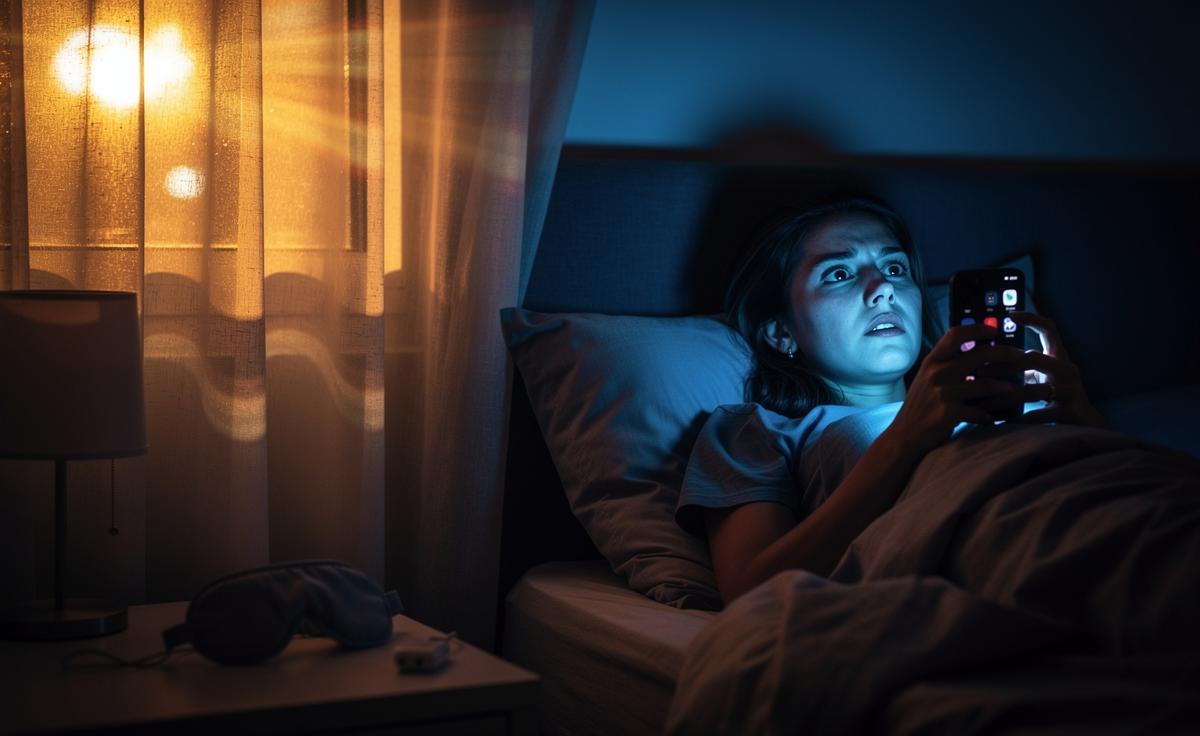
Smartphone screens emit short-wavelength blue light that tells your brain it’s daytime. Specialised retinal cells feed this signal to the suprachiasmatic nucleus—your master clock—suppressing melatonin and shifting the circadian rhythm. The result: you feel alert later, fall asleep later, and shave minutes off deep sleep. Night modes help, but not completely; they shift colour temperature while overall brightness and timing still count. In practice, the closer light exposure is to bedtime, the stronger the body-clock nudge. Even brief, bright checks can delay melatonin onset, especially in dim bedrooms, where a single glowing rectangle becomes the brightest “sun” in the room.
Physiology is only half the story. The brain’s arousal systems respond to novelty and reward—exactly what feeds populate at night. Interactive tasks (replying, gaming, debating) lift sympathetic activation, while emotionally charged content boosts cortisol. This blend of light plus arousal is a double whammy. Meanwhile, lying supine with a phone inches from your eyes can increase visual strain and micro-awakenings. Clinicians often report a pattern: “I’m in bed for eight hours but feel unrefreshed.” That mismatch commonly traces back to pre-sleep stimulation and light. Reduce brightness and stimulation together, not one without the other.
- Signals of disruption: later sleep onset, morning grogginess, weekend catch-up sleep.
- Higher risk windows: the last 90 minutes before lights out and mid-night wake-ups.
- Most sensitive groups: teens, shift workers, and anyone with insomnia tendencies.
Notifications, Dopamine, and the 3 a.m. Wake-Up
Ever bolt awake, check a message, then spiral into alertness? That’s the notification–arousal loop. Pings cue anticipation; anticipation boosts dopamine; dopamine primes you to seek more. It’s behavioural conditioning at scale. Even when you don’t check, the fear of missing out keeps the brain scanning. Light sleepers are particularly susceptible: a muted vibration can lift them into lighter sleep without full awareness, fragmenting the night. Sleep isn’t just duration—it’s continuity. Break it into shards and the “total” hours mislead. In interviews with sleep clinicians, the refrain is consistent: it’s not one catastrophic habit but many micro-disruptions that drain daytime energy.
A London A&E nurse I shadowed described post-shift “revenge bedtime scrolling,” a term psychologists use for reclaiming leisure at the cost of sleep. The brain associates the bed with alertness, not rest, making future nights harder. Add doomscrolling—high-emotion feeds at midnight—and you’re essentially dosing your nervous system with mini stressors. There’s also social timing: friends in different time zones, late-night group chats, or work apps bleeding into personal time. A simple rule of thumb from therapists: if your phone can wake you, it can train you. Night Focus modes and scheduled silences aren’t luxuries; they’re neural boundary lines.
Pros and Cons of Bedtime Phone Use
Phones aren’t villains. Used carefully, they can soothe: a guided breathing track, a sleep story, or a progressive muscle relaxation programme can lower heart rate and quiet racing thoughts. People with tinnitus often rely on subtle soundscapes to mask ringing. Accessibility tools—voice control, larger fonts—mean you can set routines without bright visual loads. The device that overstimulates can also become a precise tool for winding down. The trick is intent and design. The same feed that sparks arguments can be curated into a calming, finite ritual, much like a paper book but with timers and gentle audio.
Still, pros come with strings. Passive watching often turns active; autoplay keeps you up; and “just one more” is the most expensive phrase in sleep. Charging in bed adds heat and temptation. Nighttime work replies blur boundaries, priming the brain to expect obligations whenever the screen lights. Where’s the line? Experts suggest separating consumptive scrolling (open-ended, stimulating) from structured sleep aids (time-limited, sensory-calming). Below, a snapshot contrasts common bedtime uses.
| Use Case | Potential Benefit | Potential Harm | Mitigation |
|---|---|---|---|
| Guided breathing | Calms autonomic arousal | Bright screen exposure | Audio-only, screen facedown |
| Sleep stories/ASMR | Reduces rumination | Autoplay prolongs wakefulness | Timer; disable autoplay |
| News/social feeds | Information, connection | Emotional arousal, time drift | Cut 90 mins before bed |
| Emails/messages | Task closure | Work encroachment | Work Focus, batch replies |
| Alarm setting | Reliable wake cue | “Quick check” spiral | Set earlier; place away from bed |
Evidence-Based Fixes You Can Try Tonight
Think in layers: light, content, timing, and placement. First, set a digital sunset about 60–90 minutes before bed. Shift from interactive apps to low-arousal audio; dim the screen to its lowest and use true dark mode. Second, build an “if-then” plan for wake-ups: “If I stir at 3 a.m., then I play a pre-downloaded 10‑minute body scan without unlocking the screen.” Preparation beats willpower at midnight. Third, move charging to the hallway; a small distance cuts impulse checks. Lastly, replace late scrolling with a tactile cue—paper book, warm shower, or writing down worries—so the brain learns a predictable wind-down.
Tools help when they’re automatic. Schedule Focus modes every night; whitelist critical contacts and silence the rest. Use grayscale to make feeds visually boring. Disable badges after 8 p.m. and turn off “raise to wake.” Consider blue‑light‑reducing spectacles if evening screens are unavoidable, but remember: light control without content control is half a fix. For data lovers, track sleep for two weeks: note screen-off time, wake quality, and energy at 10 a.m. You’ll likely see a pattern. Start with the easiest lever—the last 30 minutes—and stack from there.
- Anchor consistent wake time, even after a late night.
- Keep a bedside notepad to offload next-day tasks.
- Use audio timers to cap sessions at 10–20 minutes.
- Store the phone out of reach to prevent reflex checks.
- Create a one-tap “Night Home Screen” with only sleep apps.
Smartphones amplify whatever we ask of them. With a few boundary tweaks—less light, fewer alerts, gentler content, earlier cut-offs—they can support rather than steal sleep. Your aim isn’t perfection but predictability: a routine your brain recognises as safe and sleepy. Track what changes move the needle, own your triggers, and design your nights accordingly. When devices respect circadian biology, mornings feel radically different. Which single tweak—moving the charger, scheduling Focus, or swapping feeds for audio—will you experiment with tonight, and what will you measure to know it worked?
Did you like it?4.4/5 (27)