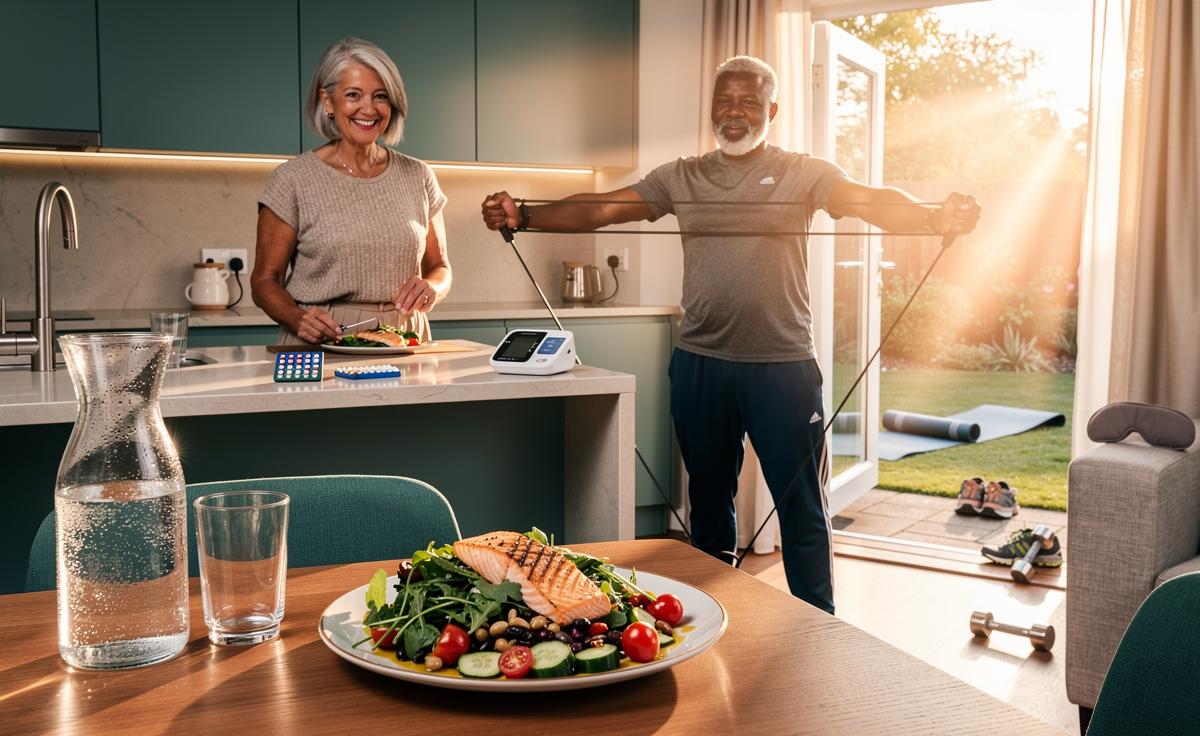
In a nutshell
- 🍽️ Rethink diet: avoid under‑fueling; prioritise protein (1.0–1.2 g/kg/day), plenty of fibre, quality carbs, and consider vitamin D and B12; hydrate and keep alcohol within low‑risk limits—why “less” isn’t always better.
- 🏋️ Build strength, balance, and bones: add resistance training twice weekly, sprinkle in power moves, and practise balance (e.g., Tai Chi); walking alone isn’t enough—consistency beats heroics.
- 💊 Get smart with healthcare: tackle polypharmacy via annual GP/pharmacist reviews; use the NHS Health Check, return bowel screening kits, and track blood pressure, lipids, and HbA1c with context (e.g., QRISK).
- 😴 Protect recovery: treat sleep as infrastructure—evening wind‑down, morning light, short naps only; manage stress with brief daily practices and strengthen social connection to buffer health risks.
- 🧭 Make it stick: focus on patterns over perfection—choose one small, repeatable tweak for two weeks to build momentum you can sustain.
There’s a quiet myth that once you turn 50, decline is inevitable. In reality, your body is still brilliantly adaptable—if you stop repeating the small, well‑meaning mistakes that chip away at health. This piece is a journalist’s field guide to avoiding the pitfalls I hear about most from British readers, GPs, and physiotherapists. We’ll look beyond clichés and swoop in on what to change this week: smarter food, stronger bones, clearer meds, steadier sleep, and deeper connections. Think of it as a midlife tune‑up rather than a rescue mission. With a few focused tweaks, your 50s and 60s can be the most capable, confident decades yet.
Rethinking Diet: Why Less Isn’t Always Better
One of the most common over‑50 mistakes is eating “lighter” and accidentally under‑fueling. Ageing nudges muscle mass downward, so a low‑calorie, low‑protein menu can speed up weakness. Counter‑intuitively, eating too little can make weight loss harder by shrinking metabolically active muscle. Aim for adequate protein (many dietitians suggest roughly 1.0–1.2 g/kg/day) and prioritise fibre for gut and heart health. Think Greek yoghurt with berries, eggs on wholegrain toast, beans, lentils, tofu, and oily fish.
Carb‑phobia is another trap. The fix isn’t “no carbs”; it’s choosing quality: oats, quinoa, potatoes with skin, and loads of veg. Add a teaspoon of olive oil, nuts, or seeds to meals to support absorption of fat‑soluble nutrients, including vitamin D. The UK advises 10 micrograms of vitamin D daily in autumn/winter; discuss vitamin B12 if you eat little animal produce. A reader from Leeds told me her energy changed within a month when she swapped cereal for eggs and added a lunchtime bean salad. This decade rewards consistency over intensity. Choose a pattern you can repeat, like a Mediterranean‑style plate: colourful veg, wholegrains, pulses, fish, and extra‑virgin olive oil.
- Hydration: Keep a refillable bottle to hand; mild dehydration mimics fatigue.
- Alcohol: Mind the totals. Off‑days help you keep within low‑risk guidelines.
- “Why less isn’t always better”: Crash diets trim muscle; steady deficits protect it.
Strength, Balance, and Bones: Training That Actually Protects You
Walking is brilliant—but it’s not the whole story. After 50, the “only cardio” habit leaves gaps in resistance training, power (speed + strength), balance, and bone loading. Stronger muscles are your best insurance policy against falls, fractures, and loss of independence. The evidence‑based blend is simple: 150 minutes of moderate activity a week, plus at least two sessions of strength work and regular balance practice.
Start with the basics and progress gradually:
- Lower body: sit‑to‑stand from a chair, supported squats, step‑ups on stairs.
- Upper body: wall or countertop press‑ups, rows with a resistance band, overhead press with light dumbbells.
- Balance: single‑leg stands while brushing teeth, heel‑to‑toe walks, or Tai Chi.
Malcolm, 63, told me he “doesn’t do gyms.” We built a living‑room plan: bands, a step, and two 5 kg dumbbells. In six weeks he climbed the Underground stairs without stopping—his proudest Tuesday. Sprinkle in “power” by standing quickly from a chair or doing a controlled step‑up with intent. It’s the change of pace, not the heaviest weight, that keeps you nimble. If joints grumble, reduce range, mix in swimming or cycling, and speak to a physio about form. Consistency, not heroics, moves the needle.
Medications, Checkups, and Numbers That Matter
By our 50s, many of us carry a growing pillbox. The risk isn’t medication itself; it’s polypharmacy—multiple drugs that may interact or be outdated. Ask for an annual medication review with your GP or pharmacist to deprescribe where safe and simplify dosages. A tidy medicine cabinet is not just convenient; it’s protective. The NHS Health Check (for adults 40–74) screens blood pressure, cholesterol, and type 2 diabetes risk—take it if invited. For bowel cancer, look out for screening kits posted to your home; the programme is expanding to include people in their 50s.
Know your key metrics and how you’ll track them:
- Blood pressure: consider a home monitor and keep a log to share at appointments.
- Cholesterol/lipids: discuss results in context, not a single number in isolation.
- HbA1c (glucose control): trends over time tell the real story.
- QRISK: UK tool estimating 10‑year heart disease risk; use it to guide prevention with your GP.
| Common Mistake | Why It Backfires | Science‑Backed Fix |
|---|---|---|
| Skipping medication reviews | Interactions, duplicate drugs, unnecessary side effects | Annual GP/pharmacist review; simplify and deprescribe safely |
| Ignoring screening invites | Late detection reduces treatment options | Return kits promptly; book follow‑ups without delay |
| Chasing single numbers | Overreacting to one reading creates anxiety | Track trends and discuss context with your clinician |
| No home measurements | White‑coat readings can mislead | Use a validated BP cuff; record averages, not one‑offs |
Sleep, Stress, and Social Health: The Overlooked Trio
In midlife, many of us wear busyness as a badge and treat sleep as optional. That mistake can raise blood pressure, sap willpower, and worsen joint pain perception. Good sleep is not indulgence; it’s infrastructure. Protect your evenings: dim lights, park screens an hour before bed, and keep caffeine for mornings. If you wake at 3am, avoid clock‑watching—get up briefly, read a page under a low lamp, and return to bed when sleepy. Gentle morning light (a walk or opening the curtains) helps stabilise circadian rhythm.
Stress and loneliness also bite harder after 50. Research repeatedly links social connection with healthier ageing. Think practical and local: a weekly swim, choir, library talk, or volunteering shift. Short, regular doses of calm—breathing drills, a 10‑minute stretch, or journalling—beat the occasional spa day. For racing thoughts, ask your GP about CBT‑I techniques for insomnia; they’re often more effective than pills long‑term. Here’s a quick contrast to keep you honest:
- Naps vs. Night Sleep (Pros vs. Cons): Short naps (10–20 minutes) can refresh; long naps may fragment night sleep.
- Nightcaps vs. Deep Sleep: Alcohol may hasten sleep onset but disrupts REM and increases early waking.
- Scrolling vs. Soothing: Bright screens stimulate; paper or audiobooks calm.
Small daily rituals become big health dividends by year’s end. Treat stress‑care and friendships as recurring appointments, not optional extras.
Ageing well isn’t a makeover; it’s maintenance with intent. Nourish with protein and fibre, lift something twice a week, practise balance, and keep your medicines and screenings current. Guard sleep like a precious asset and invest in people, places, and hobbies that make you feel useful. If a change feels daunting, pick one tweak and repeat it for two weeks—you’ll build momentum you can feel. Your future self doesn’t need perfection; it needs patterns. Which single habit from today’s list are you going to test first—and what will you put in place to make it stick?
Did you like it?4.5/5 (28)