In a nutshell
- 🍭 Hidden sugars are everywhere: cereals, yoghurts, sauces, and juices often pack high free sugars, with UK guidance roughly 19g/24g/30g for ages 4–6/7–10/11+, meaning breakfast alone can max out a child’s daily limit.
- 🧠 Physiology matters: rapid glycaemic spikes trigger insulin and energy crashes, skewing appetite and mood, while repeated exposures drive tooth decay; stabilise with fibre, protein, and fats.
- 🏷️ Read labels smartly: check “Carbohydrate—of which sugars” per 100g (≤5g low, ≥22.5g high), cap juice to 150ml with meals, and spot aliases like syrups, concentrates, and “-ose” sugars—most still count as free sugars.
- ❌ Why “No added sugar” isn’t always better: fruit purees/concentrates remain free sugars; sweeteners cut calories but may keep sweet cravings; keep dried fruit to mealtimes for teeth.
- 🔄 Practical, sticky swaps: default to water or milk, build a steady breakfast, stock balanced snacks, set simple “treat rules,” and make gradual recipe and product shifts that the whole family can keep.
Parents often tell me they feel ambushed by sugar. It isn’t just birthday cake and tuck-shop treats; it’s the hidden sugars in everyday foods that slip past busy eyes on the school run. In UK kitchens, we’re meticulous about packed lunches yet a juice box or “healthy” yoghurt can quietly deliver more sweetness than a slice of pudding. The real issue is not demonising sugar, but understanding where it hides and how it behaves in young bodies. Below, I unpack the stealth sources, the science inside a child’s metabolism, and the practical swaps that stick—without turning your home into a no-fun zone.
The Sneaky Sources: Where Sugar Hides in a Child’s Day
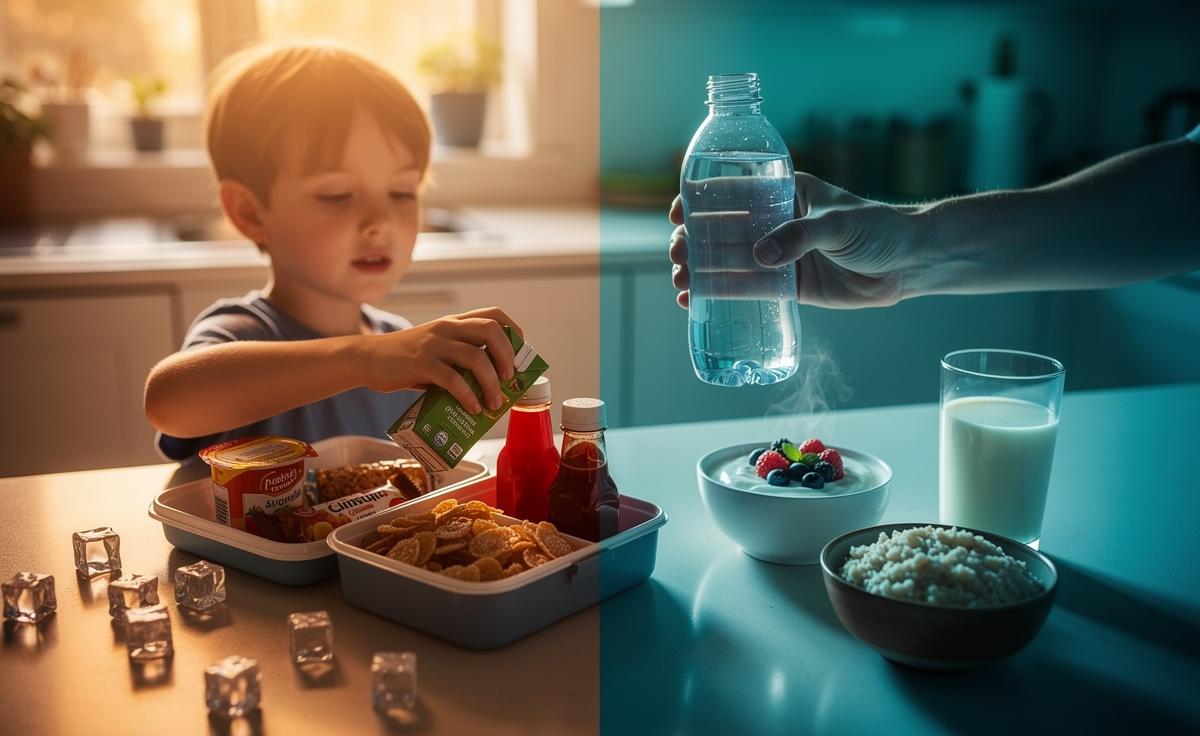
Scan a lunchbox and you’ll rarely see spoonfuls of sugar—but you will see its aliases. Free sugars (those added to foods or released from fruit when juiced) lurk in cereal bars, flavoured yoghurts, sauces, and “no added sugar” drinks. Most of the sugar children consume doesn’t taste obviously sweet. Parents routinely point to desserts, yet breakfast can be the bigger hit: a bowl of crunchy cereal, a squeezable yoghurt, and a carton of juice can meet a primary-school child’s daily maximum before 9am. UK guidance suggests limits of roughly 19g (4–6 yrs), 24g (7–10 yrs), and 30g (11+ yrs) of free sugars per day—about 5, 6, and 7 teaspoons respectively.
| Everyday Item | Typical Serving | Sugar (g) | Teaspoons (approx.) | Why It Adds Up |
|---|---|---|---|---|
| Fruit yoghurt | 1 small pot (125g) | 12–16g | 3–4 tsp | Added fruit puree and sugar |
| Breakfast cereal | 30g bowl | 8–12g | 2–3 tsp | Sweetened flakes and coatings |
| Fruit juice | 150ml glass | 12–15g | 3–4 tsp | Counts as free sugars |
| Cereal bar | 1 bar (25–35g) | 8–13g | 2–3 tsp | Syrups and fruit concentrates |
| Ketchup | 1 tbsp | 4g | 1 tsp | Often more than expected |
Labels hide the story in plain sight. Look for “Carbohydrate—of which sugars” per 100g: 5g or less is low; 22.5g or more is high. Drinks are trickier—150ml of juice “counts” as one of five-a-day, but any more piles on free sugars. The simplest early win? Swap juice for water or milk, then move to lower-sugar yoghurt and cereals in small, staged steps.
What Sugar Does Inside a Growing Body
When a child downs a sweet drink on an empty stomach, blood glucose rises fast. That glycaemic spike triggers insulin, which clears sugar from the blood—sometimes overshooting and prompting the notorious energy crash. Over time, frequent spikes can nudge appetite control off course; children may feel hungrier sooner and crave more sweet foods. It’s not willpower—it’s physiology responding to swift highs and lows. Meanwhile, a steady drip of sugar supports the bacteria that cause tooth decay; every sugary sip or snack starts a 30–40 minute acid attack on enamel.
There’s also the liver to consider. Excess free sugars—especially from sweetened drinks—are linked to increased liver fat and markers of metabolic risk later in life. That doesn’t mean a blanket ban; it means pattern matters. Pairing carbohydrates with fibre, protein, and healthy fats slows absorption, taming those peaks. Parents often report behaviour wobbles after sugary treats; while sugar isn’t a hyperactivity switch, rapid swings in energy can translate to restlessness in the classroom. Think stability rather than strictness: regular meals, balanced snacks, and fewer sips of sweetness between meals.
Why “No Added Sugar” Isn’t Always Better
“No added sugar” looks virtuous, but many products get their sweetness from fruit concentrates or purees—still free sugars once blitzed or reduced. A pouch of mashed fruit can deliver a rush comparable to a soft drink, minus the fibre you’d get from chewing an apple. Dried fruit belongs at mealtimes, not for constant grazing, because it clings to teeth. Sweeteners are another puzzle: they reduce sugar and calories, yet may keep a child’s “sweetness expectation” high.
- Pros: Cuts sugar and calories; helpful for weaning off fizzy drinks; tooth-friendly compared with sugar.
- Cons: Can maintain a preference for sweet tastes; some children report tummy discomfort with certain polyols.
- Label tip: Watch for “juice from concentrate”, “fruit puree”, “syrup”, “-ose” endings (glucose, sucrose).
- Reading strategy: Compare per 100g across brands; aim for lower “of which sugars”.
Fruit juice counts as free sugars; a glass is not the same as a piece of fruit. If you keep juice, cap at 150ml with meals and dilute. For yoghurts, pick plain and add fresh berries; for cereal, blend unsweetened flakes with a sweeter brand and shift the ratio weekly. Small moves, less noise.
Practical Swaps and Family Strategies That Actually Stick
Real change happens in routines, not lectures. I met a Bristol mum who loved baking with her eight-year-old. Rather than quit, they halved sugar in recipes and added mashed banana for moisture. Small, agreed tweaks beat top-down bans. Start with the “big rocks” that deliver the biggest wins—drinks, breakfast, and after-school snacks—before fussing over the odd birthday slice. Frame it as discovery, not denial: more crunch, more colour, more choice.
- Drinks: Water or milk as the default; reserve juice for mealtimes and keep to 150ml.
- Breakfast: Porridge with cinnamon; wholegrain toast with peanut butter; plain yoghurt with fruit.
- Snacks: Cheese and oatcakes; apples with skin; popcorn; hummus and veg sticks.
- Lunchbox: Swap sweetened yoghurt for plain + berries; replace cereal bar with nuts/seeds (if allowed) or oat bites.
- Micro-rules: “Sweets stay seated at the table”; “one sweet thing after a meal, not between.”
After three weeks of these swaps, that Bristol duo noticed steadier after-school moods and fewer “I’m starving” pleas. The secret wasn’t perfection; it was repetition and visibility. Keep a fruit bowl at eye level. Pre-portion nuts or popcorn. Make water bottles as reachable as the TV remote. Habits beat hacks, every time. And when treats happen, enjoy them—then return to the routine without drama.
Sugar is woven into British childhoods, from party bags to pitch-side drinks. The goal isn’t to strip away joy; it’s to reclaim control. By spotting free sugars, smoothing the day’s “peaks and troughs”, and making calm, repeatable swaps, families can dial down the sweetness without dialling down delight. Small changes compound quickly. If you tried one shift this week—breakfast, drinks, or snacks—which would make the biggest difference in your home, and what would help you stick with it?
Did you like it?4.5/5 (29)