In a nutshell
- 🦶 Early research on barefoot walking/grounding hints at better sleep, reduced stress, and improved HRV, though the evidence remains preliminary and small-scale.
- 💪 Barefoot time heightens foot mechanoreceptor input, potentially sharpening balance and strengthening intrinsic foot muscles for a more adaptable gait.
- 🧠 Sensory-rich walks in green or blue spaces act as embodied mindfulness, supporting mood, attention, and steadier circadian rhythms.
- 🛡️ Prioritise safety and hygiene: avoid hazards, inspect soles, and seek medical guidance if you have diabetes or neuropathy.
- 🌅 Adopt a progressive approach—start on grass or sand, increase texture gradually, and use a hybrid routine to fit real-world terrain and schedules.
Kick off your shoes and you’ll notice it instantly: cooler ground, sharper sensations, a subtle shift in posture. Advocates call it barefoot walking or earthing, and the idea is gaining traction far beyond wellness circles. Early studies suggest it might nudge sleep, stress, and balance in the right direction, while basic biomechanics argue that feet work better when they can move and feel. Skeptics are right to ask for better trials and less hype. But the habit is spreading, particularly in parks and along UK beaches, where the risks are low and the experience is rich. The question isn’t whether shoes are bad, but whether a little deliberate barefoot time could be good.
What Science Says About Grounding
The physiological case for grounding begins with skin-to-earth contact. Proponents argue that connecting to the planet’s surface may influence inflammation, cortisol rhythms, and heart rate variability (HRV). Small crossover trials have reported modest improvements in sleep quality and stress markers when participants used grounded pads or spent time barefoot on conductive surfaces. There are also reports of reduced pain scores after brief sessions. It’s intriguing, and it fits intuitively with a parasympathetic “downshift” you can often feel outdoors. Yet sample sizes are small, blinding is tricky, and several studies are industry-linked. In short: signals exist, but the evidence base remains preliminary and uneven.
Possible mechanisms range from mundane to controversial. On the mundane end: cooler ground and richer tactile input may stimulate calming reflexes and improve body awareness. On the contested end: hypotheses about electron transfer from the Earth to the body, which critics argue is hard to verify at meaningful scales. A pragmatic stance helps here—test the experience while keeping a scientist’s caution. The table below summarises what’s been reported so far, with caveats that matter.
| Potential Benefit | Evidence Snapshot | Notes |
|---|---|---|
| Sleep quality | Small trials show improved subjective sleep and more stable cortisol profiles. | Short duration, limited blinding; effect sizes vary. |
| Pain and inflammation | Pilot studies report reduced pain ratings and shifts in inflammatory markers. | Heterogeneous methods; needs larger RCTs. |
| HRV and stress | Some increases in HRV and calmer mood reported after grounding sessions. | Often acute effects; long-term data sparse. |
Feet, Balance, and Stronger Muscles
Your feet are packed with mechanoreceptors—sensors that map pressure, texture, and tilt. When you walk barefoot, those receptors awaken, feeding the brain with high-fidelity data. The result can be crisper balance, more stable ankles, and a gait that adapts naturally to the ground beneath you. Cushioned shoes dampen impact, which is useful, but they also dampen information. Over time, gentle barefoot sessions can nudge the intrinsic foot muscles—the small stabilisers that support the arch—into doing more of their evolutionary job. Think of it as strength and coordination training disguised as a stroll.
The changes are subtle at first: toes splay, the arch engages, cadence shifts. Some studies suggest that minimalist or barefoot-style practice strengthens foot musculature and may reduce certain overuse niggles by improving load distribution along the plantar fascia and up the kinetic chain. But context matters. Hard pavements, tight calves, and old injuries can turn enthusiasm into aches. Start small—five to ten minutes on forgiving grass or sand—and let tissues adapt week by week. Consider a transition path: wider toe boxes, flexible soles, daily toe mobility drills. The aim isn’t to bin shoes; it’s to restore options and reclaim sensation.
Mental Health, Mood, and Stress Relief
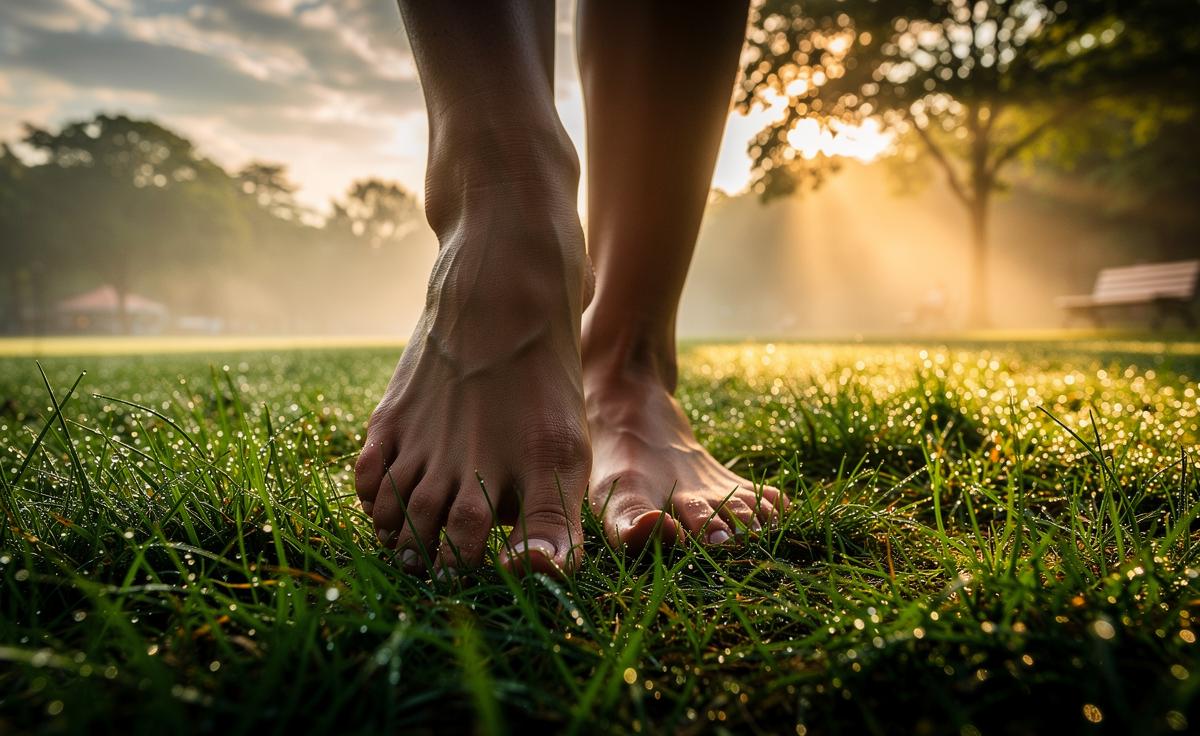
There’s a quieter story here—one of attention and place. Barefoot walking often unfolds in green or blue spaces where mind and breath slow down. The tactile novelty pulls focus out of rumination and into the feet. Notice the cool damp of morning grass, the granular give of sand, the prickle of pine needles. This is embodied mindfulness, a simple, portable practice that many find steadies mood and eases tension. Some early work links grounding sessions to improved HRV, a proxy for vagal tone and stress resilience. It’s not a cure-all, but it is a low-cost nudge toward calm.
Think of the ritual effects as well. You step outside, leave the inbox behind, and meet weather and light on their own terms. Sunlight helps anchor circadian rhythms; natural textures disrupt autopilot. People who dislike meditation sometimes find this practice more approachable because the body leads the mind. Short, regular barefoot walks can become bookends to the day—five minutes at dawn, five at dusk—producing a sense of continuity and control. For those juggling work and family, that small slice of sensory clarity can be disproportionately restorative.
Safety, Hygiene, and Practical Steps
Risks exist, but they’re manageable with common sense. Urban pavements hide glass shards, metal burrs, and hot tarmac. Parks can harbour thorns or the odd dog mess; locker rooms carry fungal spores. If you have diabetes, peripheral neuropathy, or a history of slow-healing wounds, prioritise protection and talk to a clinician first. If in doubt, keep it brief, choose clean ground, and inspect your soles after every session. A tetanus jab up to date is sensible for anyone active outdoors. Warm up calves and ankles to reduce strain on the Achilles and plantar tissues as you reintroduce natural loading.
Think “progressive, not heroic”. Begin on grass or packed sand, surfaces that spread pressure and soften variability. Add texture gradually—forest paths, then smooth stone, then short stretches of safe pavement. Wash and dry feet afterwards; let shoes breathe between wears. If your arches ache, scale back, roll the soles on a ball, and resume when settled. Consider a hybrid routine—barefoot at home, minimal shoes for errands, sturdier footwear for rubble and rush hour. The objective isn’t purity; it’s a smarter, stronger relationship with the ground you live on.
Walking barefoot is not a miracle fix, yet the blend of sensory richness, potential physiological effects, and quiet joy makes the habit worth exploring. The science is young; your feedback loop is immediate. Treat it like training—curious, incremental, personalised. If it helps you sleep, breathe easier, or feel steadier on your feet, you’ve gained something tangible. If not, you’ll still have learned how your body responds to the world underfoot. So, where might you safely take your first barefoot steps this week, and what would you want to notice most as you do?
Did you like it?4.4/5 (21)