In a nutshell
- 🥗 Prioritise smart nutrition: take 10 µg vitamin D Oct–Mar, diversify plants to feed the gut microbiome, and use food-first habits (kefir, oily fish, veg) while avoiding supplement megadoses.
- 🌞 Optimise sleep, light, and stress: target 7–9 hours, get morning daylight or a 10,000‑lux light box, limit evening screens, and use brief breathing drills to tame cortisol.
- 🏃 Train wisely in winter: favour moderate, consistent activity (about 150 minutes weekly) over all-out HIIT; warm layers, quick recovery, and timely protein/carbs reduce the “J‑curve” immunity dip.
- 💉 Stack public‑health wins: stay current with the flu jab and eligible COVID boosters, keep 20‑second handwashing, and mask when ill to lower transmission.
- 🏠 Improve indoor air: use ventilation, aim for 40–60% humidity, and add HEPA filtration or CO₂ checks in crowded rooms to cut viral load and bolster defences.
Winter in Britain can be bracing, beautiful—and brutal on the immune system. Colder air, shorter days, and more time indoors create a perfect storm for seasonal sniffles. The good news is that a few evidence-led tweaks can fortify your natural defences without upending your routine. From vitamin D strategy to smarter sleep and clean indoor air, these practical, UK-specific hacks are designed for busy lives. Think of them as a layered shield: no single fix is magic, but together they tilt the odds in your favour. Below, you’ll find clear steps, contrastive guidance (what to do—and when not to overdo it), and quick wins you can start today.
Smart Nutrition That Primes Your Defenses
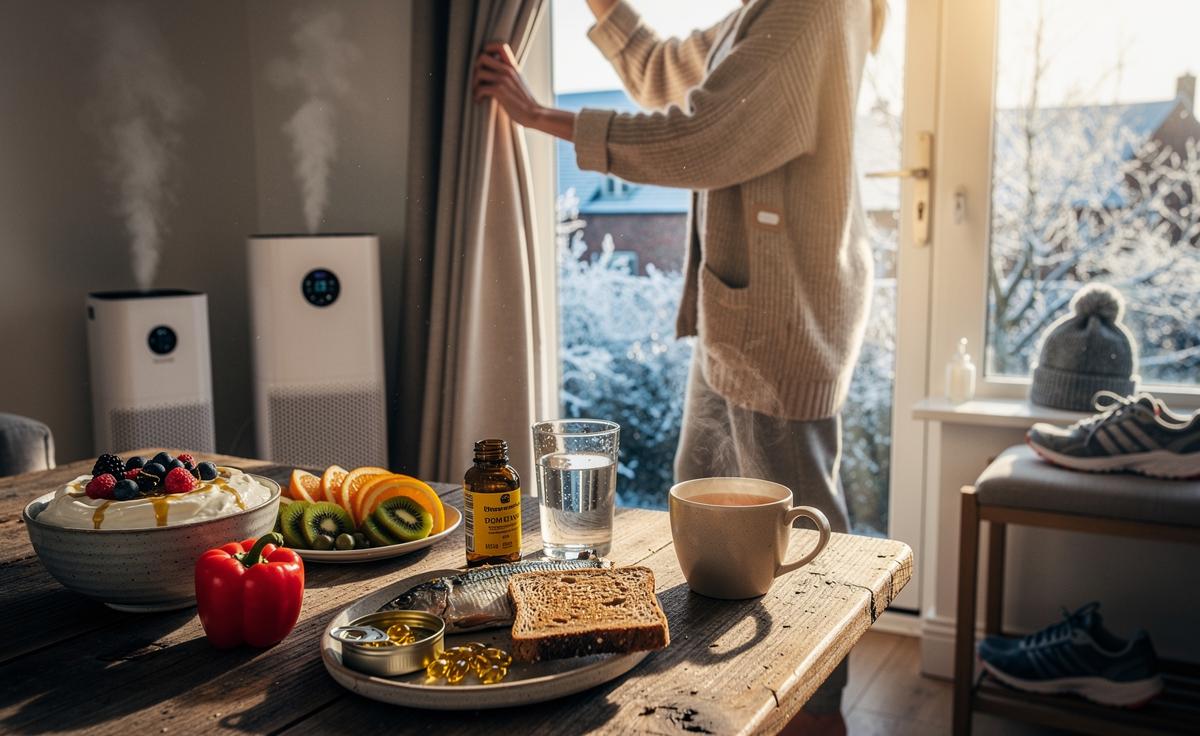
Diet isn’t a winter cure-all, yet it’s the quiet backbone of resilience. In the UK, the NHS advises everyone to consider 10 micrograms (400 IU) of vitamin D daily between October and March—a simple move with outsized impact, especially for those with darker skin, who cover up, or rarely see daylight. Pair that with a rainbow of produce to feed your gut microbiome, the immune system’s training ground. Small, repeatable habits beat heroic, short-lived efforts. Think: porridge with kefir, a handful of berries, tinned fish on toast, and a pot of veggie-rich soup simmering for the week.
Use these targets as guardrails, not gospel. Over-supplementing isn’t better; it’s wasteful at best, and risky at worst. If you’re pregnant, on medication, or have a condition affecting absorption, speak to your GP before adding supplements. Food-first remains the safest route for most nutrients—supplements fill gaps. Below is a quick-reference table to steer your shop and your plate.
| Nutrient | UK Food Sources | Daily Target / Notes |
|---|---|---|
| Vitamin D | Oily fish, eggs, fortified milk/plant drinks | 10 µg (400 IU) Oct–Mar; test if concerned |
| Vitamin C | Kiwi, peppers, citrus, berries | ~75–90 mg; one pepper or two kiwis does it |
| Zinc | Shellfish, pumpkin seeds, beans | ~7–9.5 mg; don’t exceed high-dose lozenges long-term |
| Selenium | Brazil nuts, eggs, tuna | 1–2 Brazil nuts meet most needs |
| Fermented foods | Kefir, live yogurt, sauerkraut, kimchi | Small daily portion supports gut diversity |
Pro tip: Batch-cook “immune bowls”: barley or brown rice, roasted veg, tinned mackerel, and a dollop of sauerkraut. Consistency—not complexity—is your winter superpower.
Sleep, Light, and Stress: The Daily Rhythm Reset
Short daylight can derail circadian rhythms, shaving sleep quality just when we need it most. Aim for 7–9 hours with a stable wake time. In winter, a bright morning “anchor” pays off: throw open the curtains, step outside for 5–10 minutes, or use a certified 10,000‑lux light box while you read the headlines. Morning light cues your body clock; evening light confuses it. After dusk, nudge melatonin by dimming lamps and parking screens an hour before bed.
Stress is the stealth saboteur. Cortisol spikes blunt immune vigilance, so build micro-rest into weekdays. A two-minute box-breathing break—inhale 4, hold 4, exhale 4, hold 4—can lower arousal quickly. Keep caffeine before midday, and adopt a wind-down ritual: warm shower, paperback, and a to-do “brain dump” to clear mental tabs. What you repeat, your nervous system remembers.
- Why more sleep isn’t always better: Oversleeping can leave you groggy and is linked with lower mood. Target regularity, not marathon lie-ins.
- Daylight snack: A brisk noon walk beats an extra espresso.
- Bedroom basics: 16–18°C, dark, quiet; reserve the bed for sleep and intimacy.
- Supplement caution: Melatonin isn’t routinely recommended in the UK without medical advice; try light and routine first.
Cold-Weather Training and Recovery: Why More Isn’t Always Better
Exercise is a potent immune tune-up—until it isn’t. The “J-curve” effect shows moderate activity lowers infection risk, while heavy, unrelenting training can nudge it up. Aim for 150 minutes of moderate or 75 minutes of vigorous activity weekly, plus two strength sessions. In the cold, swap ego runs for consistency and warmth: layer up, cover extremities, and finish sessions before you shiver.
Pros vs. Cons for winter workouts:
- Pros: Better nasal clearance, improved mood, higher sleep quality, metabolic warmth.
- Cons: Overreaching can suppress mucosal immunity; sweat-chill increases stress load; indoor classes in poor air may raise exposure.
A brief case study: over a dreich January, a reader training for a 5K cut HIIT from five to two days, added two easy jogs, and kept a strict cool‑down plus a hot shower within 15 minutes. Result? Fewer niggles and no midwinter cold for the first time in years. Train hard enough to adapt, easy enough to recover. Refuel within an hour—carbs to replenish, protein (20–30 g) to repair—and sip something warm to reheat from the inside out.
Vaccines, Hygiene, and Air: Low-Drama Wins
This is the unglamorous, high-yield layer. The flu jab and eligible COVID boosters remain the most powerful tools to cut severe illness; UKHSA analyses show significant reductions in hospitalisation among vaccinated groups each season. If you’re eligible (over-65s, certain conditions, carers), book with your GP or pharmacy. For everyone: 20-second handwashing and not touching your face are still stunningly effective.
Indoors, target clean, not sterile, air. Good ventilation reduces viral load before it reaches you. Crack windows between meetings or use a HEPA purifier in busy rooms. Keep humidity roughly 40–60% to help nasal defences—too dry, and your airways struggle; too damp, and mould thrives. Consider a simple CO₂ monitor as a proxy for stale air in gatherings.
| Intervention | Impact | Cost/Effort |
|---|---|---|
| Flu/COVID vaccination | High for severe disease reduction | Low; annual/seasonal appointment |
| Handwashing + tissues | High for day-to-day transmission | Low; build into routine |
| Ventilation/HEPA | Medium–High in crowded spaces | Varies; open windows or invest in purifier |
| Masking when ill | Medium; protects others and you | Low; courteous in clinics/transport |
Reality check: You won’t control every exposure. Stack small, reliable protections and you’ll shift the odds without living like a monk.
Winter resilience isn’t about biohacking bravado; it’s the calm choreography of food, light, movement, air, and public-health basics. Start with one change—vitamin D with breakfast, a bright morning walk, a tidy bedtime—and build from there. Keep your training moderate, your hands clean, and your indoor air fresh. Perfection is optional; progress is protective. Which of these winter health hacks will you try first this week—and what’s the one barrier you’d like help troubleshooting next?
Did you like it?4.5/5 (22)