In a nutshell
- 🐜 A chalk line halts ants by disrupting pheromone trails and altering surface traction, creating instant confusion that makes columns stall or turn back.
- ✏️ Composition matters: dusty calcium carbonate (school/sidewalk) and grippy magnesium carbonate (climbing) work best; waxy tailor’s chalk is poor; moisture quickly reduces effectiveness.
- 🛠️ Application tips: clean and dry the area, draw a 2–3 cm continuous barrier, fill crevices, extend to block detours, and reapply after sweeping, mopping, wind, or rain.
- 🧯 Use as part of a plan: treat chalk as a temporary stop-gap while sealing entry points, removing food cues, and placing species-appropriate baits for long-term control.
- ⚠️ Know the limits and alternatives: some ants cross narrow or damp lines; dust can be messy—consider diatomaceous earth, talc, or petroleum jelly in dry, sheltered spots.
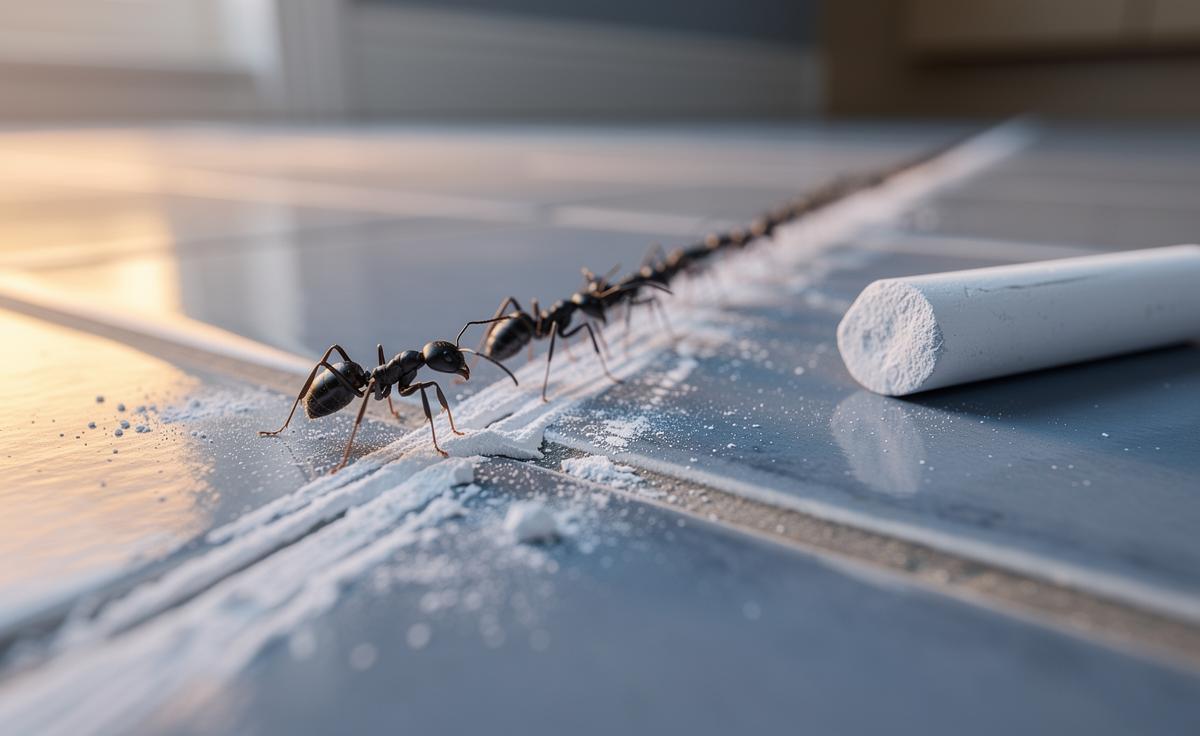
Picture the scene: a dark train of ants advances across your kitchen tiles and, with a single swoop of chalk, the march stalls. It looks like magic. It isn’t. A chalk line creates a sudden, powdery frontier that interferes with the way ants communicate, navigate and stay organised. Because they follow chemical cues and tactile landmarks, this strange boundary scrambles their senses, buying you precious time and preventing a full-blown invasion. It’s a fast, low-tech fix—cheap, safe, and surprisingly effective for short-term control. Here’s the science behind the trick, how to do it properly, and when to reach for alternatives that offer longer-lasting protection.
Why a Simple Chalk Line Confuses Ants
Ants don’t wander randomly. They read the world through pheromone trails, chemical highways laid by scouts and reinforced by the colony. A crisp chalk line acts like a sudden fog on that road. The fine particles cling to antennae and tarsi, mask scent molecules and roughen the surface. To an ant, that crisp grout line it trusted a minute ago becomes an alien landscape. Ants stop because the chalk disrupts their chemical map. Some turn back, others mill about, a few try to test the edge—and many simply refuse to cross.
There’s more at play than smell. The powder shifts underfoot. Micro-grains alter traction and texture, so minute that we barely notice but significant to an insect calibrated to consistent surfaces. Chalk can also absorb or scatter odour cues, diluting the trail fidelity that keeps a column cohesive. It’s not poison. It’s interference. And it works fast, which is why you often see an instant pile-up at the boundary. That said, determined species or hungry workers may eventually breach a thin or smudged line, so technique and maintenance matter.
Composition Matters: The Science Inside Different Chalks
Not all chalks behave the same. Traditional school chalk is largely calcium carbonate, a soft mineral that leaves a generous, dusty deposit—ideal for creating the powdery barrier ants dislike. Tailor’s chalk, by contrast, often contains wax and clay, gliding on fabric with minimal residue; it draws a line you can see but that ants barely “feel”. Builder’s reel chalks vary by brand; some are vividly pigmented but less dusty. The more free powder on the surface, the stronger the disruption. Gym or climbing chalk, usually magnesium carbonate, is highly absorbent and grippy; many householders find it particularly effective on smooth tiles and skirting.
Pigments don’t matter to ants, but particle size, hydrophobicity and binders do. A chalk that cakes or clumps leaves gaps; one that dusts evenly creates a continuous sensory barrier. Moisture kills performance: wet chalk consolidates, odours persist, and the “fog” becomes a film. If you’re buying fresh, choose a soft, dusty stick or a loose powder you can dab on.
| Chalk Type | Main Composition | Residue/Dust | Ant-Blocking Tendency | Notes |
|---|---|---|---|---|
| School/Sidewalk Chalk | Calcium carbonate | High | Good | Cheap, easy to reapply |
| Climbing/Gym Chalk | Magnesium carbonate | High | Very good | Grippy, effective on smooth surfaces |
| Tailor’s Chalk | Wax/clay blend | Low | Poor | Waxed lines rarely work well |
| Builder’s Reel Chalk | Varies | Medium | Mixed | Check for fine, dry formulation |
How to Draw and Maintain an Effective Barrier
Start with a clean, dry surface. Wipe the path with a damp cloth, let it dry, then draw a continuous line where the ants enter—door thresholds, window sills, skirting board gaps, pipe penetrations. Go bold: aim for a band 2–3 cm wide, then double back to build powder density. A thin, broken line will fail. For uneven brickwork, tap a little loose chalk into crevices to remove stepping-stones. On glossy tiles, gym chalk offers extra grip and coverage.
Watch how the column reacts. If ants bunch and probe for a bypass, extend the line to block detours. Reapply after sweeping, mopping or rain, and especially after heavy ant traffic that compacts the powder. Treat chalk as a temporary barrier while you fix the root cause: crumbs, sticky spills, compost caddies, and exterior nests. Seal gaps with silicone, fit brush strips to doors and, indoors, switch to closed bait stations once the immediate incursion is halted. Chalk buys time; good housekeeping and proofing win the war.
Limits, Myths, and Safer Alternatives
Chalk is not a silver bullet. Some species—especially larger carpenter ants or aggressive Argentine ants—will eventually cross, particularly if the line is narrow or damp. Outdoors, dew and wind degrade the barrier quickly. And while chalk is generally non-toxic, the dust can be messy around electronics and may irritate those with respiratory sensitivities. Chalk repels; it doesn’t poison. The myth that a chalk line “kills ants” persists, but the effect is mechanical and behavioural, not chemical lethality.
If you need more staying power, consider diatomaceous earth (food grade) for dry, sheltered edges; its microscopic shards abrade waxy cuticles, desiccating insects. Petroleum jelly creates a slick moat on wires or bin rims. Talc or baby powder offers a similar, though often weaker, disruption. For long-term control, place protein or sugar baits matched to the species and season, then seal entry points. In kitchens and playrooms, chalk remains a handy first responder: quick to deploy, easy to clean, and gentle compared with sprays that linger on surfaces.
Chalk draws a curious line between science and simplicity: a child’s toy that stops a superorganism in its tracks. By hijacking the ants’ reliance on pheromone trails and tactile consistency, a dusty band creates confusion, then retreat. Use it to halt an invasion, then follow up with sealing, cleaning and targeted baits to end it. Think of chalk as a pause button, not a permanent solution. What entry points could you secure today—and which material from your cupboard might become your next fast, safe barrier against the tiniest trespassers?
Did you like it?4.3/5 (26)