In a nutshell
- 🍋 Lemon’s citric acid dissolves hard water deposits and loosens oxidised oils, restoring fibre reflectivity; ideal for cotton and linen, caution with wool, silk, and elastane.
- ⚙️ One-wash method: add 120–180 ml lemon juice (or 2–3 tbsp citric acid crystals) with detergent, run at 40–60°C; pause 30 minutes mid-cycle for heavy yellowing, then sun-dry to boost brightness.
- ⚠️ Safety first: Never mix with chlorine bleach; patch-test trims and dyes; avoid prolonged acidic soaks on delicate or elastane-rich fabrics and keep acids away from metal embellishments.
- 🧼 Real-world results: brighter whites in minutes, lifted greying on tea towels, reduced odours, and crisper school shirts—especially effective in limescale-prone, hard-water regions.
- 💷 Smart and sustainable: low-cost, readily available, biodegradable; for stubborn historic yellowing, repeat across washes or alternate with an oxygen-based whitener on a different day.
Britain’s whites are under siege. Hard water leaves a grey cast, quick cycles underperform, and chlorine bleach feels too harsh for everyday loads. Enter a bright, thrifty fix hiding in your fruit bowl: lemon juice. This gentle acid lifts dinginess, tackles odours, and coaxes cotton back to brilliance in a single wash. It’s fast. It’s low-cost. It smells like summer. Most importantly, it works with the kit you already own, from a 15‑minute quick programme to a standard 40°C cotton cycle. One wash can make a tired shirt look shop-fresh, and you won’t be scrubbing collars for ages. Here’s how to get it right, safely, every time.
Why Lemon Juice Works on Whites
At the heart of lemon’s laundry magic is citric acid. It’s mildly acidic, which helps dissolve mineral films from hard water that give white fabrics their dreary grey tone. Those deposits trap soil and oils; remove them and the cloth reflects more light, appearing instantly brighter. Citric acid also acts as a light chelating agent, binding the calcium and magnesium that cling to fibres. That’s important across much of the UK, where limescale wins too many domestic battles. Restore the fibre’s clean surface, and the white returns.
There’s a second, subtle effect. Lemon’s acidity can loosen oxidised body oils that set yellow stains on pillowcases and shirt underarms. Add a sunny drying day and you get a gentle photo-brightening nudge: UV helps disperse leftover chromophores without the harshness of chlorine. Crucially, lemon juice is typically safe for everyday cotton and linen at 30–60°C. Be cautious with wool, silk, and items labelled “dry clean only” — test first. And while lemon lifts odours, it won’t fix dye transfer; for that, a separate colour run remover is the smarter tool. Still, for routine dinginess, it’s a minor miracle.
One-Wash Method: Quick Steps and Ratios
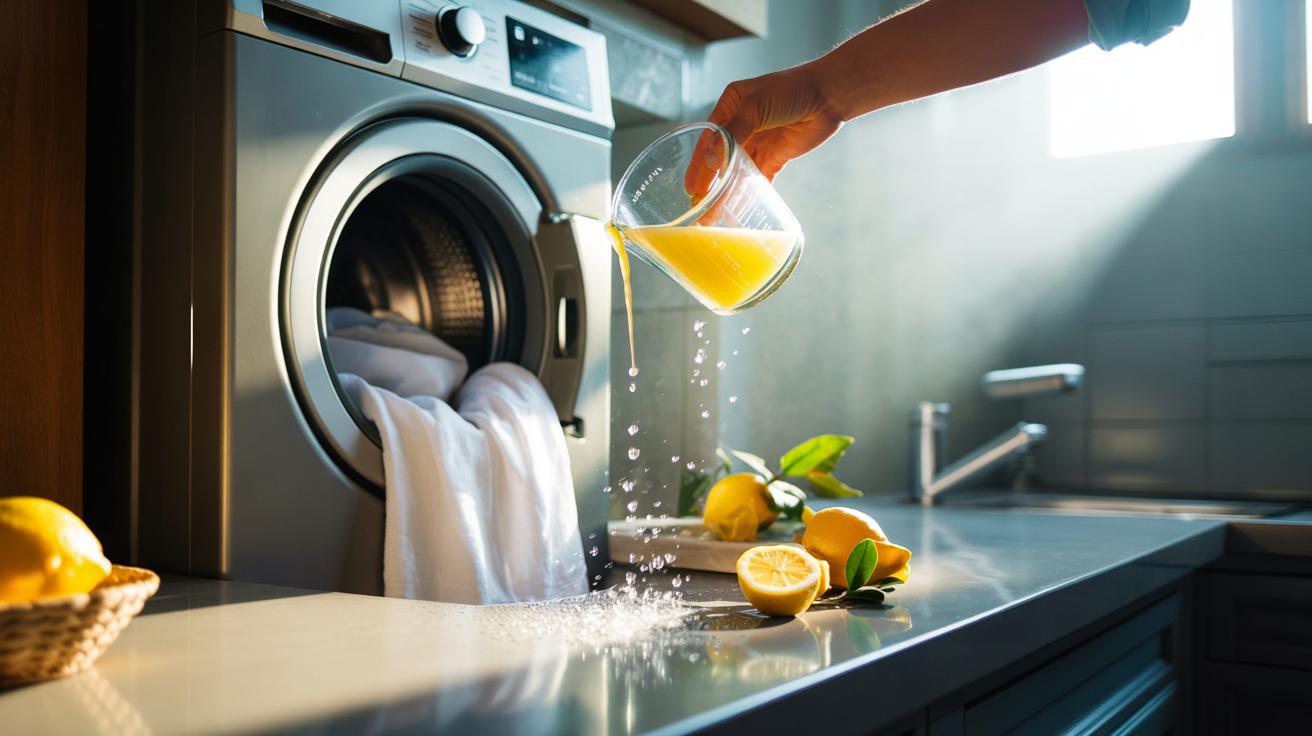
For a standard 6–8 kg machine load of white cottons, pour 120–180 ml of fresh lemon juice (or 2–3 tbsp food-grade citric acid crystals dissolved in hot water) directly into the drum or the detergent drawer. Add your usual enzyme detergent. Choose 40°C for shirts and bedding; go to 60°C for towels if fibres allow. Never add chlorine bleach to this mix. Run the cycle. That’s it — no extra waiting, no secondary rinse drama. For heavy yellowing, pause the cycle after the first 10 minutes to soak for 30 minutes, then resume. Sun-dry where possible to amplify brightness and freshen naturally.
If hand-washing a smaller batch, fill a basin with 5 litres warm water, add 60 ml lemon juice, submerge for 20 minutes, then rinse and launder as normal. Spot-pre treating collars: dab lemon juice onto the band, leave five minutes, then toss in the wash. Avoid metal-tipped embellishments and test elastane-rich blends for resilience. Keep acids out of contact with chlorine products at all times.
| Load/Item | Lemon/Citric Acid | Water Temp | Time | Notes |
|---|---|---|---|---|
| Full machine (6–8 kg) | 120–180 ml juice or 2–3 tbsp crystals | 40–60°C | One cycle | Add with detergent; no bleach |
| Hand-basin (5 L) | 60 ml juice | Warm | 20–30 mins | Rinse, then normal wash |
| Spot treatment | Neat juice | Cold | 5–10 mins | Patch test first |
Safety, Fabric Care, and Real-World Results
There’s one golden rule: never mix acids with chlorine bleach. That includes hypochlorite-based stain removers lurking in cupboards. The combination can release hazardous gas. Keep lemon for a separate wash or for the main cycle when using regular detergent. For trims, buttons, and embroidery, patch-test on an inside seam. While citric acid is gentle, repeated acidic soaks could encourage fading in some delicate dyes or accelerate wear in elastane over time. Use sparingly on technical sports fabrics.
What should you expect? White school shirts regain snap in a single wash, tea-towel greying lifts, and pillowcases lose that faint yellow halo that screams “old”. Odours ease because acid helps disrupt bacteria-friendly residues that standard low-temperature cycles miss. In hard-water areas, the effect is strikingly consistent: less limescale equals brighter whites. Costs remain modest — a couple of lemons or a spoon or two of citric acid beats speciality boosters. If you’re chasing a hotel-sheet look, finish with line-drying in bright light and a cool iron to flatten fibres so they reflect more evenly. Small tweaks, big gains.
Lemon juice won’t replace every laundry weapon, but it earns a front-row spot for quick revivals, hard-water battles, and budget-friendly brightness. It’s readily available, biodegradable, and simple enough for a midweek wash with minutes of effort. For stubborn historic yellowing, repeat across a few cycles or alternate with an oxygen-based whitener on a different day to avoid chemistry clashes. Above all, keep it simple: measure, wash, sun-dry, admire. Ready to try the one-wash citrus trick on your own whites — and which garment will you rescue first?
Did you like it?4.5/5 (29)