In a nutshell
- 🔆 Photobleaching explained: natural UVA/UVB break stain-causing chromophores; damp fibres generate reactive oxygen species that turn yellowing molecules colourless.
- 🧼 Practical method: wash, pre-treat if needed, then line-dry while still damp, face stains toward the sun, flip midway, and tailor exposure (1–5 hours) to conditions for even whitening.
- 🧪 Fibre care & safety: protect elastics, wool, silk from long, harsh exposure; keep items moist to avoid brittleness and remember UV polishes whites but is not a disinfectant.
- 🌿 Environmental gains: sunlight is a free, residue-free bleach that reduces chemical use, slashes tumble-drying energy, and lowers your laundry’s carbon footprint.
- 🧭 Troubleshooting & seasons: match treatment to stain type, use winter sun via south-facing windows and reflective surfaces, track the UV index, and “strip” detergent build-up before sun cycles.
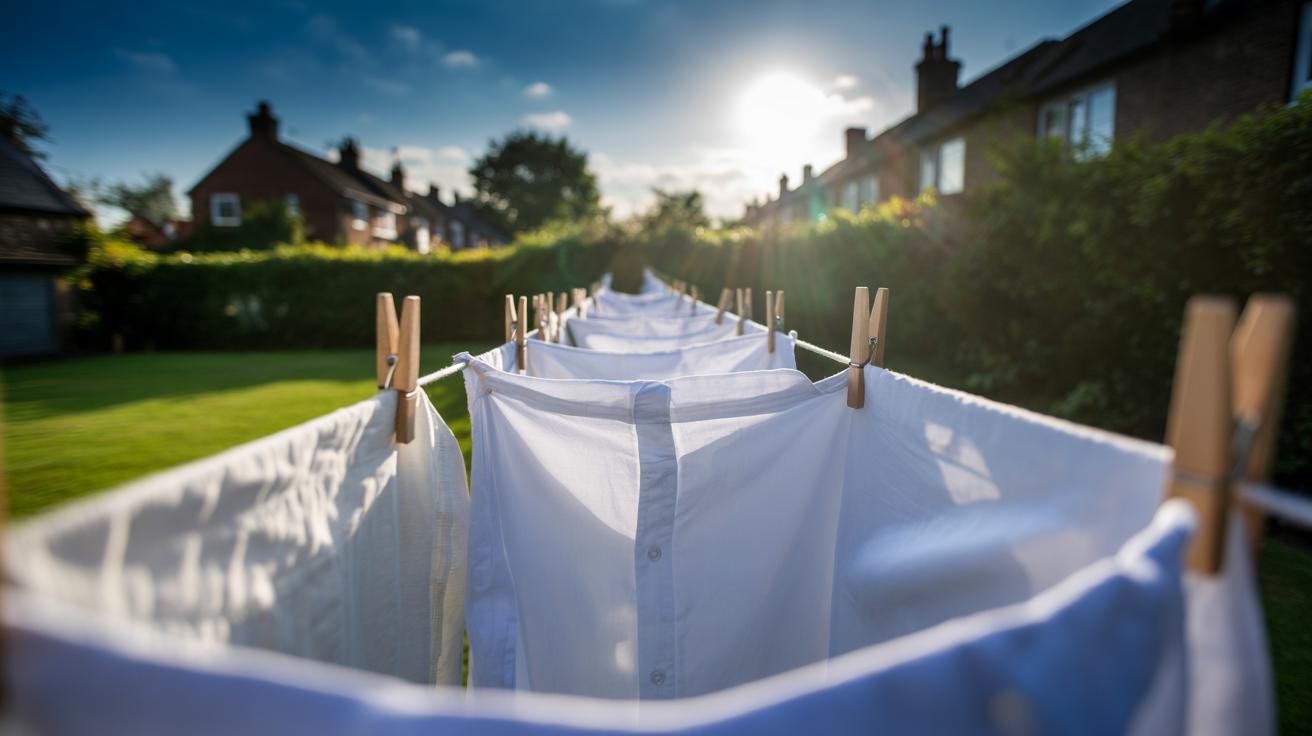
Britons have long trusted the washing line, but there’s a quieter magic at work than a stiff breeze. When you dry on the line, sunlight does more than wick away moisture: its natural UV rays gently strip away the yellowing that dulls cottons and linens. No harsh chlorine, no perfume fog. Just photochemistry. It’s old wisdom meeting clean science. In an age of soaring energy prices and itchy labels, that feels timely. Sunlight is a free bleach that leaves no residue, and—handled well—it can outperform many bottles under your sink. Here’s how natural UV restores fabrics brilliantly, and how to do it safely, season after season.
The Science of Sunlit Whitening
The greying we see on shirts and sheets comes from chromophores—molecules lodged in fibres that absorb visible light and throw back a dingy cast. Sunlight, rich in UVA and a pinch of UVB, breaks those chromophores apart in a process called photobleaching. When damp fibres meet oxygen, UV energy spurs the formation of reactive oxygen species—notably singlet oxygen and traces of hydrogen peroxide—that attack the double bonds responsible for colour. The result is smaller, colourless fragments. Light does the hard work while water acts as a catalytic partner.
UVA penetrates deeper and, crucially, still works through most window glass; UVB is punchier but largely filtered by glass and the atmosphere in the UK. Both contribute enough energy on bright days to lift tea, wine, and grass stains after a standard wash. That’s why whites look cleaner after a sunny dry even without bleach. Some modern detergents also leave minerals or optical brighteners that respond to light, enhancing apparent whiteness by reflecting more blue. The upshot: let the sky top up your laundry’s luminosity for free.
Practical Method: From Soak to Line
Start clean. Run a normal wash with a quality detergent, avoiding heavy doses of fabric softener that can dull fibres. For stubborn marks, dab with a paste of bicarbonate and water or a drop of oxygen bleach; rinse well. The key step: peg items to the line while still damp. Water catalyses those light-driven reactions. Spread fabric without overlaps, pull seams flat, and face stains toward the sun. Flip halfway through to even the exposure. On a crisp, bright UK day, one to three hours often suffices; in midwinter, double it and be patient.
Position matters. South-facing gardens catch steady midday rays; balconies work too. Through-glass drying on a sunny windowsill can refresh socks and baby cloths thanks to UVA transmission. Check care labels for colourfast warnings, and shield prints or elastics by tucking them inside. If you can read a newspaper comfortably outdoors, there’s enough light to make a difference. A simple rule: damp, flat, and sunward.
| Condition | Suggested Exposure | Notes |
|---|---|---|
| Bright summer sun | 1–2 hours | Flip at 45–60 minutes for even whitening. |
| High cloud/bright overcast | 2–4 hours | UVA still active; keep fabrics damp. |
| Winter low sun | 3–5 hours | Use south-facing spots or windowsills. |
| Through window glass | 2–6 hours | UVA passes; UVB mostly blocked. |
Safety, Fibre Care, and Environmental Gains
Sun whitening is gentle compared with chlorine bleach, but not risk-free. Prolonged, intense exposure can desiccate fibres. Never leave delicate elastics baking for hours. Cotton and linen usually tolerate long sessions; wool and silk prefer shade and brief bursts. Polyester resists yellowing but can become brittle if overheated on a hot rail. If in doubt, shorten sessions and keep items moist with a spritz. Avoid pegging garments by shoulder seams for days—UV plus tension can distort shapes.
The environmental upside is compelling. Using sunlight instead of chemical bleaches reduces waterborne chlorine by-products and cuts a load’s carbon footprint. Line-drying avoids tumble energy, trims bills, and leaves no synthetic fragrance residues on skin. Compared with oxygen bleach, UV photobleaching generates reactive oxygen on the spot and then disappears—no packaging, no transport emissions. That said, don’t rely on sunshine for sterilisation. It will reduce bacterial counts on nappies and tea towels, but it’s not hospital-grade disinfection. Wash hot when hygiene matters. Think of UV as a polish for whites, not a substitute for sound laundering.
Troubleshooting Stains and Seasonal Workarounds
Different stains respond differently to light. Protein-based marks—milk, sweat—lift best after a cold-water rinse and a normal wash; then let UV finish the job. Tannins from tea or wine often need a pre-soak in oxygen bleach before the line. Grease? Detergent and warm water first; the sun cleans up residual yellowing but won’t move oil on its own. Avoid bar soaps with optical brighteners on only part of a garment; they can cause halos that UV accentuates. Uniform preparation equals uniform whitening.
In winter, play the long game. Use a south-facing window, rotate items through a bright sill, or exploit reflective surfaces—light bricks, pale walls, even snow—to bounce extra rays. Track the UV index in your weather app to time sessions; anything above 1 can help if fabrics stay damp. For set-in dinginess from detergent build-up, “strip” once: a hot soak with washing soda and a mild oxygen bleach, thorough rinse, then sun. Repeat sun cycles are safe and cumulative. If colour items creep in, peg them in shade or inside-out to avoid fade lines. Small, regular exposures beat rare marathon sessions.
Sunlight won’t write ad copy on your washing line, but it will write off the gloom in your whites. It’s chemistry we can see: photons, water, oxygen, and patience conspiring to restore lustre. The method costs nothing, slashes chemicals, and turns laundry day into a quiet ritual under a changing sky. Try it once on an old pillowcase and watch the fabric revive. Then scale up. Where will you claim your patch of sun—garden rail, balcony, or bright kitchen window—and what tired white will you transform first?
Did you like it?4.6/5 (28)