In a nutshell
- 🧪 The science: acetic acid in white distilled vinegar dissolves mineral and detergent build-up, lifts odours, and restores fibre reflectivity for visibly brighter whites.
- ⏱️ Quick method: a 5-minute soak using 250 ml vinegar per 2 L cool–lukewarm water; agitate gently, rinse thoroughly; machine tip: add ~100 ml to the rinse drawer to prevent re-deposit.
- ⚠️ Safety and fabrics: Never mix vinegar with chlorine bleach; best for cotton and linen; avoid silk, wool, and elastane-heavy blends; limit exposure to five minutes and test trims.
- 💧 Hard-water help: Vinegar tackles hard water minerals that cause greying; keep machines clean with a monthly hot cycle and 500 ml vinegar; dose detergent correctly to curb residue.
- ✨ Extra perks: Acts as a natural fabric softener, improves drape, and neutralises odours; for stubborn yellowing, use a bicarbonate paste after the soak; line-dry for gentle UV lift.
Whites rarely turn grey overnight. It’s the slow creep of detergent residue, hard-water minerals and body oils that dims their sparkle. A quick, clever fix sits in the kitchen cupboard: white distilled vinegar. In just five minutes, its mild acidity loosens the film that muffles brightness, restoring a clean, luminous look without harsh bleaches. The method is swift and forgiving, and the finish often surprises: softer handfeel, fresher smell, more light bouncing off the fibres. A short soak, a thorough rinse, and your cottons and linens step out looking newly awake. For busy households and tight schedules, this is a low-cost, eco-minded reset that genuinely works.
Why Vinegar Makes Whites Look New Again
Think of greying laundry as a chemistry problem. Soap molecules cling. Minerals from hard water, chiefly calcium and magnesium, bind to fibres and trap soils. Over time, a faintly beige cast emerges. Acetic acid—the active component in household vinegar, typically 5%—shifts the pH, dissolving mineral deposits and loosening the electrostatic grip of detergent residue. With that film gone, light reflects more cleanly from each fibre, making whites appear brighter to the eye.
There’s more at play. Vinegar can help dislodge deodorant and alkali build-up under arms, a frequent cause of yellowing. It also neutralises lingering odours by knocking back volatile compounds rather than masking them with fragrance. The result feels different too: fabric that’s been stripped of residue moves more freely, so it drapes better and feels less scratchy. It’s a subtle change with an outsized visual payoff.
Importantly, this is a mild acid, not an industrial cleaner. Used briefly and in the right dilution, it respects cotton and linen, which tolerate acidity well for short periods. That’s why a targeted five-minute soak is so effective: strong enough to shift the film, gentle enough to preserve the cloth.
The 5-Minute Soak: Step-by-Step Method
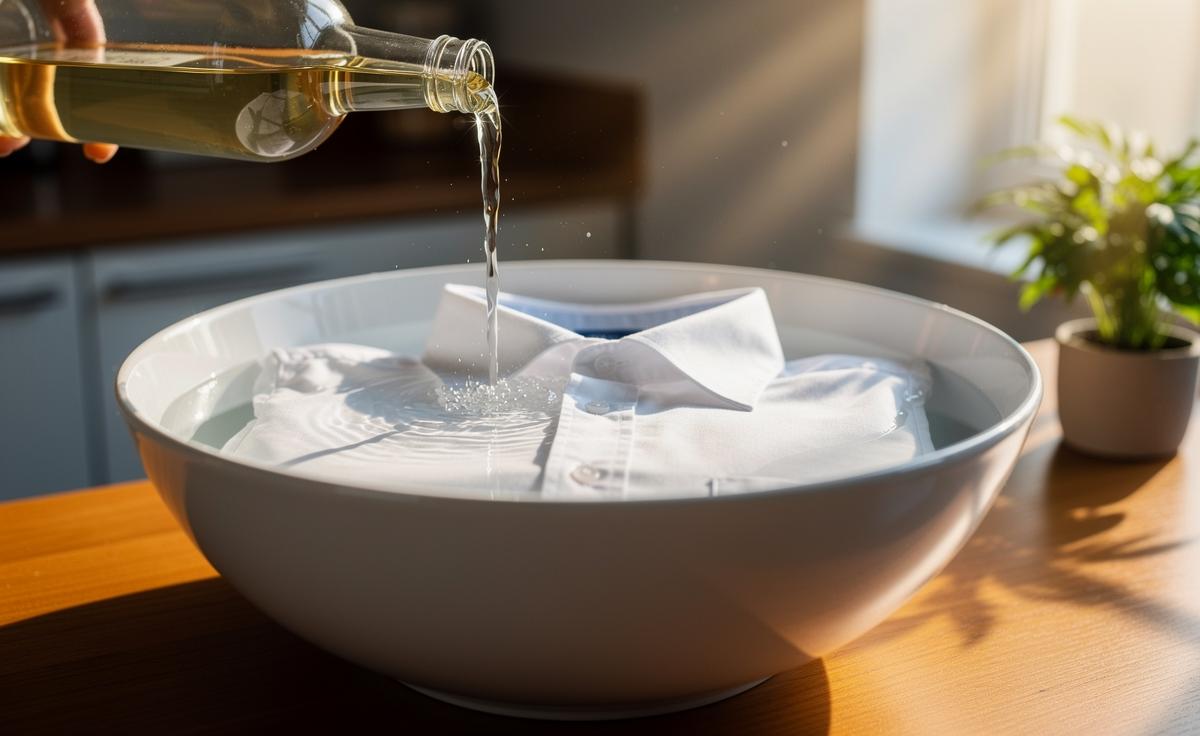
First, separate genuinely white garments from lights and colours. Check labels for “dry clean only” or silk/wool content; set those aside. Fill a clean basin with cool or lukewarm water—about 2 litres is plenty for a few shirts or a set of pillowcases. Add 250 ml of white distilled vinegar (5% acidity), stirring to distribute evenly. Submerge the garments, agitating gently so the solution reaches seams, cuffs and high-friction zones.
Five minutes is enough for a quick reset. While soaking, swish the items once or twice. Lift one piece and you’ll often feel the slip return as residues release. Drain the basin, then rinse thoroughly under cool running water until the faint tang disappears. Spin on a short cycle or press in a towel to remove excess moisture. Dry in indirect light; high heat can set any remaining body oils. For machine users, you can also add a small splash—about 100 ml—to the rinse drawer to prevent re-deposit.
Keep this simple reference to hand:
| Vinegar Type | Water Ratio | Soak Time | Best For | Avoid With |
|---|---|---|---|---|
| White distilled (5%) | 250 ml per 2 L | 5 minutes | Cotton, linen, towelling | Silk, wool, elastane-heavy blends |
Safety, Fabrics, and What to Avoid
Never mix vinegar with chlorine bleach. The reaction releases chlorine gas, which is dangerous even in small, poorly ventilated spaces. Keep a clear rule: vinegar for the soak, bleach never in the same session, bucket or machine cycle. If you do use oxygen-based whiteners at another time, rinse well between steps and avoid simultaneous use to prevent neutralising effects.
Fabric-wise, short acidic soaks suit cotton and linen. They’re less friendly to silk, wool and elastane-rich blends, where acidity and moisture can distort protein fibres or fatigue elastic. If in doubt, test a hidden seam for colourfastness, especially on trims, embroidery or optical-brightened patches that may behave unpredictably. Metal buttons or copper rivets are fine for five minutes, but rinse promptly to prevent dulling.
Water quality matters. In hard-water postcodes, mineral load amplifies greying; vinegar shines here because it chelates those deposits. That said, avoid long soaks “just in case.” Prolonged exposure offers no extra brightness and may stress delicate constructions like bra elastics or printed graphics. Stick to five minutes, rinse thoroughly, and you’ll get the glow without the risk.
Beyond Brightness: Added Perks and Troubleshooting Tips
The side benefits are quietly impressive. Vinegar in the rinse acts as a natural fabric softener by clearing detergent residues that stiffen fibres, so towels regain loft and T-shirts drape more naturally. It also tamps down odours from sportswear and bedding, not with perfume but through acid-base neutralisation that removes the source. For allergy-prone households, the fragrance-free finish is a relief.
If yellowing lingers—common at collars and underarms—try a two-step approach. After the five-minute vinegar soak and rinse, dab the area with a paste of bicarbonate of soda and water, leave 15 minutes, then launder as normal. Don’t combine bicarb and vinegar in the same bowl; the fizz looks dramatic but cancels cleaning power. For tannin stains like tea, blot first, then rely on a standard wash after your vinegar reset.
Machine maintenance helps too. Run a hot maintenance cycle with 500 ml vinegar monthly to clear internal soap scum that redeposits on laundry. Use correct detergent dosing; excess soap is the chief culprit behind dullness. Finish with line-drying when you can—UV light offers a gentle brightening effect, but avoid scorching midday rays that can yellow plastics and degrade elastics.
In five spare minutes, a bowl, and a cup of white distilled vinegar, dulled whites rebound with surprising clarity. The chemistry is simple, the cost tiny, and the habit easy to repeat between full washes or whenever towels feel flat. This is the kind of everyday fix that keeps wardrobes fresher for longer while steering clear of harsh bleaches and heavy perfumes. Ready to give your sheets or favourite shirt a quick acid reset this evening, and what will you brighten first?
Did you like it?4.7/5 (26)