In a nutshell
- 🧪 Why ketchup works: mild acids (acetic, citric) plus salt dissolve copper oxides on brass gently, restoring shine without abrasion.
- 🧼 Step-by-step: confirm solid (not plated/lacquered), degrease, apply a thin film for 5–10 minutes, light circular rub, thorough rinse, dry and buff.
- ⏱️ Pro tips: use short, controlled dwell times; never let acids dry; repeat brief cycles for stubborn tarnish instead of extending one pass.
- ⚠️ Limits and risks: avoid on lacquered or brass-plated items and pieces with valued patina; patch-test and ensure you can rinse residues fully.
- ✨ Alternatives and protection: lemon with salt, a mild citric-acid dip, or commercial polishes; finish with microcrystalline wax and store dry to slow re-tarnish.
It sounds like folklore, yet every British homeowner who’s tried it knows the quiet thrill: a blob of ketchup turning sallow, lifeless brass bright again. Tarnish creeps in slowly, a film of copper oxides dulling the shine; the remedy sits in the fridge, unassuming and cheap. The trick relies on mild acids, a pinch of salt, and time. No fumes, no chalky residues, no special kit. Just your patience and a soft cloth. A dab removes tarnish effectively when applied correctly and rinsed thoroughly. Here’s how it works, when to use it, when not to, and how to keep that lustre longer than a Sunday roast.
Why Ketchup Works on Brass
Brass tarnish is mainly copper oxide and copper carbonate on the surface. These films scatter light, stealing that warm glow you bought the candlesticks for. Ketchup delivers a mild, controlled clean thanks to three allies: weak acids, salt, and water. Tomatoes bring citric acid; vinegar supplies acetic acid. Both dissolve oxides without biting aggressively into the underlying metal. Salt introduces chloride ions that help break up grime and encourage very light complexing of copper compounds. The water keeps it all mobile, while the paste-like body prevents runoff, letting chemistry linger where it’s needed.
Because it’s mild, ketchup reduces the risk of scratchy abrasion or over-cleaning, yet it still shifts most everyday tarnish. It’s not magic; it’s kitchen chemistry. The glossy shine you see after buffing is the bare brass catching light again. Think of ketchup not as a polish but a gentle tarnish remover, resetting the surface so you can finish with a protective wax or polish if you wish. Yes, it’s unconventional. But it’s also tidy, low-odour, and surprisingly consistent on solid brass.
| Component | Role in Cleaning |
|---|---|
| Acetic acid (vinegar) | Dissolves copper oxides and carbonates gently. |
| Citric acid (tomato) | Helps chelate copper ions for efficient removal. |
| Salt (sodium chloride) | Assists disruption of oxide layers; improves action. |
| Water | Moves acids across the surface; aids rinsing. |
| Tomato paste body | Clings to vertical or detailed areas; prevents runoff. |
The synergy matters: mild acids plus salt, held in place by a sticky matrix, make ketchup ideal for short, controlled dwell times. That balance is why a sandwich staple punches above its weight against dullness.
Step-by-Step: Cleaning Brass with Ketchup
Begin with identification. Is the item solid brass, brass-plated, or lacquered? A magnet helps: brass is non-magnetic, but plating often hides a magnetic base. Do not use ketchup on lacquered or brass-plated items you wish to preserve—you risk cloudy finishes or patchy removal. For solid, unlacquered pieces, wash with warm, soapy water to banish grease. Dry completely. Grease blocks the acids from touching the tarnish.
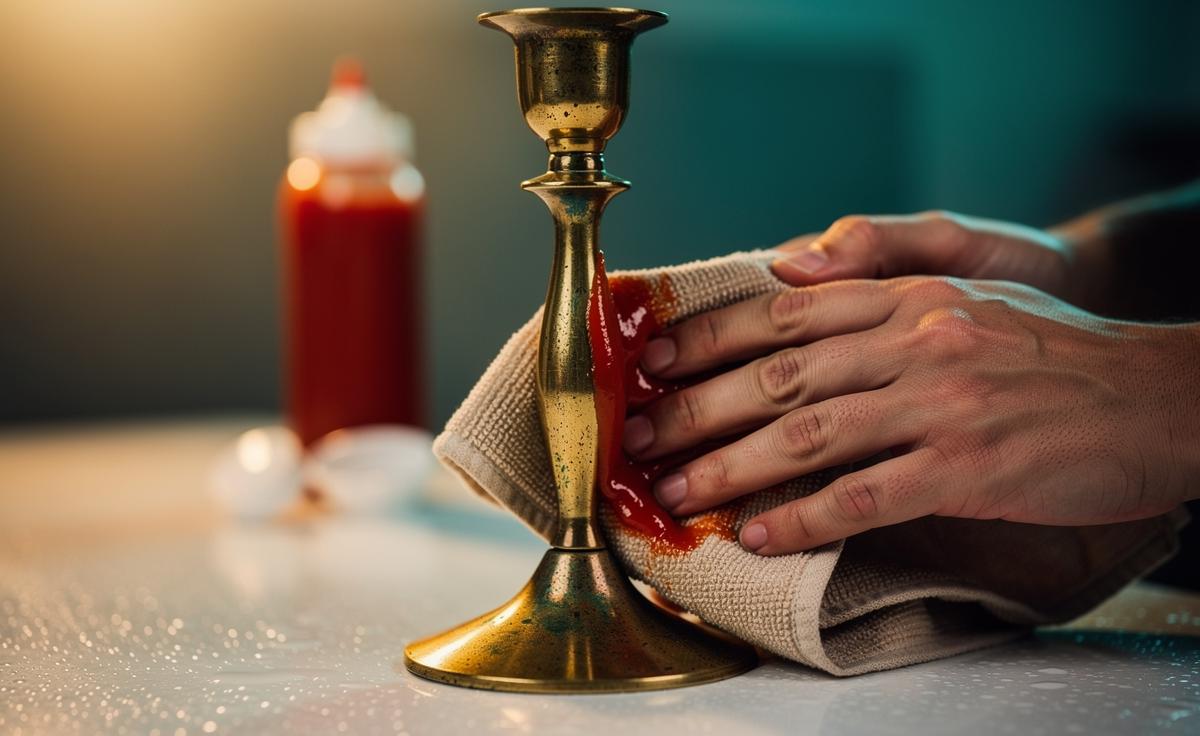
Squeeze a small line of ketchup onto a soft cloth, then spread a thin, even film over the brass. More isn’t better; the key is contact, not quantity. Let it sit for 5–10 minutes. For heavier tarnish, 15 minutes is fine, but monitor closely. Never let acidic cleaners dry on the metal. When dwell time ends, massage the surface with the same cloth, using light, circular motions. A soft toothbrush helps in crevices. You’re not sanding; you’re assisting the chemistry.
Rinse thoroughly under warm running water. This matters. Residual acids can attract fresh tarnish if left behind. Dry immediately with a lint-free towel, then buff with a clean microfibre cloth for sheen. For longer protection, apply a thin layer of microcrystalline wax or a neutral metal wax and buff again. If faint staining remains, repeat once more rather than extending a single long dwell—short, controlled cycles reduce risk. A bright result should appear with minimal effort and no harsh odour.
When to Skip Ketchup: Limits, Risks, and Alternatives
Ketchup excels with routine tarnish on solid brass, not every scenario. Avoid it on lacquered brass—you’ll haze or lift the clear coat. Be wary with brass-plated items: plating is thin, and any abrasion can expose the base metal. If a piece carries desirable patina, a ketchup clean may strip the character you prize. Ornate items with deep crevices can trap residue; if you can’t rinse thoroughly, don’t start. When in doubt, patch-test on an inconspicuous area and stop at the first sign of odd colour or streaking.
Prefer a different pantry route? Try a sliced lemon with a dusting of table salt, rubbed lightly and rinsed quickly, or mix a teaspoon of citric acid crystals in warm water for a timed dip (seconds, not minutes). Commercial brass polishes remain excellent for uniform results, especially on heirlooms, though they can be more aggressive. After any method, finish with wax to slow future tarnish. Store brass in a dry place, handle with clean hands, and avoid aerosol cleaners that leave silicones—these can blotch over time. The best shine isn’t the most aggressive clean; it’s the gentlest process that achieves your goal.
If you meet stubborn, dark spotting that resists ketchup, the culprit may be sulfide staining or micro-pitting. That calls for specialist polishes or professional conservation, not longer acid exposure. Keep perspective. The kitchen trick is a first-line fix, not a cure-all.
Ketchup on brass feels cheeky, yet the science holds and the results often delight. A light application, a sensible dwell, a careful rinse—simple steps that turn a dull doorknob or a sulky candlestick into a warm, golden glow. Protect the finish with wax, handle with care, and you may only need a quick refresh every few months. Small effort, big payoff, minimal risk. Will you try the pantry method on a test piece this week, or do you have a treasured brass object that deserves a gentler, more traditional polish—what will you choose and why?
Did you like it?4.3/5 (26)