In a nutshell
- 🧼 Use white vinegar and bicarbonate of soda for a 10-minute fizz that mechanically lifts greasy stains from carpet fibres.
- ⏱️ Follow the steps: blot excess, dust with bicarb, spray a 1:2 vinegar-to-warm-water mix (optional drop of detergent), wait 10 minutes, blot, dry, then vacuum.
- ⚠️ Stay safe: conduct a patch test, avoid over-wetting, choose white towels, reduce acidity on wool, and never mix vinegar with bleach.
- 👨🔧 Know when to escalate: persistent, large, or aged oil stains may need professional hot water extraction; consider carbonated water or enzymatic spotters as gentler alternatives.
- 🧰 Prevent problems: act fast on spills, keep a small kit ready, and use light, regular upkeep for an eco-friendly, budget-smart approach to carpet care.
Kitchen spill, family film night, dog darts through with an oily chew—greasy carpet stains arrive without warning. Before you reach for a harsh solvent, reach for a bottle of white vinegar and a tub of bicarbonate of soda. This low-cost, low-tox pairing creates a lively fizz that shakes loose grime, helping you lift it in minutes, not hours. The method is quick, forgiving, and kind to most fibres when used properly. It’s the rare home remedy that is both simple and surprisingly effective. Here’s how the natural reaction works, why it targets oily spots, and the exact steps to get a clean, fresh finish in roughly 10 minutes.
Why Vinegar Works on Grease
Grease binds to carpet fibres because it’s sticky, hydrophobic and often mixed with dust, pigments and food residues. A solution of white vinegar introduces mild acidity that can disrupt film-forming residues and help release fine particulates. When paired with bicarbonate of soda, the energetic carbon dioxide fizz creates micro-agitation, loosening soils without hard scrubbing. Add capillary action from blotting and you have a tidy physics lesson playing out on your rug. The fizz is not just theatre; it’s mechanical lift that works fast on fresh spots.
Acetic acid (about 5% in standard white vinegar) also nudges the pH of the stain closer to neutral, which can help with odours and some dye transfer risks. That said, chemistry isn’t magic. Heavy, aged oil can polymerise and bond stubbornly; repeated applications may be needed, and sometimes a professional hot water extraction is best. For most synthetic carpets (nylon, polypropylene, polyester), a diluted vinegar solution is safe. On wool, use a gentler mix and test first. Always patch test in an inconspicuous corner to check for colourfastness and texture changes.
10-Minute Fizz Method, Step by Step
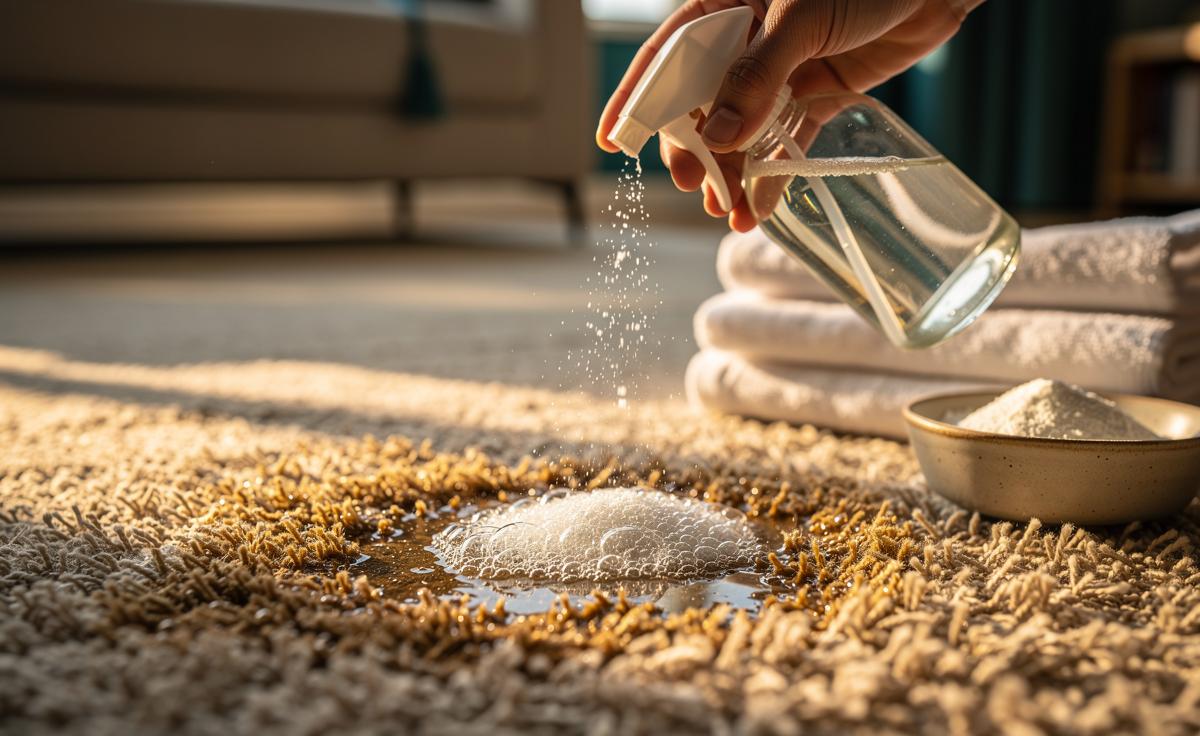
First, act quickly. Blot the fresh grease with clean, white paper towels to remove excess. Do not rub. Rubbing drives oil deeper and scuffs fibres. Sprinkle a light, even layer of bicarbonate of soda over the stain—just enough to dust the surface. In a spray bottle, mix 1 part white vinegar to 2 parts warm water. For especially oily spots, add a single drop of mild washing-up liquid to aid emulsification. Spray until the powder is just damp and fizzing. Let it work for 10 minutes. The bubbles help lift the soil; the soda absorbs and the vinegar carries it.
After the dwell time, blot firmly with a clean, absorbent cloth, working from the edges inward. If residue remains, spritz plain warm water and blot again. Finish by placing a dry towel over the area with a weight on top for 30 minutes to draw out moisture. Allow to air dry thoroughly and then vacuum to remove any dried soda. If the stain lightens but lingers, repeat once rather than flooding the carpet. One careful second pass is safer than one saturated, overzealous attempt.
| Step | What to Use | Ratio/Amount | Timing | Notes |
|---|---|---|---|---|
| Pre-blot | White towels | As needed | Immediate | Blot, don’t rub. |
| Dust | Bicarbonate of soda | Light sprinkle | — | Even coverage |
| Spray | White vinegar + warm water | 1:2 (optional 1 drop detergent) | — | Use white vinegar only |
| Dwell | — | — | 10 minutes | Fizz does the work |
| Blot & Rinse | Clean cloth + water | Light spritz | 2–3 minutes | Remove residues |
| Dry | Towel + weight | — | 30 minutes | Then vacuum |
Avoiding Damage and Setting Stains
Carpets hate excess moisture. Never soak a spot to “force” a clean—over-wetting spreads soil and can wick stains back as it dries. Use controlled sprays and decisive blotting. Choose white vinegar only; coloured vinegars can tint fibres. Skip abrasive brushes on cut-pile carpets. For wool, reduce acidity further (try 1:3 vinegar to water) and shorten dwell time. A quick patch test: dab solution, press for 30 seconds, then blot dry; if dye transfers to your cloth, stop and reassess.
Avoid chemical clashes. Never mix vinegar with bleach. It can release dangerous gases and harm both health and fibres. If you previously used a strong alkaline cleaner, rinse with plain water and blot before introducing vinegar, preventing unpredictable reactions. To avoid setting the stain, keep heat away until fully clean: no hairdryers on high, no ironing towels over the spot. Heat can fix oils and make future removal difficult. Finally, dry thoroughly. Residual damp invites musty odours and subtle rings. If the area feels stiff after drying, mist with water, gently groom the pile, and vacuum once more to restore texture.
When to Call a Professional and Smart Alternatives
Not every blot is a quick fix. Large spills that saturate the underlay, old polymerised cooking grease, or stains laced with dyes from sauces may need professional hot water extraction or solvent-boosted treatments. When a stain returns after two careful DIY attempts, that’s your cue to escalate. Professionals can balance pH, heat and chemistry safely, and ensure the backing dries properly. If you’re avoiding vinegar’s scent, try carbonated water as a first pass; the bubbles lift light soils, though it’s less potent on heavy oil. Enzymatic, plant-based spotters can target food residues without harsh odours, used sparingly and rinsed well.
Prevention helps. Treat new spills immediately, keep a small kit—white towels, bicarbonate of soda, spray bottle, and a gentle detergent. For households with pets or fry-ups, a quarterly maintenance sprinkle of bicarbonate followed by a light vacuum can curb odours and film build-up. And for luxe fibres—wool, viscose, silk—err on the side of caution with dilution and contact time. This is careful housekeeping, not a chemistry lab. Done right, the 10-minute fizz becomes a reliable, eco-friendly first responder.
Vinegar and bicarbonate won’t replace every specialist product, but they offer a nimble, budget-friendly answer to everyday greasy mishaps. They minimise harsh chemicals, protect most fibres when applied with restraint, and deliver visible results quickly. The key is precision: light powdering, a measured spray, a calm 10-minute wait, then steady blotting and thorough drying. A small routine beats a big rescue. Next time a slick mark threatens your lounge, will you reach for the natural fizz, or call in a pro and save the home remedy for the next spill?
Did you like it?4.6/5 (28)