In a nutshell
- 🧽 Uses crumpled aluminium foil for gentle micro-abrasion that lifts carbon and grease without gouging chrome-plated racks.
- ⏱️ Delivers fast results in under 10 minutes by warming the rack, adding washing-up liquid, scrubbing with two foil balls, and finishing with a hot rinse until it “squeaks.”
- 🧪 Boosts cleaning power with a pinch of bicarbonate of soda for sugary, baked-on spills, and a twist-pinching motion to clear welds and undersides.
- ⚠️ Stresses safety: avoid non-stick/PTFE or painted racks, wear gloves, don’t use on glass doors, and test a hidden patch to protect finishes.
- 💷 Compares methods: foil is cheap, quick, and effective; bicarb soaks and dishwasher-tablet baths suit delicate coatings but take longer.
There’s a curious cleaning hack doing the rounds in British kitchens: crumpled aluminium foil used as a makeshift scrubber to cut through carbon, fat, and burnt-on sauce. It sounds too simple. It isn’t. The physics stack up, the cost is pennies, and the time saving is startling. With a little hot water, a drop of washing-up liquid, and two palm-sized foil balls, you can restore dull, gummy oven racks to a bright silver in a single tea break. Ten minutes is enough to revive racks if you work methodically. Here’s how it works, why it’s safe on most racks, and when to pick a different tactic.
Why Aluminium Foil Works on Baked-On Grease
At first glance, a foil ball looks too gentle to beat heavy grime. The trick is micro-abrasion. Aluminium is softer than the chrome-plated steel found on most racks, so it scours residue without gouging the metal beneath. As you rub, a light dusting of aluminium oxide forms on the surface of the foil. This acts like a fine polishing compound, shaving down stubborn grease films and heat-bonded sugars that dish sponges cannot touch. The pressure is localised to the foil’s crinkles, which pinch into the curve of each bar and dislodge deposits along the welds.
Grease behaves differently when it warms. Run the rack under hot tap water first, or rest it over a steaming sink for a minute. Warmth softens oxidised fats, reducing the effort needed to scrub. A slick of diluted washing-up liquid breaks surface tension and helps lift residues as they’re abraded. It’s the combination of soft metal, fine oxide, heat, and surfactant that speeds the job. If you’ve got sugary spills from roasts or sweet glazes, this synergy is especially effective.
There’s also good news for finish longevity. Because foil is relatively soft, it’s far gentler than steel wool or harsh green pads. Used with light pressure, it polish-cleanse cycles the bars rather than scratching them to a haze. Still, common sense applies. Test on a hidden corner first. If the foil picks up shiny plating flakes, your rack’s coating may already be compromised and needs a lighter approach.
How to Clean Oven Racks in Under 10 Minutes
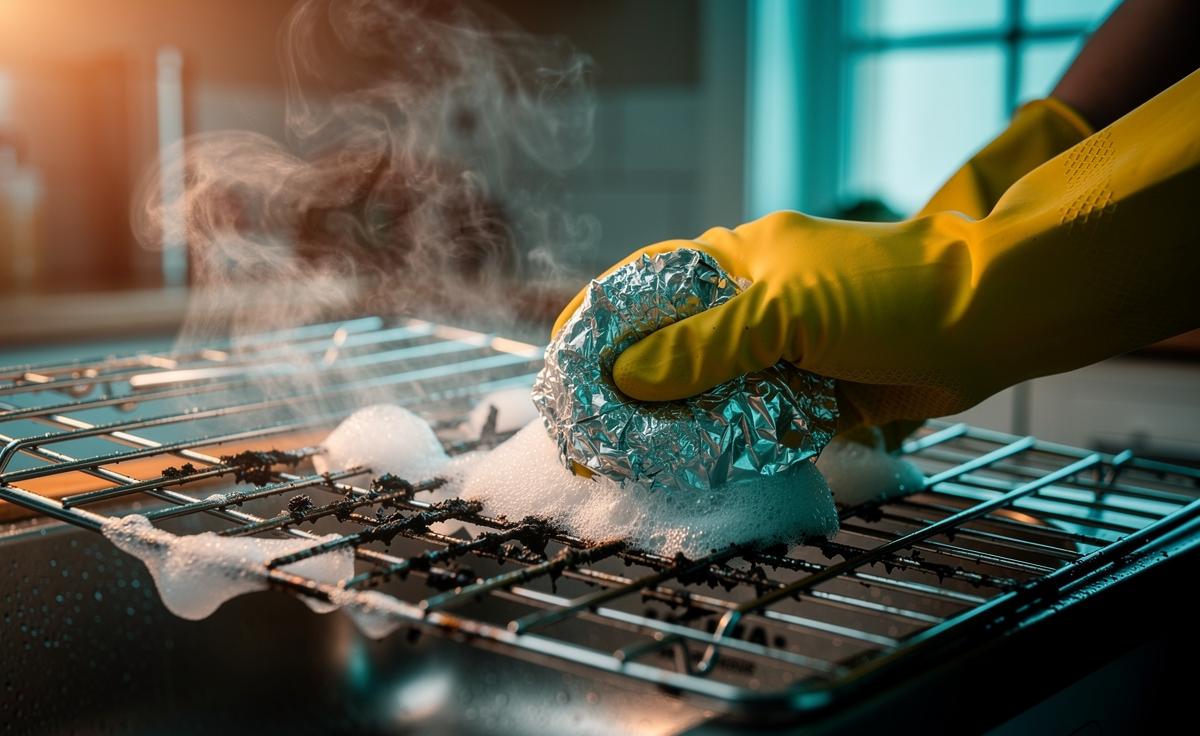
Set up swiftly. Pull the rack from a cool oven and place it across your sink. Run hot water for 30–45 seconds to warm the metal. Mix one teaspoon of washing-up liquid into a jug of hot water and splash it over the bars. Crumple two tight balls of aluminium foil, each about the size of a walnut. Keep one dry and one slightly wet—this gives you two cutting actions and a back-up when the first ball clogs.
Work in lanes. Starting at one corner, scrub along a single bar, moving the foil with short, fast strokes. Rotate the ball as it darkens to expose new edges. For heavy carbon near welds, pinch the bar with the foil and twist—this shearing motion lifts brittle deposits quickly. Stuck caramel? A light sprinkle of bicarbonate of soda over the foam creates a mild, fizzing scour without nasty fumes.
Flip the rack and repeat. Grease often hides underneath where fat drips and bakes onto the underside curves. Don’t chase perfection on the first pass. If a patch is obstinate, return after you’ve cleared the rest; by then, the detergent and heat will have softened it further. Rinse with hot water, wipe once with a microfibre cloth, then rinse again until squeaky. If you hear that clean “squeak,” residue is gone.
Dry immediately with a towel to prevent water spots. If you like a showroom shine, finish with a final swipe of a clean, slightly damp cloth and a drop of vinegar, then buff dry. The whole routine—setup, scrub, rinse, and dry—comfortably fits within ten minutes for an average rack, less if you keep on top of spills after roasts.
Safety, Surfaces, and When Not to Use Foil
Most household racks are chrome-plated steel and tolerate this method well. However, some premium or specialist accessories may have non-stick coatings or a darker, matte finish designed for easy clean-up. Do not use foil balls on non-stick, PTFE-coated, or painted bakeware-style racks. If you’re unsure, check the appliance manual or test a fingertip-sized patch on the back rail. Any dulling or colour transfer means you should switch to a paste of bicarbonate of soda and hot water instead.
Protect yourself. Wear washing-up gloves to shield skin from hot water and detergent. Avoid pairing foil with aggressive oven cleaners at the same time; that’s overkill and risks fume exposure. If you’re cleaning over a bath, lay a towel down first to protect enamel. Never use foil on the oven’s glass door or on soft aluminium trays—use a soft pad for those. And keep fine metal shavings away from gas burner ports or fan inlets; rinse thoroughly.
Think longevity. Strong abrasives—steel wool, wire scourers—can gouge chrome plating, making future cleans harder as grease clings to scratches. Foil sits in the sweet spot: firm enough to cut, soft enough to preserve finish. If your rack is already pitted or rusty, switch to a bicarbonate soak and nylon brush, then consider replacement. Good cleaning is as much about preserving surfaces as it is about speed.
Costs, Time, and Results: A Quick Comparison
For many households, the foil-ball method wins on availability and speed. You likely have aluminium foil and washing-up liquid to hand, and there’s no overnight soak, no chemical fumes, and minimal setup. Still, different jobs call for different tools. Here’s a simple snapshot to help you choose the right approach for the grime in front of you.
| Method | Typical Time | Cost | Scratch Risk | Effectiveness |
|---|---|---|---|---|
| Foil ball + washing-up liquid | 5–10 mins | Pennies | Low on chrome | High on grease/carbon |
| Steel wool pad | 5–8 mins | Low | Medium–High | Very high, but can mar finish |
| Bicarbonate paste soak | 30–60 mins | Low | Very low | Moderate; gentle on coatings |
| Dishwasher tablet bath | 1–2 hours | Low–Medium | Low | High after long soak |
If speed matters and your racks are chrome-plated, foil is the pragmatic winner. For delicate finishes, the bicarbonate paste or tablet soak reduces risk and still delivers a clean you’ll be happy to cook on. Matching the method to the material keeps your kit looking new and your Sunday roast tasting of, well, roast—not last month’s drips.
In a cost-of-living squeeze, techniques that are cheap, quick, and safe earn their keep. A couple of crumpled foil balls unlock the shine in tired oven racks with surprisingly little elbow grease, harnessing micro-abrasion and simple chemistry to erase grime in minutes. Clean gear cooks better, and it makes the kitchen feel calmer too. Try it once and you’ll likely bin the rusty scourer for good. What’s your go-to cleaning hack for restoring battered kitchen kit when time is tight and the oven’s calling?
Did you like it?4.5/5 (23)