In a nutshell
- 🧪 Why it works: Vinegar’s acetic acid lowers pH to dissolve limescale and loosen grease, with microfibre fibres gripping loosened grime for a swift, thorough clean.
- ⏱️ Two-minute method: Spray a 1:1 mix of white vinegar and water, wait two minutes, then wipe in overlapping S-strokes; warm vinegar speeds up stubborn scale removal.
- 🧰 Ratios and tools: Use 1:1 for windows, neat or 2:1 for shower glass; pair a damp cloth for lifting with a dry glass cloth for a streak-free finish, and prefer distilled water to prevent marks.
- ⚠️ Safety and care: Never mix vinegar with bleach; avoid delicate coatings (tinted glass, anti-glare screens) and test privacy films on a corner first.
- ✨ Results that last: Low-cost, low-odour cleaning that restores clarity and light in minutes; a tiny mist plus a dry buff leaves glass camera-ready with minimal effort.
Streaked windows and cloudy mirrors don’t just dull a room; they steal light and make everything feel tired. Enter humble household vinegar. Cheap, quick, and surprisingly sophisticated, this pantry staple slices through grime, limescale, and grease with a speed that astonishes first-time converts. Spray, wait two minutes, wipe. Done. The science is real, the method is simple, and the payoff is glass that looks professionally polished without harsh solvents or perfumed residues. In British homes facing hard water and winter condensation alike, vinegar’s acetic acid content delivers fast clarity. If you give the solution time to bite, it will do most of the heavy lifting for you.
Why Vinegar Works So Fast
Vinegar’s power rests on chemistry. Its 4–8% acetic acid drops surface pH, quickly dissolving alkaline mineral deposits like limescale (calcium carbonate) through a simple acid–base reaction that produces soluble salts and carbon dioxide. That fizz you sometimes see? It signals the reaction is underway. On greasy fingerprints, acetic acid helps loosen the film and disrupts the bonds that make oils cling. It’s not a full detergent, but in combination with a microfibre cloth—whose split fibres grip particles—the effect is swift and thorough.
Contact time is the trick. Two minutes of dwell time allows the acid to penetrate and lift before you disturb it. Warm vinegar accelerates kinetics, so slightly heated solution works faster on shower glass or a cooker splashback. Using distilled water in your mix prevents new mineral streaks, and an S-pattern wipe stops redepositing soil. The result? Clear panes, less elbow grease, and a neutral, short-lived odour that doesn’t clash with the room’s natural air.
Two-Minute Method: Step-by-Step
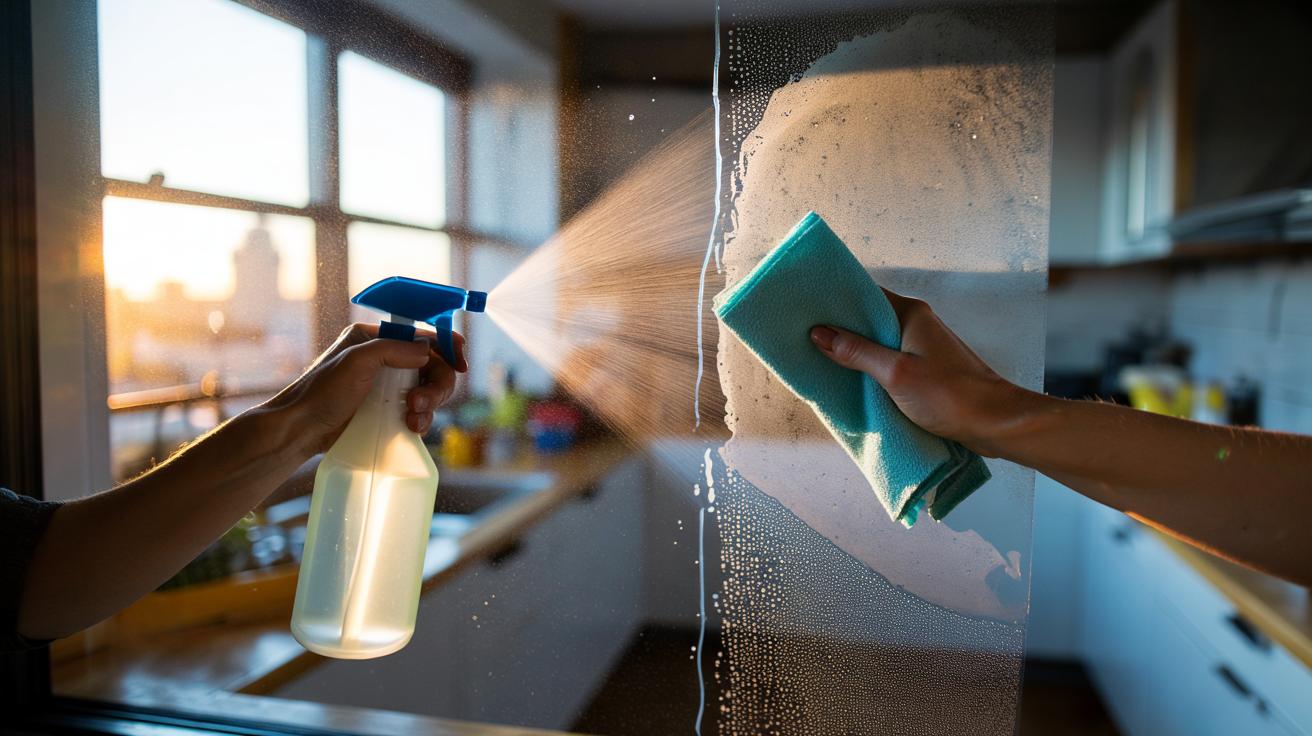
Decant a 1:1 mix of white vinegar and water into a spray bottle. For heavy scale or soap scum, go stronger. Mist the glass evenly until it’s uniformly damp, not dripping. Walk away. Time matters. Let the solution sit for a full two minutes to unlock the quick-clean effect. For stubborn edges, dab a bit more solution along the seals where grime accumulates.
Return with a clean microfibre cloth. Wipe in overlapping S-strokes from top to bottom. Flip the cloth as it loads. Grease on the hob splashback? Add one drop of mild washing-up liquid to the bottle to improve emulsification. For mirrors and high-shine balustrades, finish with a dry glass cloth to buff out micro-haze. If you hit chalky spots that resist, press a vinegar-soaked pad on the area for another minute. Never mix vinegar with bleach or products containing chlorine—dangerous gases can form. Rinse sprayers and cloths after use to keep them lint-free and ready for the next round.
Ratios, Tools, and Troubleshooting
Different messes ask for different strengths. Hard water windows thrive on a 1:1 mix; shower screens with crusty deposits often need full-strength vinegar, warmed slightly for speed. Keep two cloths: one damp for lifting soils, one dry for the streak-free finish. If streaks linger, the culprits are usually dirty cloths, mineral-heavy tap water, or over-application. Switch to distilled water and keep your cloths impeccably clean for reliable clarity every time.
Tackle lines and halos by lightening your hand—too much pressure smears loosened residue. Drafts help; open a window and the quick evaporation reduces tide marks. Avoid delicate coatings: anti-glare TV screens, tinted automotive glass, and natural stone ledges beneath windows. Use a gentle, pH-neutral cleaner there instead. For privacy films, test a corner first. A final pro tip for photographers and landlords: a tiny mist followed by a dry buff renders glass nearly invisible to the camera, saving you from editing reflections later.
| Surface | Vinegar:Water | Dwell Time | Notes |
|---|---|---|---|
| Windows/Mirrors | 1:1 | 2 minutes | Buff with dry microfibre for no streaks |
| Shower Glass | Neat or 2:1 | 2–3 minutes | Warm solution speeds limescale removal |
| Greasy Splashbacks | 1:1 + drop soap | 2 minutes | Emulsifies oils, then wipe and buff |
| Delicate Coatings | Test first | — | Use pH-neutral alternative if unsure |
Vinegar’s appeal is simplicity: minimal kit, minimal cost, maximum clarity. In two minutes, glass regains its shine and rooms regain their light, without synthetic fragrances or residue. Small adjustments—warmer solution, clean cloths, disciplined dwell time—turn a good result into a great one. If hard water and daily fingerprints are your reality, this method becomes a habit fast. Ready to trial it on your trickiest pane, or tempted to compare it against your go-to commercial spray and report which wins on speed, streaks, and smell in your own home?
Did you like it?4.6/5 (25)