In a nutshell
- 🧪 Citric acid in lemon (about 5–7%) dissolves alkaline limescale and chelates metal ions, lifting soap scum and haze to visually “whiten” grout without bleach; avoid on natural stone.
- ⏱️ Two-minute method: dry grout, apply lemon juice or a cut lemon, wait ~2 minutes, light nylon-brush scrub, rinse and buff; optional fine salt for extra abrasion; never mix with bleach and patch test first.
- 🔄 Right tool for the job: choose lemon for light mineral film; use vinegar for general scale, bicarbonate for grease, oxygen bleach for mildew shadowing, and chlorine bleach for active mould—escalate gently.
- 🛡️ Keep grout bright: apply a quality grout sealer, squeegee after showers, improve ventilation, use pH‑neutral products, microfibre wipe-downs, and consider water softening in hard‑water areas.
- 🌿 Benefits: quick, low-odour, budget-friendly cleaning that revives tiles in minutes while reducing reliance on harsh chemicals—ideal as a first-line, sustainable maintenance step.
Rub a cut lemon across dingy grout and something oddly satisfying happens: the grey haze lifts, edges sharpen, and tiles look newly set. That speed isn’t magic; it’s chemistry. The juice is rich in citric acid, a mild, biodegradable cleaner that attacks the mineral film and soapy residues that make grout appear dirty. In British bathrooms and kitchens, hard water is the daily villain, leaving limescale and metal traces that lock in grime. A two-minute swipe can loosen that grip without harsh fumes or bleachy streaks. Used correctly, lemon brightens grout fast while keeping surfaces and lungs happier than many heavy-duty alternatives.
How Citric Acid Works on Grout
Grout discolours because of two main culprits: mineral deposits from hard water and embedded organic residues from soaps, oils, and cooking. Citric acid, abundant in lemon juice (roughly 5–7% by volume), tackles both. First, as a weak acid with a pH ~2, it dissolves alkaline carbonate scale that dulls grout lines. That chalky film scatters light; remove it and the original colour reads cleaner and brighter. Second, citric acid is a chelating agent. It binds metal ions like calcium, magnesium, and iron, loosening their hold on surfaces so a quick scrub can carry them away.
While it’s not a bleach in the oxidising sense, the acid shift helps detach tannins, soap scum and traces of rust that stain grout, which visually “whitens” the line. This is why two minutes can be enough for routine haze: chemistry does the heavy lifting, you provide a light scrub, and water rinses away the residues. Keep in mind: avoid lemon on natural stone such as marble or limestone, where acids can etch the surface.
Two-Minute Lemon Method, Step by Step
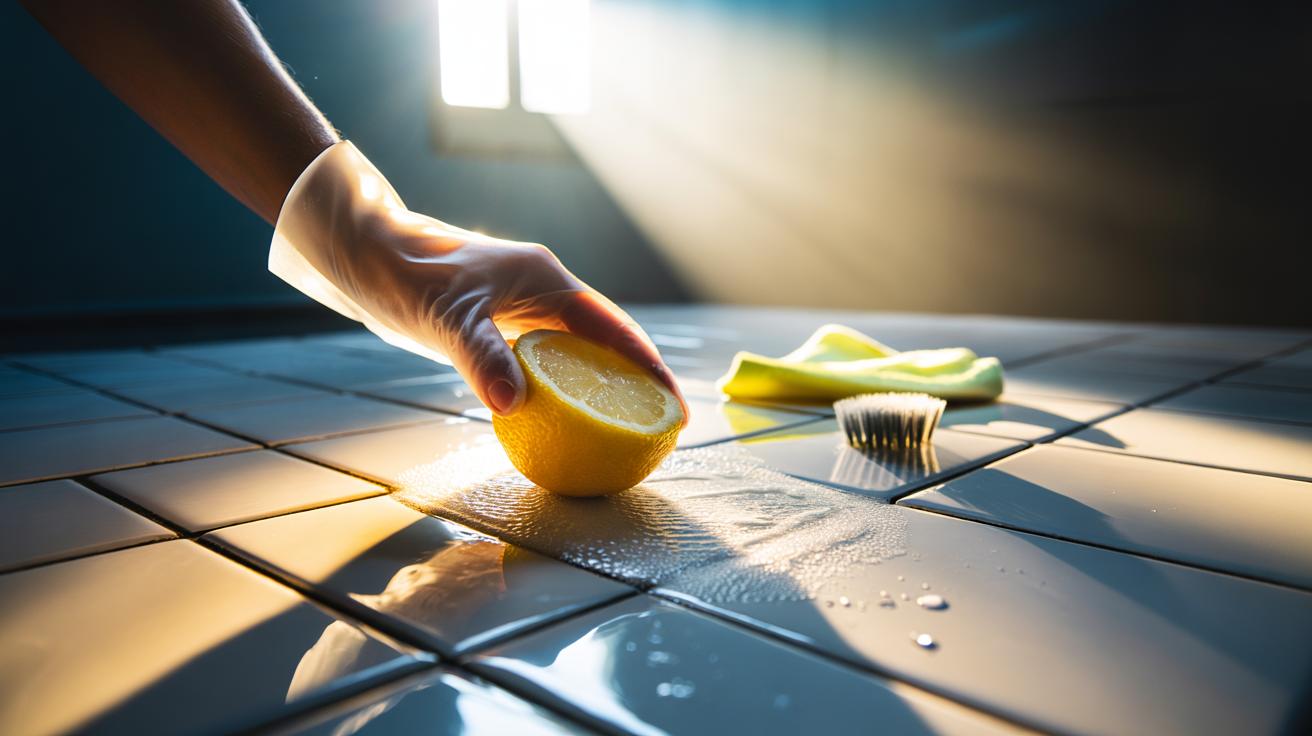
For weekly refreshes, speed is the selling point. Start with ventilated space and gloves if you have sensitive skin. Halve a fresh lemon, or pour 30–50 ml of strained juice into a small bowl. Wipe the grout line dry so acid isn’t diluted from the outset. Press the cut lemon directly along the grout, or dip a soft toothbrush in the juice and paint a generous line. Set a timer for two minutes—long enough for citric acid to dissolve surface scale, short enough to protect surrounding materials.
Now scrub lightly with a nylon brush. Focus on corners where scum accumulates. Rinse with warm water and buff the tile faces with a microfibre cloth to prevent new water spots. For heavy staining, repeat once or extend contact to five minutes. Add a pinch of fine salt only if extra abrasion is needed, and keep it strictly on the grout, not glossy glazes. Never mix lemon with bleach products—chlorine gas is a risk—and always patch test a discrete spot first.
When to Use Lemon vs Other Cleaners
Not all grime is equal. Lemon excels at freshening light discolouration, limescale haze and soap film, especially on ceramic and porcelain installations. It’s budget-friendly, smells pleasant, and is kinder to indoor air than many sprays. But some jobs want something else: mould colonies may need an oxidiser, while greasy kitchen grout might prefer an alkaline degreaser before the acid step. The quick comparison below helps you pick the right first strike.
| Cleaner | Best For | Typical Dwell | Key Caution |
|---|---|---|---|
| Lemon (Citric Acid) | Limescale haze, soap scum, light rust tint | 2–5 minutes | Avoid on marble/limestone; don’t mix with bleach |
| Vinegar (Acetic) | General mineral film | 5–10 minutes | Sharper odour; same stone cautions |
| Bicarbonate (Alkaline) | Grease and food soils | 5–15 minutes | May leave residue; rinse thoroughly |
| Oxygen Bleach | Mildew shadowing, organic stains | 10–30 minutes | Check colour-fastness; follow label |
| Chlorine Bleach | Active mould on non-porous grout | 3–10 minutes | Strong fumes; never combine with acids |
Choose the gentlest product that solves the problem, then escalate only if needed. This preserves grout integrity and keeps tiles looking newer for longer.
Preventing Future Grout Discolouration
Bright today, brighter for longer—that’s the aim. After cleaning, apply a quality grout sealer once the lines are bone dry; it blocks stains from soaking in and makes next week’s wipe-down quicker. In showers, run a squeegee after use to strip away mineral-rich droplets, then crack a window or fan to reduce humidity. Switch to pH‑neutral shampoos and cleaners where possible to minimise residue. In kitchens, a brief wipe with diluted lemon (1:4 with water) after cooking keeps splashbacks from building film, but rinse to avoid sticky remnants.
Adopt small habits: microfibre cloths, quick spot scrubs, and monthly inspections around taps and corners. Addressing haze early prevents the deep-set staining that demands harsher chemistry later. If you live in a hard water area, consider a softener or at least rinse surfaces with low-mineral water to reduce limescale cycles. Your grout will thank you with consistent colour and crisp lines.
Lemon’s secret is simple: citric acid strips the mineral veil that makes grout look tired, and it does it fast. Two minutes, a light scrub, a rinse—that’s often enough to revive a shower or splashback without reaching for eye-watering chemicals. Used with care, it’s a reliable first response and a smart maintenance tool. The trick is knowing when to stick with gentle chemistry and when a different cleaner or a full reseal is wiser. How will you build a quick, sustainable grout routine that keeps your tiles bright between deep cleans?
Did you like it?4.5/5 (29)