In a nutshell
- 📰 Newspaper delivers a streak-free shine by buffing rather than smearing, shedding minimal lint and exploiting strong absorbency for a crisp finish.
- 🧪 The science: intertwined cellulose fibres and capillary action wick moisture and grime, while mineral fillers add gentle polish and inks stay set for smooth glide.
- 🧼 Method: light vinegar-water mist, crumpled sheets, overlapping S-strokes, frequent flips, then a final dry buffing pass to erase haze and sharpen clarity.
- 🛠️ Troubleshooting: use less liquid for streaks, pause on silicone residues before buffing, avoid glossy inserts, protect fragile silvering, and refresh paper often.
- 🌱 Sustainability: an eco-friendly, low-cost, low-waste routine that repurposes newsprint and avoids microfibre shedding and detergent residues.
It’s a trick your gran swore by, and for good reason. Cleaning a mirror with ordinary newspaper can deliver a crisp, streak-free shine without pricey sprays, fancy cloths, or plastic-heavy wipes. In an age of microfibres and gadgetry, this old-school approach feels disarmingly simple—and wildly effective. The secret lies in how paper interacts with water, glass, and grease. It can buff, wick, and dry in one deft movement. Done correctly, the method leaves glass gleaming with minimal effort and almost no waste. Here’s why that happens, and how to master the technique like a pro.
Why Newspaper Beats Lint-Prone Cloths
Cloths promise convenience, yet many leave their calling card: lint, smears, or a faint haze as they move dissolved grease around. Cotton towels can hold too much water and redeposit residue. Some microfibre cloths grab dirt brilliantly, but when they’re overused or poorly rinsed, they carry trace detergent that dries into streaks. Newspaper behaves differently. The fibres are short, firm, and slightly abrasive in a benign way, which encourages buffing rather than smearing. That gentle “polish” helps level microscopic irregularities on glass, enhancing clarity without scratching.
Equally important is absorbency. Newspaper drinks in moisture quickly through a dense network of pores. As liquid is lifted, dissolved grime goes with it. You’re left with a uniformly thin film that evaporates cleanly. This wicking action is why the final passes suddenly look crystal-sharp. And unlike fluffy towels, newsprint leaves almost no fibres behind. It also stands up well to common glass cleaners—particularly vinegar-based solutions—so you can loosen oils with liquid, then dry and polish in one motion.
There’s a sustainability bonus. A few sheets of yesterday’s paper spare a wash cycle, reduce microfibre shedding, and repurpose a material already in circulation. It’s low-cost, local, and practical. For households that read in print, it’s an effortless way to extend the life of a resource while gaining a professional finish. Add the tactile feedback—paper tells you when it’s saturated—and you’ve got a method that’s instinctive, reliable, and fast.
The Science: Ink, Cellulose, and Capillary Action
Newspaper’s cleaning prowess is rooted in cellulose chemistry and physics. Cellulose fibres, bound with small amounts of mineral fillers and sizing, produce a sheet that’s firm yet porous. Those pores create countless capillaries. When the sheet touches a wet surface, capillary action pulls fluid into the fibre network, drawing dissolved oils and surfactants off the glass. That rapid uptake prevents the water from sitting around long enough to dry into streaks. In short, the paper acts as a thirsty sponge and a mild polisher at once.
What about the ink? Modern newsprint inks are formulated to set within the paper matrix rather than smear. They’re typically polymer- or oil-based, designed to resist transfer during normal handling. On glass, they stay put—yet the residual resin in the sheet contributes a whisper of glide that aids polishing. Fillers such as calcium carbonate add microscopic “tooth,” improving the buff. The outcome is a fine balance: strong enough to lift, smooth enough to finish, clean enough to evaporate without a trace.
| Element | What It Does | Result on Streaks |
|---|---|---|
| Cellulose fibres | Absorb water and dissolved grime via capillary channels | Rapid lift reduces drying marks |
| Mineral fillers | Provide gentle micro-abrasion and structure | Smooth, polished finish |
| Printing inks | Remain set in the sheet; add slight glide | No transfer, easier buffing |
| Surface sizing | Controls absorbency and fibre shedding | Less lint, cleaner edges |
| Capillary action | Draws liquid evenly through the sheet | Uniform drying, fewer streaks |
How to Do It Right, Step by Step
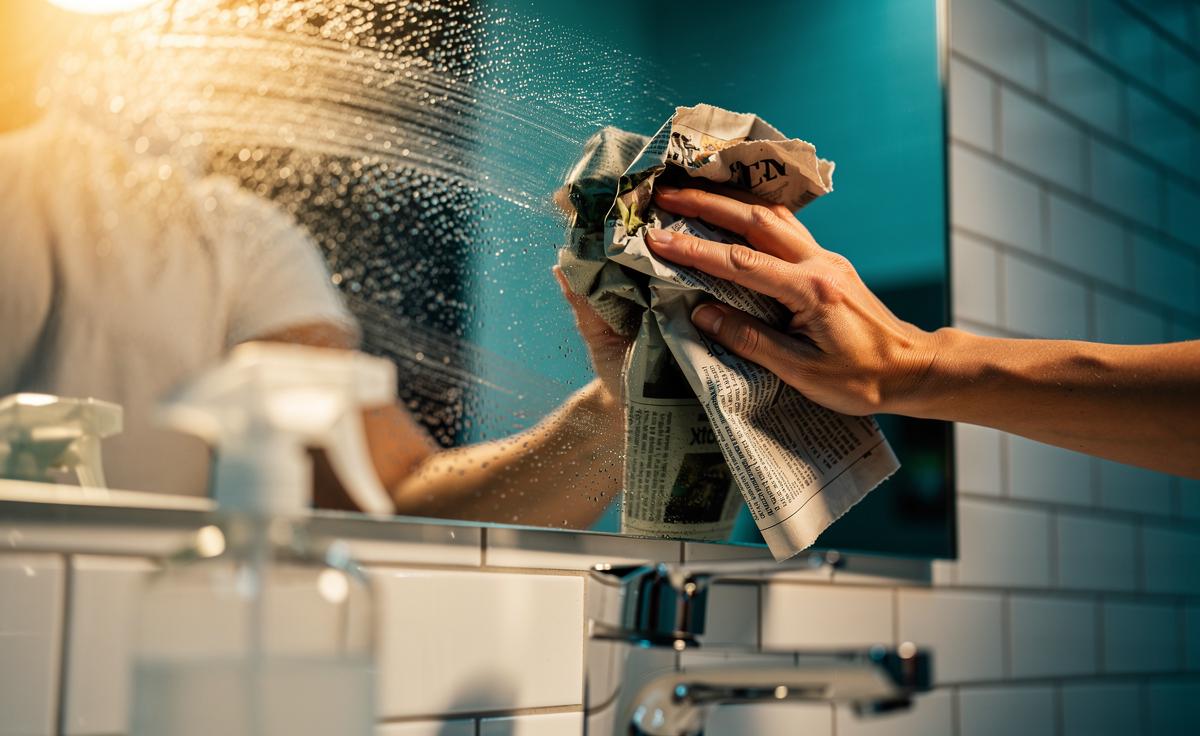
Start with a quick dust-off. A dry sheet of newspaper or a soft brush removes loose particles that could drag across the surface. Prepare your cleaner: equal parts water and white vinegar in a spray bottle, or a quality commercial glass spray. Avoid sudsy detergents—bubbles mean residue. Lightly mist the mirror. Don’t drench it; thin films are easier to lift cleanly. Crumple a sheet of newspaper into a firm pad. The crumple creates edges that grip grime and fresh facets that keep working as the outer layers dampen.
Wipe in overlapping S-patterns from top to bottom, keeping pressure light but consistent. Flip the paper frequently to expose drier areas; when it softens or tears, switch to a new sheet. For corners and edges, twist a point into the paper and trace the frame’s inner line. Finish with a fresh, dry sheet to polish. That last pass matters. Dry buffing aligns any remaining moisture into a vanishing film and removes the faintest haze left by cleaning agents.
Troubleshooting is straightforward. Persistent streaks? Use less liquid and more paper. Smudges that “ghost” back? That’s often silicone or hair product; apply a targeted spritz, pause for ten seconds, then buff again. Grey lines on antique mirrors can indicate failing silvering—clean gently and avoid aggressive rubbing. Skip glossy magazine pages and heavily coated inserts; they’re less absorbent and can skid. When the method is crisp—light mist, fresh paper, dry polish—the glass reliably shines.
There’s a quiet satisfaction in restoring a mirror to hard, brilliant clarity with nothing more than a few sheets of newsprint. It’s thrifty, low-waste, and oddly calming—part ritual, part science experiment you can repeat weekly. You’ll hear the difference too: that squeak at the final buff, a tiny assurance of a streak-free finish. If you’re switching from cloths, give yourself two or three tries to perfect your pressure and timing. Then judge the results in daylight. Are you ready to test the newspaper trick on your bathroom mirror—and what tweaks will you make to suit your home?
Did you like it?4.6/5 (25)