In a nutshell
- 🧪 Tea’s natural tannins act as gentle astringents that lift oils and grime, delivering a streak-free mirror finish without harsh chemicals.
- 🧯 Follow the method: brew two black tea bags, cool completely, lightly mist or dampen a cloth, wipe in S‑strokes, then buff dry immediately.
- 🧰 Choose the right kit: tight‑weave microfibre cloths, a small spray bottle, and distilled water in hard‑water areas for crystal clarity.
- 🔧 Fix streaks fast: use less liquid, work smaller sections, switch to distilled water, and rebuff with a clean, dry cloth—avoid soaking mirror edges.
- 🌍 Smart swap: a low-cost, plastic-free routine that cuts odours and residues while keeping mirrors, chrome, and frames brilliantly clear.
Tea bags in the cleaning caddy? It sounds like a hack from a bygone era, yet the science is surprisingly sound. Brewed tea carries natural tannins, plant polyphenols with a gentle astringency that lifts oils, evaporates cleanly, and leaves glass glossy. On mirrors, that means fingerprints fade, toothpaste mist loosens, and smears surrender. It’s inexpensive, plastic‑free, and oddly satisfying. No chemical tang, no rainbow film. Just clarity. This is a low‑effort method that rewards patience and light touch. From the hallway mirror to the bathroom cabinet, one cooled cup can reset the shine. Here’s how to turn a humble bag of leaves into a streak‑free secret weapon.
Why Tannins Make Mirrors Sparkle
Tannins are polyphenols that bind to oils and microscopic grime, helping them detach from the glass surface. They’re mildly acidic, too, which aids the breakdown of greasy films without stripping or dulling the reflective layer. Think of them as a gentle, plant‑derived astringent. Not abrasive. Not sticky. Just firm enough to coax residue away. The brew’s water acts as a carrier, spreading the tannins thinly across the pane so they can do their quiet work while evaporating cleanly.
The pH of typical black tea hovers around 5–6, a sweet spot for loosening everyday bathroom haze. Always let the brew cool completely before touching glass; heat accelerates evaporation and can set streaks. Once cool, the liquid reduces static cling and rehydrates stubborn specks, making them easy to lift with a microfibre cloth. Add the gentle mechanical action of a tight weave and you’ve got a low‑tech, high‑gleam pairing.
There’s another perk: tea leaves contain trace surfactant‑like compounds that slightly reduce surface tension. The drop spreads. The film thins. Wiping becomes efficient, not arduous. The result feels distinctive—glass that looks crisp, but not squeaky or over‑buffed. No perfumes, no wax, no ghosting.
Step-By-Step: The Tea Bag Cleaning Method
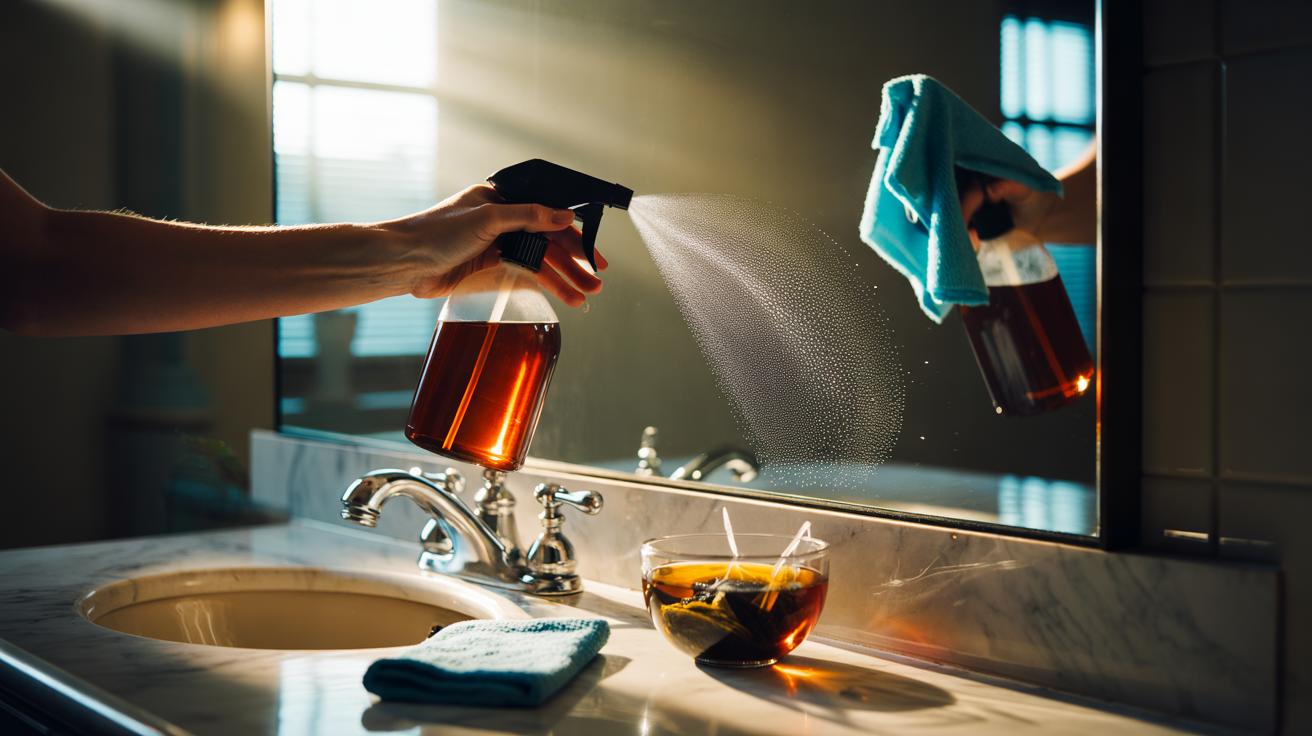
Start with two standard black tea bags in 250–300 ml of freshly boiled water. Steep for five minutes for a tannin‑rich solution, then fish out the bags and cool to room temperature. Pour into a small spray bottle or a bowl. Do not apply hot tea to glass. It’s tempting to rush. Don’t. Cooling prevents flash‑drying and the streaks that follow. If your tap water is very hard, use distilled water for a mark‑free finish.
Lightly mist the mirror, or dip and wring a lint‑free microfibre until just damp. Work in an S‑pattern from top edge to bottom, overlapping strokes. Keep the cloth moving; let the tannins dwell for a few seconds where toothpaste flecks cling. Flip to a dry side and buff immediately. The second pass is crucial. It removes the loosened residue and polishes the glass before minerals can settle. Less liquid equals fewer streaks.
For edges and fittings, swipe with a nearly dry corner or a folded coffee filter. Avoid soaking the mirror’s backing or frame—especially if it’s wood or antique. Stubborn patches? Touch the area with a re‑dampened cloth, pause ten seconds, then buff again. Most marks yield without pressure. Save elbow grease for the gym.
Choosing the Right Tea and Tools
Not all tea is equal for cleaning. You want high‑tannin, low‑additive leaves. Plain black tea delivers the punch. Green and white can work, but they’re lighter and may need an extra pass. Skip perfumed blends and fruit infusions—oils and sugars can smear. Decaf? Acceptable, though slightly softer in action. Old bags lurking at the back of the cupboard are ideal; flavour loss doesn’t blunt the tannin effect. Match the brew with the right kit and you’ll see the difference in seconds.
| Tea Type | Approx. Tannin Level | Aroma/Oils | Effect on Glass |
|---|---|---|---|
| Black | High | Low oil, clean | Best degreasing, streak‑free shine |
| Green | Medium | Fresh, light | Good for light fingerprints |
| White | Lower | Delicate | Gentle refresh, may need extra buff |
Tools matter. Choose a tight‑weave microfibre cloth (300+ GSM) for lift, and a second dry cloth for the final buff. A small spray bottle gives control, especially on large bathroom mirrors. Coffee filters or an old, clean T‑shirt make excellent finishing pads. In hard‑water areas, keep a jug of distilled water for brewing and a pristine bottle just for mirrors. The cleaner the water, the clearer the glass.
Troubleshooting Streaks and Common Pitfalls
Streaks happen when liquid dries before you finish buffing, or when residue outnumbers your clean fibres. Remedy: work smaller sections, reduce spray, and keep a dry cloth ready. Notice a cloudy film? That’s often hard‑water minerals. Switch to distilled water for the brew and the final wipe. If a patch feels greasy—think hair oil overspray—give it a pre‑wipe with a barely damp cloth, then apply tea and buff.
Timing matters. If the room is steamy, wait. Humidity slows evaporation and encourages tide marks. Temperature matters too: room‑temperature tea spreads evenly; chilled tea can bead. Use gentle pressure. Heavy scrubbing only redistributes residue. For antique or black‑edged mirrors, avoid wetting the perimeter; liquid wicking behind the glass can damage the backing. Work 1–2 cm shy of the edge and finish with a nearly dry corner.
If you still see faint arcs under strong light, re‑mist the cloth, not the glass, and rebuff in vertical strokes. Swap to a fresh cloth when it stops gliding—drag equals dirt. One last check: ban fabric softener from your laundry; it leaves a silicone film on cloths that transfers to glass. Clean cloths, cool tea, patient buff. That trio rarely fails.
One cup of cooled tea, two cloths, five calm minutes: that’s the rhythm of this quietly effective ritual. You’ll sidestep synthetic cleaners, spend less, and gain a mirror that looks newly installed. The method scales, too—great for framed prints, chrome taps, even the glass on picture frames. No harsh odours, no microplastic shed, no fuss. Ready to trade the blue spray for a brew and a buff—and if you do, will you reach for robust black tea or experiment with a lighter green to suit your home’s routine and light?
Did you like it?4.5/5 (26)