In a nutshell
- 🔬 How it works: Dryer sheets contain cationic surfactants that loosen baked-on grease and carbon; combined with warm water and washing-up liquid, they unglue grime without harsh abrasion.
- 🧼 Step-by-step: Submerge cool racks in warm water with a squirt of washing-up liquid and 6–10 dryer sheets for 6–12 hours; wipe with a spent sheet, rinse thoroughly, and dry—no heavy scrubbing.
- ✅ Pros and caveats: Low effort, gentle on chrome, fewer fumes; trade time for labour, repeat for stubborn patches, pick unscented sheets if sensitive, and counter hard-water film with a vinegar rinse.
- 📊 Alternatives compared: Versus bicarbonate & vinegar, commercial cleaners, and ammonia, the dryer-sheet soak offers the best balance of low effort, odour control, and surface safety.
- 💷♻️ Cost and eco notes: Biggest cost is warm water; choose brands with biodegradable surfactants, dispose of used sheets in household waste, and protect rack finish to cut replacements and reduce waste.
Scrubbing oven racks is the job everyone avoids: time-consuming, fiddly, and often punishing on your hands. A gentler shortcut is quietly conquering British kitchens: dryer sheets plus a soak, a little washing-up liquid, and patience. It sounds implausible. Yet it works because of the chemistry built into those unassuming sheets. You may genuinely never scrub again if you set up the soak correctly and let the ingredients do the heavy lifting. Below, I break down the method, why it lifts baked-on grime, and when to choose it over harsher sprays. Expect gleaming chrome, less elbow grease, and fewer scratches on your bath.
How the Dryer Sheet Method Works
The secret is in the cationic surfactants woven into many dryer sheets. These positively charged agents bind to negatively charged particles, loosening oily residues and breaking the static that helps carbonised grime cling to the metal. Add warm water and a squirt of washing-up liquid, and you’ve mixed a mild surfactant bath that emulsifies grease, softens polymerised food, and lets grime slide away with minimal effort. It’s a slow chemical unglueing, not brute-force abrasion.
Two other factors matter. First, the soak time: leave the racks submerged for several hours, ideally overnight, so the surfactants can creep under burnt layers. Second, the sheet contact: scatter several dryer sheets directly on and under the racks. They leach conditioning compounds that, in warm water, act like tiny release agents across the metal. For stubborn corners, a spent sheet doubles as a gentle scrubber. Because the fibres are soft, you reduce the risk of gouging chrome plating compared with steel wool. The result is a safer, quieter clean that respects both your racks and your skin.
Step-by-Step: From Soak to Shine
Clear the path. Remove the racks when the oven is completely cool and shake off loose debris. If you’re using the bath, lay an old towel at the bottom to prevent scratches. A deep sink or a heavy-duty bin bag in a washing-up bowl works too. Do not attempt this on hot racks—the heat can warp plastic elements in the sheets and create fumes you don’t want.
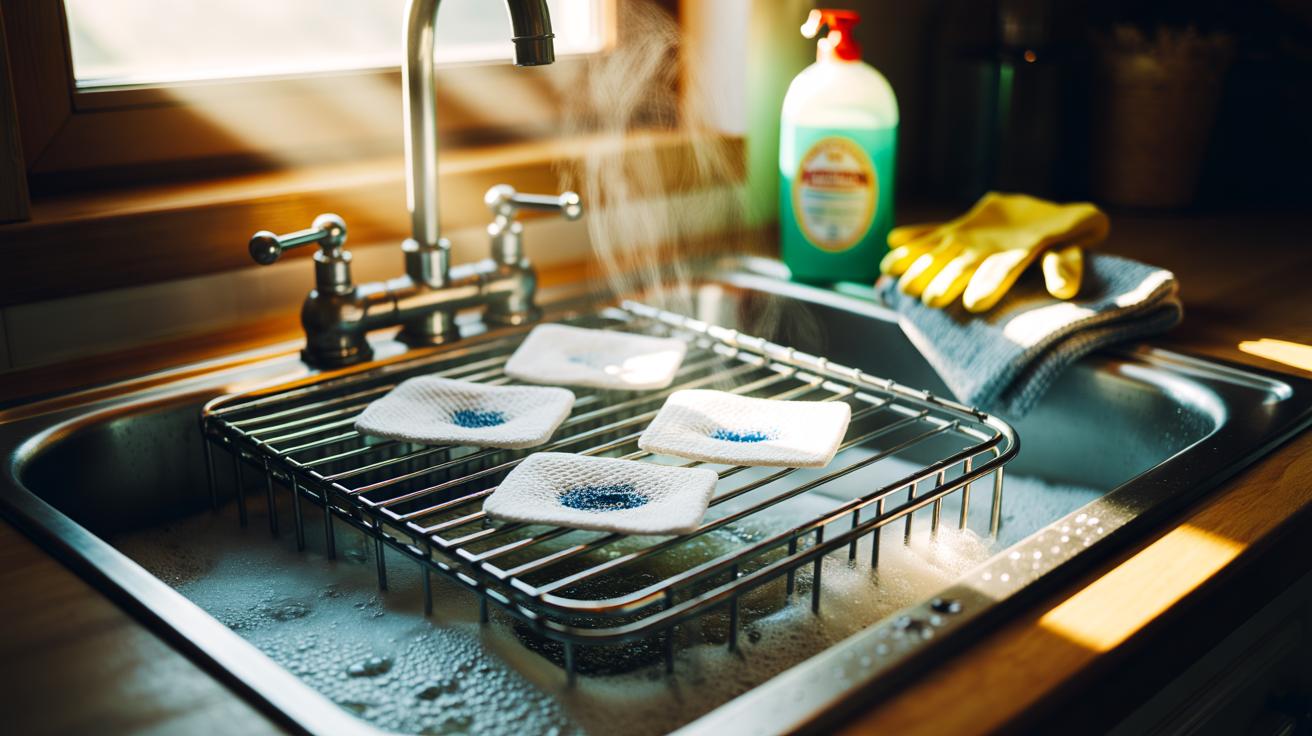
Now the setup. Place racks in the bath, plug the drain, and add warm—not boiling—water to cover. Squirt in a tablespoon of mild washing-up liquid. Float and tuck in 6–10 dryer sheets so they contact the metal. Leave for 6–12 hours. Walk away. Let chemistry work. On your return, lift a spent sheet and use it to wipe along the bars; the baked-on grease should come off in rolling, satisfying ribbons. Rinse thoroughly, then dry with a microfibre cloth to avoid water spots. If residue remains, repeat a shorter soak rather than reaching for abrasive pads. Wear gloves if you have sensitive skin, and always ventilate the room during drying.
Pros, Cons, and What the Chemistry Says
Fans love the low effort and gentle touch. The method harnesses surfactants, fabric conditioners, and antistatic compounds to loosen grime without scoring chrome or inhaling pungent oven-cleaner fumes. It’s forgiving: imprecise measures still work. Yet it’s not instant. You’re trading time for labour, and strongly carbonised patches may need a second pass. If your home has very hard water, you might see film unless you rinse well. Those sensitive to fragrance should pick unscented sheets to avoid lingering perfume.
Here’s how dryer sheets stack up against other common approaches:
| Method | Time | Effort | Odour | Surface Risk | Notes |
|---|---|---|---|---|---|
| Dryer sheets + soak | 6–12 hrs passive | Low | Mild to perfumed | Low | Gentle; good for chrome racks |
| Bicarbonate + vinegar | 2–6 hrs | Medium | Tangy | Low | May need scrubbing on heavy carbon |
| Commercial oven cleaner | 1–4 hrs | Medium | Strong | Medium | Fast, but watch fumes and finishes |
| Ammonia-in-bag | Overnight | Low | Very strong | Medium | Effective; requires great ventilation |
For most homes, dryer sheets deliver the best balance of gentleness and outcome. If you’re dealing with years of neglect, start with a sheet soak and finish with a bicarbonate paste on the last stubborn corners.
Cost, Time, and Environmental Considerations
Running the tap costs more than the sheets. The true price is the warm water to fill a tub or deep sink. To trim it, use a sturdy bin bag inside a washing-up bowl so the racks are just submerged. One handful of budget dryer sheets—unscented if you prefer—does the job. Time-wise, it’s a passive clean; you’re not hovering with a scourer. Set it up after supper, wake to easy wipe-downs. In UK hard-water areas, a quick rinse with a splash of white vinegar helps banish film.
On sustainability, the method avoids caustic sprays but does introduce quaternary ammonium compounds from the sheets. Choose brands that list biodegradable surfactants and skip extra fragrance where possible. Dispose of used sheets with household waste rather than flushing. If you’d like to cut waste further, pair fewer sheets with a pump of mild dish soap and extend soak time. The real win is longevity: by sidestepping abrasive scouring, you protect the rack’s finish and avoid premature replacements. That’s money saved and metal kept out of the waste stream.
Cleaning doesn’t have to be a punishment. By letting smart chemistry do the graft, your oven racks return to sparkle without the usual dread or damaged knuckles. Dryer sheets transform a grim chore into a set-and-forget routine, kinder to your chrome, your lungs, and your patience. Treat stubborn spots with a light hand, rinse well, and enjoy the shine. You might genuinely never scrub again. Will you give the overnight sheet soak a try next time, or do you swear by another low-effort method that deserves a place in Britain’s cleaning canon?
Did you like it?4.5/5 (25)