In a nutshell
- 🔬 How it works: ammonia fumes penetrate carbonised grease, breaking bonds in fats and proteins; a warm, sealed oven boosts diffusion, enabling a no‑scrub wipe‑down by morning.
- 🧪 Overnight routine: Pre‑warm then switch off; place 250 ml household ammonia on the top shelf and 1–2 L boiling water below; close for 8–12 hours, ventilate, then wipe with warm soapy water (plastic scraper for corners).
- 🧰 Tools and ratios: 250 ml (5–10%) ammonia, 1–2 L boiling water, soft cloths and microfibre; 10–15 minutes of ventilation; optional bicarbonate solution for a final deodorising rinse.
- ⚠️ Safety and surfaces: Never mix ammonia with bleach; keep the oven off; be cautious with aluminium and non‑stick (patch test); avoid soaking door gaskets; ensure gas flames/pilots are off.
- 🌬️ Odour control: Air the kitchen, set out white vinegar, then wipe with bicarbonate solution and rinse; low‑heat lemons help neutralise lingering smells and finish with a fresh shine.
There’s a hack that spares your elbows and restores a dull, greasy oven to something you’d be proud to cook in. It relies on ammonia fumes, not effort. When enclosed in a cooled, switched‑off oven overnight, those vapours penetrate baked‑on splatters, soften carbonised fat, and make the morning wipe astonishingly easy. It’s a no‑scrub method when done correctly. You won’t be sloshing chemicals around or wielding a wire wool pad. Instead, it’s a measured household trick that uses time, temperature, and a small bowl. There are caveats. Ventilation matters, so does precise handling. But for stubborn grime, it’s a quiet, effective solution that works while you sleep.
How Ammonia Fumes Loosen Baked-On Grime
Grease is chemistry in slow motion. Spat fat oxidises, proteins dehydrate, sugars caramelise, then everything carbonises into a brittle, glue‑like film. Ammonia—a solution of ammonium hydroxide in water—pushes back. It is alkaline, so it breaks ester bonds in fats and disrupts the sticky matrix that holds burnt residue to enamel and glass. It doesn’t melt the mess outright; the fumes creep into micro‑cracks and soften the bond at the surface.
Warmth helps diffusion. In a gently warmed and then switched‑off oven, vapour pressure rises and the ammonia fumes occupy the cavity. The sealed space acts like a passive fume chamber. Overnight, the hard crust relaxes. Edges lift. The next day, a cloth takes over where chemistry left off. Heavy scrubbing becomes unnecessary because the adhesion has been weakened.
There’s an added boost. The alkaline environment nudges acidic burnt residues toward neutrality, reducing that sour, stale odour that lingers after roast dinners. You’ll still need a rinse, but the science does the heavy lifting before you even pick up a sponge.
The Overnight Method: A No-Scrub Routine
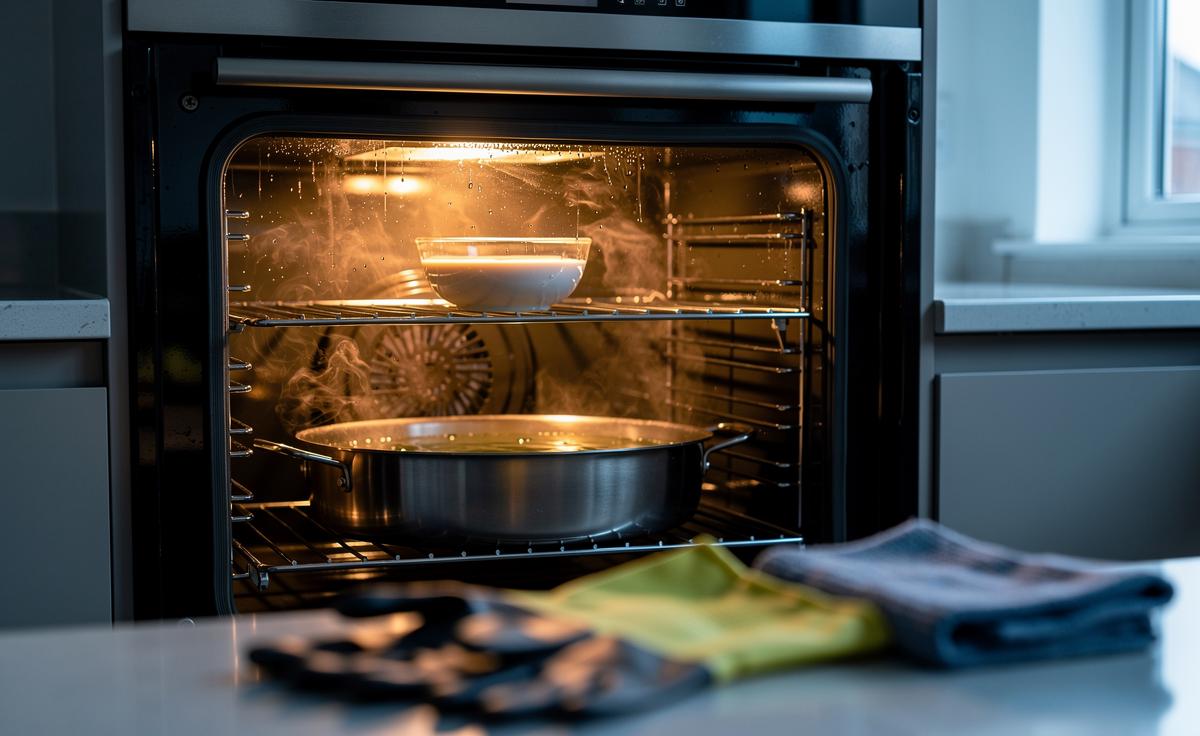
Start with a cool, empty oven. Remove racks and trays if you prefer to clean them separately; the method works on both, but space helps circulation. Pre‑warm the oven to about 65–90°C for five minutes, then switch it off and let it sit for a couple of minutes so it’s warm, not hot. Place a small, oven‑safe bowl with about 250 ml of household ammonia on the top shelf. On the bottom shelf, place a larger dish filled with 1–2 litres of boiling water. Close the door. Do not turn the oven back on.
Leave it overnight, ideally 8–12 hours. In the morning, open the door cautiously and ventilate the kitchen by opening windows. Step back while the initial fumes escape. Put on gloves and, if you’re sensitive, a simple mask. Remove the bowls and set them aside safely. Now, with a soft cloth dipped in warm soapy water, wipe the interior. You’ll see the yellow‑brown film come away in swathes. Stubborn corners? A plastic scraper will nudge residue free without scratching.
Finish with a rinse: wipe again with clean water, then buff dry with microfibre to prevent streaks. You shouldn’t need abrasive pads or caustic gels. If patches persist, repeat for an hour or two rather than forcing the issue with heavy scrubbing.
Tools, Quantities, and Timings at a Glance
This technique thrives on proportion and patience. Too little ammonia and the fumes are weak; too much and the odour lingers longer than necessary. The below figures work for a typical UK single oven. Scale up modestly only for very large cavities. Keep pets and children away during the process, and plan the timing so you can ventilate first thing in the morning when traffic is low and windows can stay open for 10–15 minutes.
| Item | Amount | Purpose | Notes |
|---|---|---|---|
| Household ammonia (5–10%) | 250 ml (about 1 cup) | Generates cleaning fumes | Place in small oven‑safe bowl on top shelf |
| Boiling water | 1–2 litres | Humidity, vapour transport | Large dish on bottom shelf |
| Warm wash‑up solution | 1 bowlful | Wipe‑down and rinse | Mild washing‑up liquid |
| Soft cloths + microfibre | 2–3 | Removal and buffing | Avoid abrasives |
| Plastic scraper | Optional | Edge release | For corners and seals |
| Ventilation | 10–15 minutes | Clear residual fumes | Open windows/doors |
To neutralise the lingering smell, wipe glass and enamel with a solution of 1 tablespoon bicarbonate of soda in 500 ml warm water, then a final clean‑water rinse. That step erases ammonia notes without dulling the shine. Racks can be treated the same way in a sink or left in the chamber overnight to share the effect.
Safety, Surfaces, and Smell: What To Watch
Ammonia is common in cleaning, but its fumes are pungent. Respect that. Never mix ammonia with bleach, chlorine, or products that list sodium hypochlorite. The combination releases chloramines that can be hazardous. Always switch the oven off for the treatment; this is a cold‑process clean that uses residual warmth from pre‑heating only. For gas ovens, ensure the flame is out and the pilot (if present) is safely off.
Surface sensitivity matters. Enamel interiors and tempered glass fare well. So do stainless housings. Take care with bare aluminium trays, which can discolour with strong alkali; if in doubt, clean them separately with milder solutions. Non‑stick coatings vary—test a small patch first. Door gaskets respond best to a cloth wrung nearly dry, avoiding saturating the seal. If you’ve got a self‑clean setting, don’t combine cycles: choose one method per week to protect finishes.
About the smell: it dissipates quickly with open windows. A shallow dish of white vinegar left on the hob for an hour helps absorb residual odour. Then cook something aromatic—bread, citrus, even a tray of sliced lemons at low heat. The kitchen should smell neutral again by lunchtime.
This overnight ammonia method suits busy homes, frugal budgets, and anyone who hates elbow‑grease cleans. It trades brute force for quiet chemistry and careful prep, delivering a brighter oven window and an interior that wipes clean without the usual slog. Done monthly, it prevents that tough, lacquered build‑up that demands drastic measures. It’s low cost, low effort, and high impact. Will you set a bowl tonight and wake to a gleaming oven tomorrow, or try a small test on the door glass first to see the difference?
Did you like it?4.6/5 (25)