In a nutshell
- 🔧 Use baking soda (bicarbonate of soda) as a mild alkali and gentle abrasive to lift rust without etching metal, fumes, or harsh chemicals.
- 🧪 Make a thick paste (about 3:1 baking soda to water), apply for 10–30 minutes, scrub with a nylon brush, rinse, and dry immediately to prevent flash rust, then oil or wax.
- 🛡️ Safety and materials: wear gloves, protect work surfaces, avoid prolonged paste on aluminium/zinc, don’t mix with acids, and use nylon or stainless brushes on stainless steel.
- ⚙️ For heavy corrosion, start with mechanical removal, then consider chelating removers or electrolysis; use methods sequentially and finish with a soda paste clean.
- 🧰 Prevent recurrence: store tools dry with a light oil/wax film, encourage airflow, add a desiccant to toolboxes, and do quick touch-ups after wet jobs.
Rust creeps up quietly. A garden spade forgotten behind the shed, a favourite spanner left damp after a rainy job. Enter a humble hero: baking soda, known in the UK as bicarbonate of soda. Mixed with water into a simple paste, it loosens corrosion and lifts stains without biting into the underlying metal. It’s cheap, non-toxic, and surprisingly effective. The trick lies in patience and technique. Apply, wait, scrub, rinse, protect. That’s it. In minutes, light-to-moderate rust can be coaxed away with hardly any drama, leaving your tools cleaner, safer, and ready for another season’s work.
Why Baking Soda Works on Rust
Rust is iron oxide, a flaky, porous crust that clings to steel and spreads when moisture lingers. Bicarbonate of soda tackles it on two fronts. First, it’s a mild alkali (pH around 8.3), which helps loosen thin oxide films and neutralise acidic grime from fingerprints, rain, or soil. Second, as a fine powder, it’s a gentle abrasive. When suspended in water, the particles slide between oxide layers, dislodging them without gouging the parent metal. No harsh fumes. No etched plating. No scorched steel.
Crucially, the paste behaves like a buffer. It stays mildly alkaline rather than swinging wildly, so it’s kinder to surrounding materials such as varnished wood handles or adjacent paint. That makes it ideal for mixed-material tools and delicate vintage pieces where you’d rather not gamble with strong acids or aggressive wire wheels.
Baking soda doesn’t “dissolve” steel or magically reverse pitting. It simply removes loose corrosion and grime so the surface can be dried and protected. That’s often all you need. When applied promptly—before rust blooms into deep pits—this low-risk paste can halt the slide and preserve edges, threads, and moving parts.
Step-by-Step: Make and Use the Paste
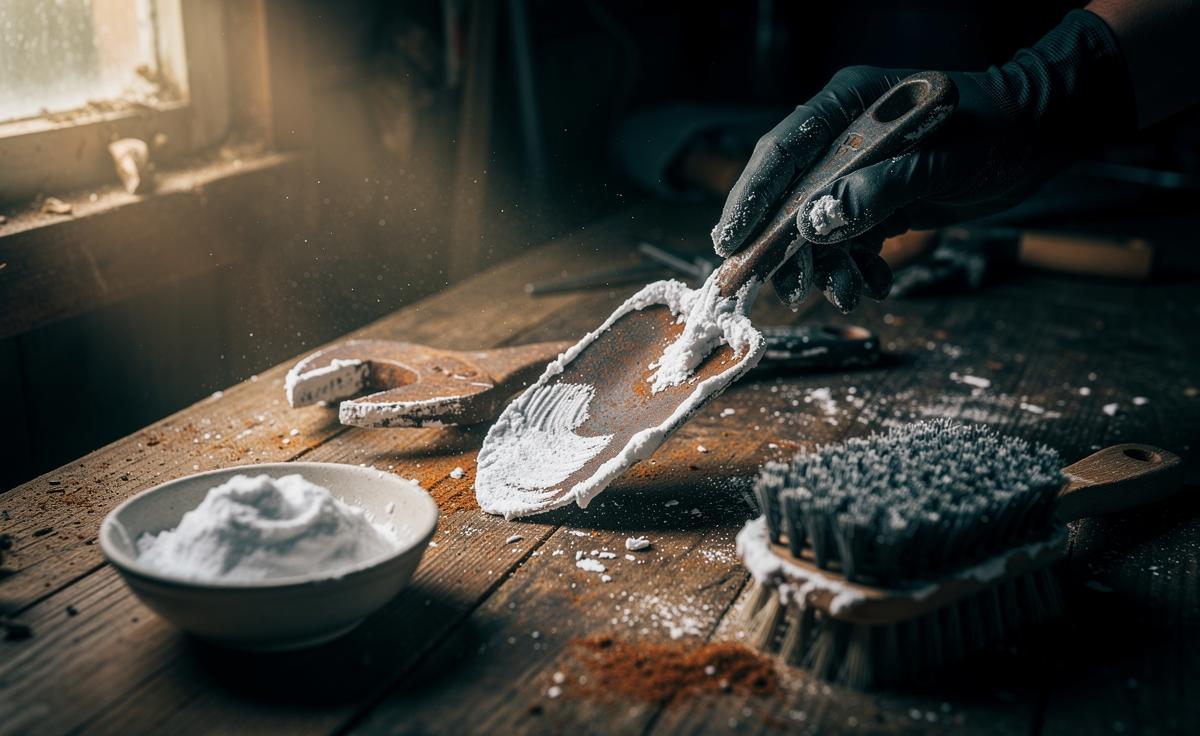
Start clean. Knock off loose dirt with a dry brush, then wipe. Wear light gloves. Mix baking soda with water to a thick, spreadable paste—think peanut butter, not soup. A common ratio is 3 parts powder to 1 part water. Add a drop of washing-up liquid if grease is present; it improves wetting. Smear a generous layer over rusty areas, pressing it into pits and seams. Leave it to dwell for 10–30 minutes, keeping it moist. For stubborn patches, cover with cling film to slow drying.
Scrub with a nylon brush or non-scratch scouring pad. Work in circles. Reapply paste where rust persists, then scrub again. Rinse thoroughly with clean water. Dry at once—compressed air, a towel, or a low heat from a hairdryer. Drying immediately prevents flash rust, which can return in minutes on bare steel. Finish with a thin coat of light oil or a wax to block moisture.
| Tool/Surface | Paste Ratio | Dwell Time | Scrub Tool | Notes |
|---|---|---|---|---|
| Carbon steel spanner | 3:1 (bicarb:water) | 15–25 min | Nylon brush | Oil after drying |
| Chrome-plated pliers | 2:1 | 10–15 min | Soft pad | Avoid scratching plating |
| Garden trowel | 3:1 | 20–30 min | Stiff brush | Rinse soil thoroughly |
Safety, Materials, and What to Avoid
Gather your kit: bicarbonate of soda, water, a small pot for mixing, gloves, a nylon or natural-bristle brush, microfibre cloths, and a protective oil. Lay newspaper or cardboard under the work to catch slurry. This is a mild process, but rust-laden paste stains, so protect clothing. If you’re cleaning a sharp edge, sheath or tape it first. Safety is mostly common sense.
Avoid prolonged soaking of aluminium or zinc-plated pieces in any alkaline solution; short contact with paste is fine, but don’t leave it on and forget. For stainless steel, skip steel wool: it can shed carbon-steel fragments and seed future rust. Choose nylon or stainless brushes instead. Do not combine this paste with acidic rust removers in the same session; if you plan to switch approaches, rinse and dry thoroughly between steps to avoid neutralising either product’s effectiveness.
Disposal is simple. Wipe up the slurry and bin it; any residue can be rinsed down the sink with plenty of water. Finally, to prevent a repeat performance, store tools dry, off the floor, and lightly oiled or waxed. A desiccant tub in the toolbox works wonders in a damp British shed.
When Baking Soda Isn’t Enough: Boosters and Alternatives
Heavy, scaly rust needs more bite. Start mechanically: a wire brush, fine sandpaper, or a gentle brass brush removes bulk corrosion, after which a bicarbonate paste can smooth and clean. Add a drop of washing-up liquid to the paste for better creep into threads. For chrome, try aluminium foil dipped in water or a thin bicarb slurry; foil burnishes oxide without scratching.
If rust is deeply pitted, consider a chelating remover (such as a neutral pH solution designed for iron oxide) or electrolysis for restorations. Use them sequentially, not simultaneously. Rinse, dry, then apply the baking soda paste for final cleaning and neutral odour. No paste will rebuild missing metal; pitting remains, though edges can be stabilised and protected.
Post-clean, lock in the win: apply a light machine oil, silicone-free paste wax, or a corrosion inhibitor. For tools that see soil, a wipe with mineral oil helps; for woodworking irons, a microcrystalline wax resists fingerprints. Store with airflow, not in sealed damp boxes. The goal is simple: remove moisture, block oxygen, and keep the surface clean so rust can’t get a foothold.
With a box of bicarbonate of soda, a brush, and half an hour, you can turn a patchy, gritty surface back into a trustworthy tool. It’s budget-friendly, family-safe, and kind to finishes you’d rather keep. The method rewards consistency: quick touch-ups after wet jobs prevent big problems later. Clean, dry, protect—repeat as needed. Which of your workshop or garden standbys will you rescue first with a simple baking soda paste, and what small change will you make to stop rust coming back?
Did you like it?4.4/5 (28)