In a nutshell
- 🧽 Use a baking soda paste to lift soils and brighten fibres via mild alkalinity and micro-abrasion—clean, whiter look with no bleach or dye damage.
- ⏱️ Quick method: vacuum, apply a thick paste at 3:1 (bicarbonate:water), dwell 3–4 minutes, agitate lightly, mist, then blot—a targeted clean in about 10 minutes.
- 🧪 Adjust for stains: tackle tannins (tea/coffee/wine) cool, handle protein marks (milk/blood) with short, cool cycles, add a drop of washing-up liquid for grease, and treat mud only after it’s dry and vacuumed.
- 🐑 Fibre care: synthetics respond brilliantly; on wool keep paste thick, contact brief, and always patch-test to avoid alkalinity stress or colour transfer.
- 🌬️ Safety and aftercare: avoid over-wetting, blot thoroughly, dry with fan/windows, vacuum any residue haze, and never mix bicarbonate with bleach or ammonia; maintain with light dry bicarb and regular vacuuming.
White carpet promises quiet luxury until reality intrudes: tea rings, muddy pawprints, a splash of red wine. The default fix is often bleach, yet it can yellow fibres, strip dyes, and leave patchy damage. There’s a faster, calmer remedy hiding in your cupboard. A bicarbonate of soda (baking soda) paste harnesses mild alkalinity and micro-abrasion to lift soils and brighten fibres in minutes, with no harsh fumes. It’s budget, safe on most fibres, and frankly satisfying. In ten focused minutes, you can reset dingy high-traffic patches and tame fresh stains without touching bleach. Here’s the science, the method, and the smart tweaks professionals use to get a crisp, clean pile and a true white finish.
Why Baking Soda Whitens Without Bleach
At the heart of this method is baking soda’s mild alkalinity (around pH 8.3). It gently loosens acidic soils—think coffee, wine, city grime—while its fine particles offer micro-abrasion that dislodges residue from carpet fibres without scratching. No oxidative bite. No dye stripping. The result is a subtle brightening that comes from soil removal and light scattering, not chemical bleaching. That’s why the colour reads “whiter” even though nothing has been bleached.
There’s useful physics too. When mixed into a paste, bicarbonate’s grain structure increases surface contact, letting you target stubborn spots and traffic lanes. As you gently agitate, the particles break the bond between fibre and soil, which you then blot away rather than grind deeper. A quick neutral mist (plain water or a weak vinegar spritz) helps lift loosened residues and resets the pH closer to neutral for a soft, springy finish.
Fibre matters. For synthetics like polypropylene and nylon, this routine is a star. On wool, keep contact short and moisture light because protein fibres dislike alkalinity. Always patch-test in an inconspicuous corner and limit dwell time on wool to a few minutes. The goal is clarity, not over-wetting or overworking.
Step-by-Step: 10-Minute Baking Soda Paste Clean
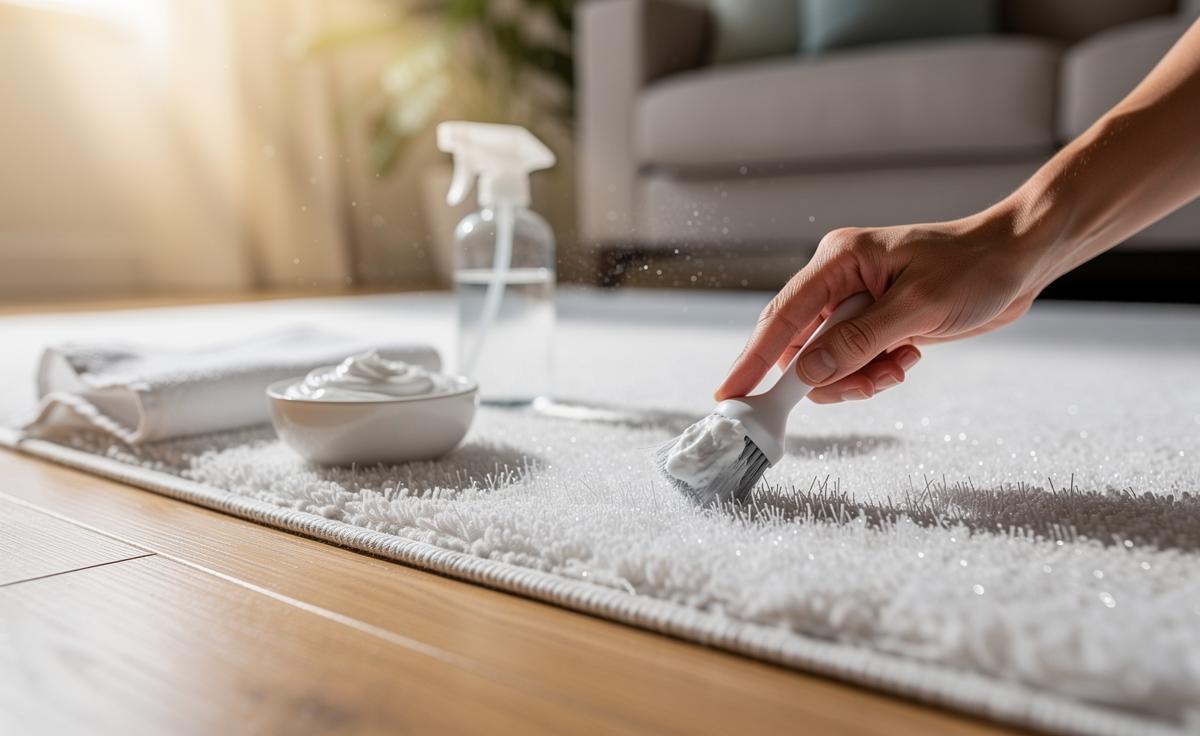
Tools first. You’ll need: bicarbonate of soda, warm water, a small bowl, a white microfibre cloth, a soft brush or old toothbrush, a clean towel, and a spray bottle with plain water. Optional: a tiny drop of washing-up liquid for greasy marks. Mix 3 parts bicarbonate to 1 part warm water into a spreadable paste—thick, not runny. Thin pastes travel down to the backing; thick pastes stay where the soil lives.
Work fast. Vacuum the area thoroughly. Spoon or finger-apply a thin layer of paste to the stain or dingy track. Wait 3–4 minutes. Agitate lightly with the brush in short strokes; don’t scrub. Add a single drop of washing-up liquid if the spot is oily, and brush again for 30 seconds. Mist with plain water, then blot firmly with the towel, rotating to a clean section each time. A final light mist and blot removes the last traces. Fluff the pile with fingers.
| Step | Key Detail |
|---|---|
| Paste ratio | 3:1 bicarbonate to warm water |
| Dwell time | 3–4 minutes (wool: under 3) |
| Action | Light agitation, then blot and rinse-blot |
| Drying | Fan on, windows cracked; avoid over-wetting |
Total time? About ten minutes for a mark, slightly longer for a track. If residue remains, let it dry and vacuum—bicarbonate lifts as a fine powder.
Stain Types and Quick Adjustments
Tannin stains (tea, coffee, red wine) respond brilliantly to this alkaline nudge. Pre-blot with a dry cloth, add your paste, wait 3–4 minutes, then agitate lightly. For fresh wine, a splash of fizzy water before the paste can help “float” the pigment. Keep the water cool to avoid setting colourants. Heat is your enemy with tannins.
Protein stains (milk, blood, egg) require cool handling. Avoid hot water, which cooks proteins into fibres. Use a cooler paste, short dwell, and extra blotting cycles. If odour lingers, allow a teaspoon of dry bicarbonate to sit on the dry area for an hour, then vacuum.
Grease and food oils call for a micro-dose of washing-up liquid in the paste—just a drop—to break surface tension. Agitate gently, rinse-blot well to remove surfactant, then fluff the pile so it dries evenly. For mud, let it dry fully, vacuum the crumbs, then paste the shadow left behind.
On wool and delicate blends, keep the contact time short and the paste thicker. Rinse-blot sparingly to protect the backing. Always test for dye stability and stop if colour transfers to your cloth. The method shifts soil; it won’t fix a factory dye bleed, but it prevents the risks bleach invites.
Safety, Drying, and Aftercare
Moisture is the hidden hazard in carpet care. Over-wetting drives soil into the underlay and slows drying. Use a conservative mist, then blot like you mean it. Open windows, put a fan on low, and avoid walking on the area until it’s dry to the touch. If a faint bicarbonate haze appears after drying, vacuum slowly with the beater bar off. That last pass often reveals the “wow” moment—clean, bright pile with no chemical harshness.
Care for the fibres and the shine lasts. Vacuum high-traffic lanes daily, the rest weekly. Treat drips immediately: dry blot first, then paste. Rotate rugs and use mats by doors to intercept grit. Never mix bicarbonate with chlorine bleach or ammonia products. You don’t need them here. The gentle alkalinity is doing the heavy lifting, supported by your technique and timing.
For periodic refresh, sprinkle a teaspoon of dry baking soda per square foot, brush in lightly, leave 15 minutes, then vacuum. It curbs odours and lifts nap. If stains persist after two cycles, call a professional cleaner—preferably one experienced with wool or designer fibres—so you protect both colour and texture.
With a bowl, a brush, and a cupboard staple, your white carpet can rebound from everyday spills in minutes—not hours—and without bleach, fumes, or drama. The method is repeatable, safe on most fibres, and kinder to air quality and budgets. It’s also empowering: a simple paste, a measured dwell, a confident blot. The difference between dingy and dazzling often lies in small, well-timed moves. Which room in your home would benefit most from a ten-minute, bleach-free reset—and what mark are you keen to banish first?
Did you like it?4.4/5 (22)