In a nutshell
- ✅ Two-minute brightening with white distilled vinegar removes residue—not bleach—so fibres reflect light cleanly and look visibly whiter.
- ⚗️ Clear mix ratios: 1:1 vinegar:water for synthetics, 1:2 for wool; 5% acetic acid breaks alkaline films that dull white pile.
- 🕒 Simple method: vacuum, fine-mist spray, wait 60–120 seconds, blot—do not scrub, rotate cloth, fluff fibres, and speed-dry while keeping the underlay dry.
- 🧼 Stains and odours: great for traffic haze, fresh coffee/tea, and odour neutralising; pair with an enzyme cleaner for pet accidents; repeat light passes instead of soaking.
- ⚠️ Safety first: avoid sisal/jute and colour-unstable rugs; patch-test discreetly, shield natural stone, and use minimal moisture on wool to prevent browning.
White carpets lose their sparkle quietly. Daily footfall mists fibres with a film of residue from shampoos, street grime, and airborne oils, making the pile look grey even when it’s technically clean. The fastest reset uses a cupboard staple: white distilled vinegar. This gentle acid breaks that film in minutes, letting light bounce again from each strand. No harsh bleach. No sticky surfactant trail. Just a swift spritz and blot that many homeowners can finish in the time it takes a kettle to boil. Always test on an inconspicuous patch first, then watch how a simple, safe formula can restore crisp brightness without fuss.
Why Vinegar Works On White Carpets
At the heart of vinegar’s magic is acetic acid at about 5%. Mild, yet purposeful. It loosens alkaline residues from cleaning products and the invisible film that dulls pale pile. The action is not bleaching; it’s removal. When that film departs, fibres reflect light more evenly, so whites read cleaner to the eye. You get a genuine optical lift without risky chemistry or optical brighteners that can yellow over time. That’s the secret: remove, don’t mask.
Because vinegar is low pH, it also helps neutralise odours embedded in the pile. Ammonia-like smells from shoes or pets shift towards neutral, leaving a fresher baseline. On synthetics such as nylon or polyester, the approach is especially forgiving. Wool is different: protein-based, naturally slightly acidic, and prone to felting if mistreated. Use a weaker dilution on wool and minimal moisture. Never soak the underlay; over-wetting invites browning and wicking as deep soils migrate upward during drying.
The two-minute promise is realistic for light dulling in traffic lanes. You’re not dissolving ancient tannins or ink; you’re lifting haze. That’s why timing is short, the motion is gentle, and the visible pop often feels instant the moment you blot and fluff the pile.
The Two-Minute Brightening Method, Step By Step
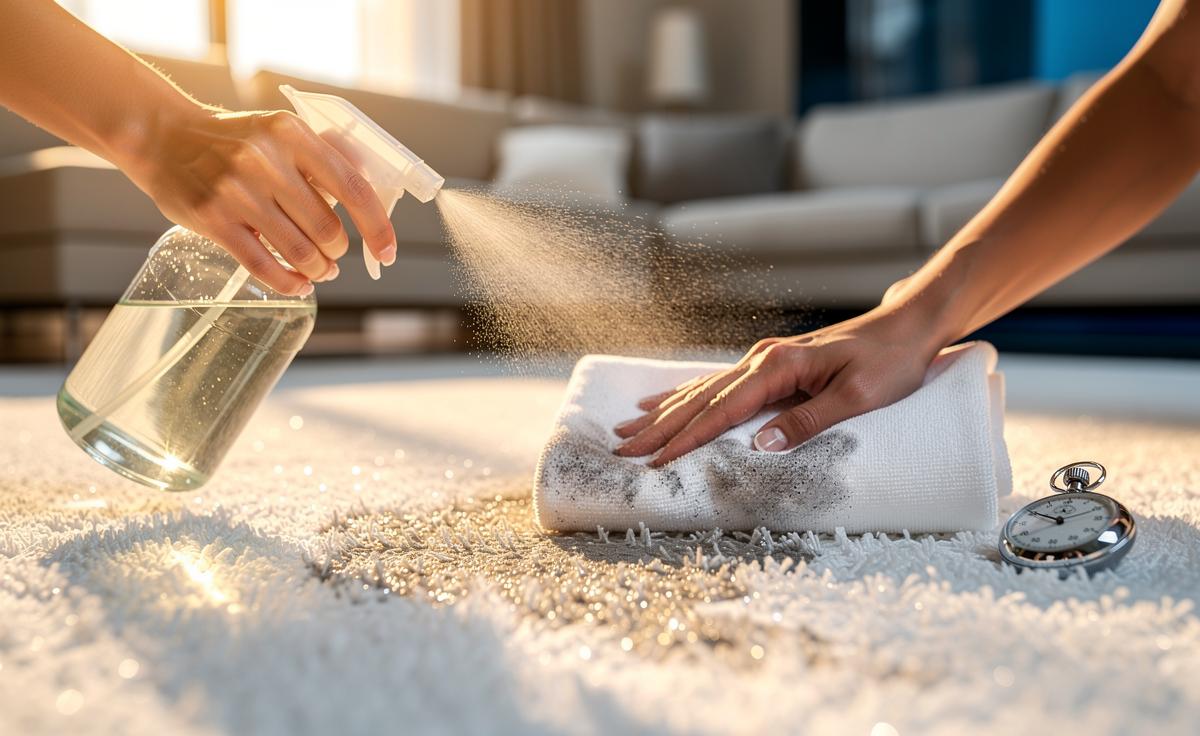
Start with a slow vacuum. Take two passes in perpendicular directions to stand the pile and remove grit. Mix a fresh solution: 1:1 white vinegar to cold water for synthetics, or 1:2 for wool. Optional: one tiny drop of washing-up liquid per 500 ml for greasy lanes, though the pure acid-water mix often suffices and leaves less residue. Decant into a fine-mist trigger bottle. Lightly mist the dull zone until the tips feel just damp. Wait roughly 60 seconds. Then blot with a clean, white microfibre cloth using firm, straight presses. You’ll see grey transfer on the cloth. Rotate to a clean area and repeat. Do not scrub—blot.
| Carpet Type | Vinegar:Water | Dwell Time | Notes |
|---|---|---|---|
| Synthetics (nylon, polyester) | 1:1 | 60–120 seconds | Fast lift on traffic haze; blot only. |
| Wool | 1:2 | 60 seconds | Minimal moisture; cool air dry. |
| Delicate plant fibres (sisal, jute) | Not advised | — | Prone to staining and warping from water. |
Finish by fluffing the fibres with light fingertip grooming or a clean spoon edge. Speed-dry with moving air—window open, fan on. Keep the underlay dry. For a stubborn patch, repeat once rather than saturate. The entire cycle, from spritz to final blot, often fits easily within two minutes for a typical footprint-sized area.
Tackling Stains, Odours, And Safe Limits
For fresh spills, always pre-blot with a white towel before the vinegar step. Coffee or tea? Blot hard, apply the vinegar solution, wait 90 seconds, then blot again. You’re targeting residue and tannins near the surface. Old, set stains are trickier and may need a targeted tannin remover after your quick brightening pass. Pet accidents respond to vinegar’s odour neutralising talent, but for biological contamination an enzyme cleaner after the vinegar step is wise. Never mix products in the bottle; apply in sequence and blot between stages.
There are limits. Avoid this method on plant-fibre carpets (sisal, jute), colour-run-prone rugs, or any backing sensitive to moisture. Keep vinegar off natural stone adjacent to carpets—it can etch. On wool, dial back to a 1:2 mix and cooler water, using minimal moisture and swift drying to prevent browning. Always patch-test in a hidden corner, checking both colourfastness and texture after drying. If dye lifts onto your cloth, stop and consult a professional.
For maintenance, a monthly quick-brighten on traffic lanes works wonders. Use clean cloths every time; grey transfer is proof of work done. Finish with a slow vacuum once dry to re-lift the pile. When a whole-room reset is due, consider hot-water extraction by a pro, then maintain with this vinegar spritz to keep whites convincingly crisp between deep cleans.
In a world of complicated chemistry, a bottle of white distilled vinegar often outperforms the cupboard of potions, restoring brightness by simply removing the veil that dims white fibres. It’s quick. It’s frugal. And handled carefully, it’s safe for most modern carpets while sparing you sticky residues that re-soil fast. The rule is simple: mist lightly, wait briefly, then blot clean. Are you ready to try the two-minute method on your dullest traffic lane this week, or is there a specific stain that’s still daring you to put vinegar’s gentle power to the test?
Did you like it?4.5/5 (29)