In a nutshell
- 🪟 Coffee filters deliver truly streak-free glass thanks to their lint-free, non-woven cellulose that absorbs oils without shedding or smearing.
- 🧭 Use a light mist of 1:1 vinegar and water, wipe in an S-pattern with folded filters, and finish with a dry filter to buff—avoid over-polishing.
- 🔬 Streaks are thin films of oils and surfactants; filters’ cellulose web adsorbs them uniformly, while even drying prevents haze under bright light.
- 💷 In UK homes, filters are low-cost, compostable when unbleached, and a smart alternative to paper towels; microfibre works too but risks detergent haze.
- 🧰 Pair filters with a squeegee for big jobs; keep spray light, pressure gentle, and swap filters as they load up to maintain a crystal-clear finish.
Most households already own the secret to streak-free windows. It sits beside the kettle. The humble pack of coffee filters does a better job on glass than many pricey gadgets, thanks to the way it absorbs oils without shedding lint. Paper towels can smear. Microfibre can haze if it carries detergent residue. Filters just glide. They leave no lint, no fuzzy fibres, no tell‑tale smears. In tests and tidy flats alike, filters deliver a crisp finish that lets the light in and the dust out. Here’s how they work, why they win, and the simple method that makes panes gleam.
Why Coffee Filters Beat Cloths and Paper Towels
At heart, a coffee filter is a sheet of non‑woven cellulose engineered to catch fine grounds while letting hot water pass. That design confers three advantages on glass. First, the tightly bonded fibres resist shredding, so you don’t pepper the pane with lint. Second, the fibre network is highly absorbent; it wicks and traps skin oils and cleaner residues that cause streaks. Third, it’s inert: unlike some paper towels, filters aren’t treated with lotions or “wet strength” additives that can leave a film.
Microfibre cloths are strong and reusable, yet they often carry traces of fabric softener or washing powder that bloom into a faint haze under sunlight. Newspapers once worked because their dense fibres and solvent‑rich inks broke down grease, but modern inks vary and can mark frames. Filters sit in a sweet spot: cheap, consistent, lint‑free.
Because filters are engineered to pass hot water without collapsing, they stand up to liquid glass cleaner without shredding. Their slightly stiff edges dig into corners. The small format encourages a light touch—essential for avoiding pressure streaks. In short, filters deliver the glass professional finish without the professional kit.
How to Use Coffee Filters for Streak‑Free Windows
Start clean. Dust the sill and frame so grit won’t drag across the pane. Mix a simple solution: 1:1 white vinegar and water, plus one drop of washing‑up liquid for greasy fingerprints. Decant into a fine‑mist sprayer. The goal is moisture, not drench. Heavy spray equals heavy streaks.
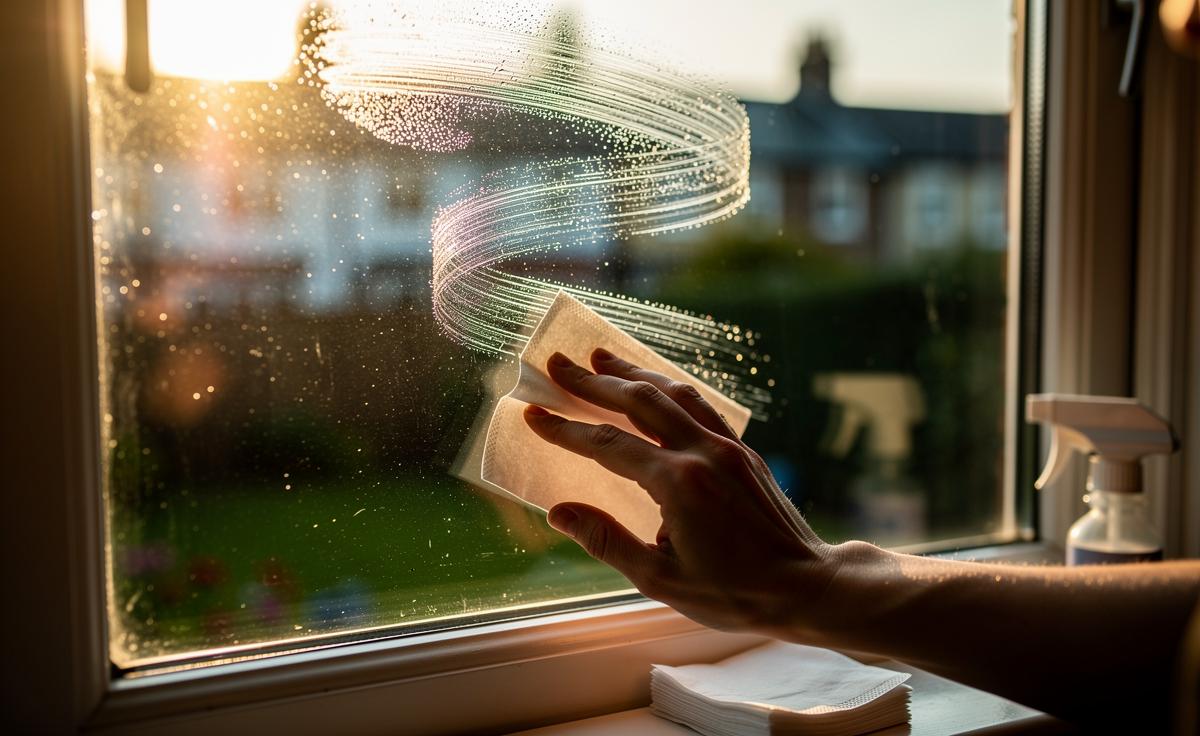
Fold a filter in half, then quarters. That creates a cushioned pad with crisp edges. Mist the glass lightly—two or three sweeps per pane. Wipe in a loose S‑pattern, top to bottom, overlapping passes. Flip to a dry quadrant as the pad loads up. For corners and edges, use the point of the fold. Swap to a fresh filter at the first sign of drag; that’s the moment oils are redepositing instead of being absorbed.
Finish with a second, dry filter for a quick buff. Work fast, then stop. Over‑polishing is the hidden cause of streaks because you re‑spread the thinnest remaining film. For exterior grime, pre‑wash with warm water before the vinegar step. On tinted or special‑coated panes, check the manufacturer’s guidance, but the same light‑mist, light‑pressure approach still applies.
The Science of Streaks: Oils, Residues, and Light
Streaks are not magic; they’re micro‑films. When a pane holds a patchy layer of oils and surfactants, light hits those uneven films and scatters. You see it as bands and arcs. Break the film and you break the streak. Coffee filters help because cellulose is naturally oleophilic enough to adsorb a thin oil layer while remaining stiff enough to push liquid uniformly. That balance—absorption plus controlled glide—prevents the stop‑start motion that lays down thick and thin tracks of cleaner.
The vinegar‑water mix reduces surface tension so the solution sheets evenly. A drop of detergent surrounds oily soil, making it liftable. The filter’s web captures these droplets, then dries quickly, dodging the “slow‑evaporation rainbow” that leaves marks under low winter sun. The effect is plain: uniform removal, uniform drying, uniform shine. Add the S‑pattern and you’ve also introduced a systematic way to avoid missed strips. It’s optics and materials working together, not cleaning folklore—just good physics on a cold pane.
Costs, Sustainability, and Alternatives
For UK homes, economics matter. A pack of 100 unbleached filters often costs less than a fancy squeegee refill and will maintain several months of spotless glass. Used filters can go in food‑waste caddies where facilities accept paper and card, or into home compost if they’re unbleached and only touched mild vinegar solution. Microfibre cloths are reusable and excellent when detergent‑free, but they demand careful laundering and can shed microfibres in wash water. Paper towels tend to lint and are poor value on glass. Newspaper remains divisive: sometimes brilliant, sometimes inky.
Choose the tool that matches your routine, then keep the chemistry simple. If you clean little and often, filters shine—literally—because they’re always fresh and residue‑free. For larger winter jobs, pair filters with a rubber squeegee to remove bulk solution, then buff. The aim is the same: low lint, low residue, high clarity at low cost. The table below summarises the trade‑offs at a glance.
| Tool | Lint Level | Reusability | Cost per Use | Best Use Cases |
|---|---|---|---|---|
| Coffee filters | Very low | Single use | Low | Final buffing, indoor panes, mirrors |
| Microfibre cloth | Low (can haze if soapy) | High | Very low | Large panes, frequent cleaning |
| Paper towels | Medium to high | Single use | Medium | Quick spills, not ideal for glass |
| Newspaper | Low (ink varies) | Single use | Low | Legacy hack; test for smudging |
So, yes, cleaning windows with coffee filters is more than a clever hack; it’s an elegant blend of material science and simple habit. Keep the spray light. Keep the motion steady. Let the cellulose web do the heavy lifting, then step back and enjoy the clear view. The method rewards restraint and consistency. If a small stack can deliver showroom glass for pennies, why wrestle with streaks at all? When you next face a sunlit smear on the sitting‑room window, will you reach for a filter and try the S‑pattern for yourself?
Did you like it?4.4/5 (24)