In a nutshell
- 🧪 The baking soda + vinegar reaction releases CO₂ bubbles that agitate soft blockages like grease, soap scum, and biofilm without harsh chemicals.
- ⏱️ Follow the 10-minute fizz method: 120 g baking soda, 250–300 ml white vinegar, cover the drain, wait 5–10 minutes, then flush with 1–2 litres of hot water.
- 🛡️ Safety first: never mix with bleach or commercial drain cleaners, avoid boiling water on PVC, ventilate, and wear gloves when handling acidic solutions.
- 🧰 Know the limits: the method excels on soft clogs but won’t clear solid obstructions or main-line issues—use a plunger/snake or call a professional when drains remain stagnant.
- ♻️ Low-cost, pipe-friendly maintenance: monthly use helps control odours and build-up, and it’s septic-safe in typical household quantities.
When the sink slows to a sulk and the shower tray pools around your ankles, the simplest fix is often hiding in the baking aisle. A scoop of baking soda and a splash of acid trigger a bubbling reaction that loosens grime, soap scum, and congealed cooking fats without toxic fumes or eye-watering costs. The method is fast. Ten minutes, sometimes less. It’s also kinder to pipes than caustic lye. For light to moderate clogs, this fizz-based clean is a smart first resort that often restores free-flowing drains. Here’s the science, the exact steps, and the limits every homeowner should know.
Why Baking Soda Works in Drains
At its heart, sodium bicarbonate is a mild alkali. That matters because many domestic blockages are a stew of fatty acids, shampoo residues, and shed skin bound into sticky films. Alkalis start to break those films down. Add an acid—household vinegar or citric acid—and the mixture releases carbon dioxide fizz. Those tiny bubbles agitate the muck, lifting it from the inner walls of the pipe. It’s not magic. It’s chemistry doing gentle mechanical work where your hands can’t reach.
This approach suits most modern plumbing. The solution is non-corrosive to PVC, copper, and stainless steel, unlike heavy-duty caustics that can pit metal or deform gaskets with frequent use. It also avoids heat spikes that sometimes warp plastic traps. Still, keep expectations sensible. Baking soda won’t chew through solid obstructions like hairpins, hardened grout, or a toddler’s toy lodged in an elbow. It excels at soft blockages and early-stage build-up, the kind that turns a quick rinse into a lingering puddle.
There’s another benefit: odour control. The alkaline base neutralises sour smells that rise from decomposing organics, while the fizz sweeps away the bacterial film that feeds them. Think of it as a low-risk reset. If it fails, you’ve lost minutes, not the weekend. If it works, you’ve spared your pipes, your lungs, and your budget a harsher ordeal. Do not mix this method with commercial drain cleaners; residues can react unpredictably.
Step-by-Step: The 10-Minute Fizz Method
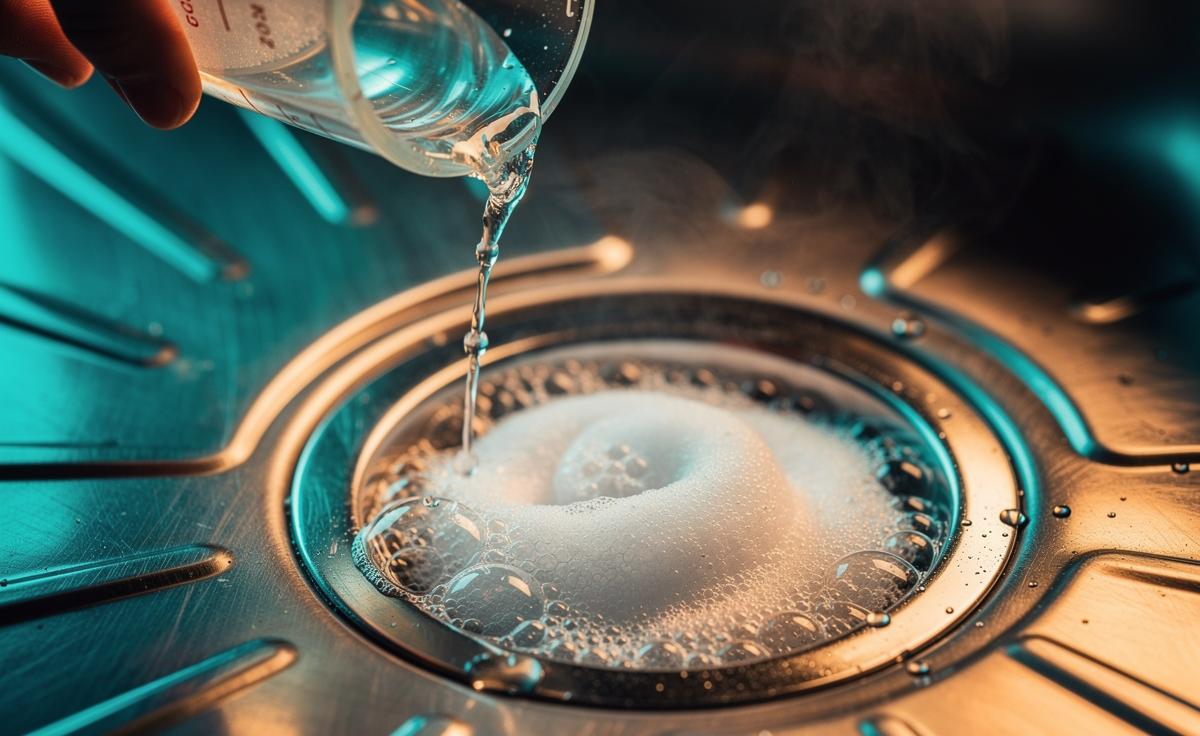
Preparation helps. Run the tap briefly to warm the pipe, then stop the water so the trap isn’t flooded. Tip 120 g (about 1/2 cup) of baking soda directly into the drain, nudging it past the grate if needed. Follow with 250–300 ml of white vinegar or a citric acid solution. You will hear the hiss. That’s the CO₂ working on contact points the foam can reach. Cap the drain with a plug or a damp cloth to force the action downward, not back into the room.
| Item | Quantity | Purpose | Time |
|---|---|---|---|
| Baking soda | 120 g (1/2 cup) | Alkaline film breaker | Immediate |
| White vinegar | 250–300 ml (1 cup) | Acid to trigger fizz | 0–10 minutes |
| Hot water flush | 1–2 litres | Rinse loosened debris | After 10 minutes |
Wait 5–10 minutes. Leave the fizz to gnaw at the grime; resist poking. Then pour through 1–2 litres of hot (not boiling) water to sweep out residue. If the flow improves but isn’t perfect, repeat once. Two cycles are usually enough for everyday clogs. Never attempt this within 24 hours of using bleach or caustic drain cleaners—the mix can release hazardous gases. Ventilate the room, wear gloves if you’re handling acidic solutions, and avoid boiling water on PVC, which can soften joints.
Safety, Plumbing Caveats, and When to Call a Pro
Home remedies shine within limits. If water stands and won’t budge, you likely have a dense obstruction or a blockage further down the stack. That’s a job for a plunger, a drain snake, or a professional with a camera. Repeated chemical attempts—DIY or shop-bought—can convert a simple snag into a compacted plug. Another red flag: simultaneous slow drains in kitchen and bath, which hints at a partial main-line blockage. In flats, sewage odours or gurgling after flushes may indicate vent issues. The fizz won’t fix those.
For most households, the soda-and-vinegar route is safe with septic systems, as the quantities are small and quickly diluted. Keep it monthly as a maintenance sweep, not a daily ritual. If you’ve recently poured fats down the sink, consider a cooler flush first; hot water can liquefy grease only to resolidify downstream. Hair-heavy bathrooms benefit from a quick manual clear of the waste guard before you reach for the cupboard staples.
What about materials? Chrome traps and silicone seals tolerate the method well, but avoid scrubbing foamy acids against natural stone basins, which can etch. And remember the basics: a wet-dry vacuum can pull stubborn slurries; enzyme cleaners work slowly but quietly overnight. Still stuck? In the UK, a weekday call-out for a straightforward rod-and-jet can undercut the cost of repeated chemical gambles. If there’s sewage backflow, stop, isolate the area, and call a professional immediately.
A fizzing jar of household science won’t solve every plumbing drama, yet it’s a cheap, low-risk first move that often restores sanity to a kitchen or bath. You learn fast, too—what your pipes tolerate, where grease lurks, how to keep traps clear with small, regular care. The 10-minute method won’t replace a plumber, but it can prevent the need for one. Use it early, and use it wisely. When the next slow drain threatens your morning routine, will you reach for harsh chemicals, or will you let a gentle bubble do the heavy lifting?
Did you like it?4.5/5 (25)