In a nutshell
- 🧪 The citric acid in lemon juice (pH ~2) dissolves hard water minerals like calcium carbonate, chelates metal ions, and makes spots “melt” for instant clarity.
- 🧼 Method that works: use 1:1 dilution for routine cleaning or neat for stubborn rings, allow 2–5 minutes dwell time, then rinse and dry with a microfibre cloth for a streak-free shine.
- ⚠️ Best on glass, ceramic, chrome, stainless steel; avoid marble, limestone, travertine, concrete and be cautious with delicate finishes—always patch-test and shorten contact time.
- 🌱 Cost- and eco-smart: lemons are low-waste with compostable peels; consider a 5–7% citric acid solution as a consistent alternative, and note vinegar’s odour and seal wear risks.
- 🔁 Keep scale away: adopt a simple routine—post-shower squeegee, weekly lemon wipe, immediate dry-down—and for severe build-up, repeat applications or add a gentle baking soda polish.
Limescale. Hard water halos. Those cloudy crescents that dull glass and metal with stubborn chalk. Reach for a lemon. Its natural citric acid doesn’t just perfume the room; it actively dissolves mineral build-up and lifts soap scum. Think of it as chemistry wrapped in zest. In British bathrooms and kitchens where kettles sing and showers steam, this humble fruit cuts through deposits quickly, safely, and without the eye-watering fumes of bleach. The method is simple and the results can be startlingly bright. For many surfaces, lemon juice returns instant clarity, turning misted fixtures into mirrors again. Here’s how and why it works, and how to get that streak-free gleam today.
The Science Behind Lemon’s Limescale-Busting Zest
Hard water leaves calcium carbonate and magnesium salts welded to surfaces. Lemon juice, typically 5–8% citric acid with a pH around 2, reacts with those alkaline deposits to form soluble citrate salts and carbon dioxide. In short, it unhooks the molecules that make chalky rings appear on taps, shower screens, and tiles. That’s why spots seem to “melt” when the juice touches them. Unlike harsh acids, citric acid is biodegradable, low odour, and kinder to skin and lungs when used sensibly. It’s also a mild chelating agent, which means it binds metal ions and stops them re-depositing while you wipe. Compared with vinegar (acetic acid), lemon’s chemistry hits a sweet spot: similar descaling power but a cleaner scent, and a slightly higher viscosity that helps it cling to vertical glass.
Two caveats matter. First, acids can attack sensitive stones and some metals over time; always patch-test. Second, contact time beats scrubbing. Let the acid do the heavy lifting, then buff. Pairing lemon with a microfibre cloth maximises abrasion control and minimises micro-scratches, vital for dazzling stainless steel and glossy ceramic.
How to Clear Hard Water Spots Fast
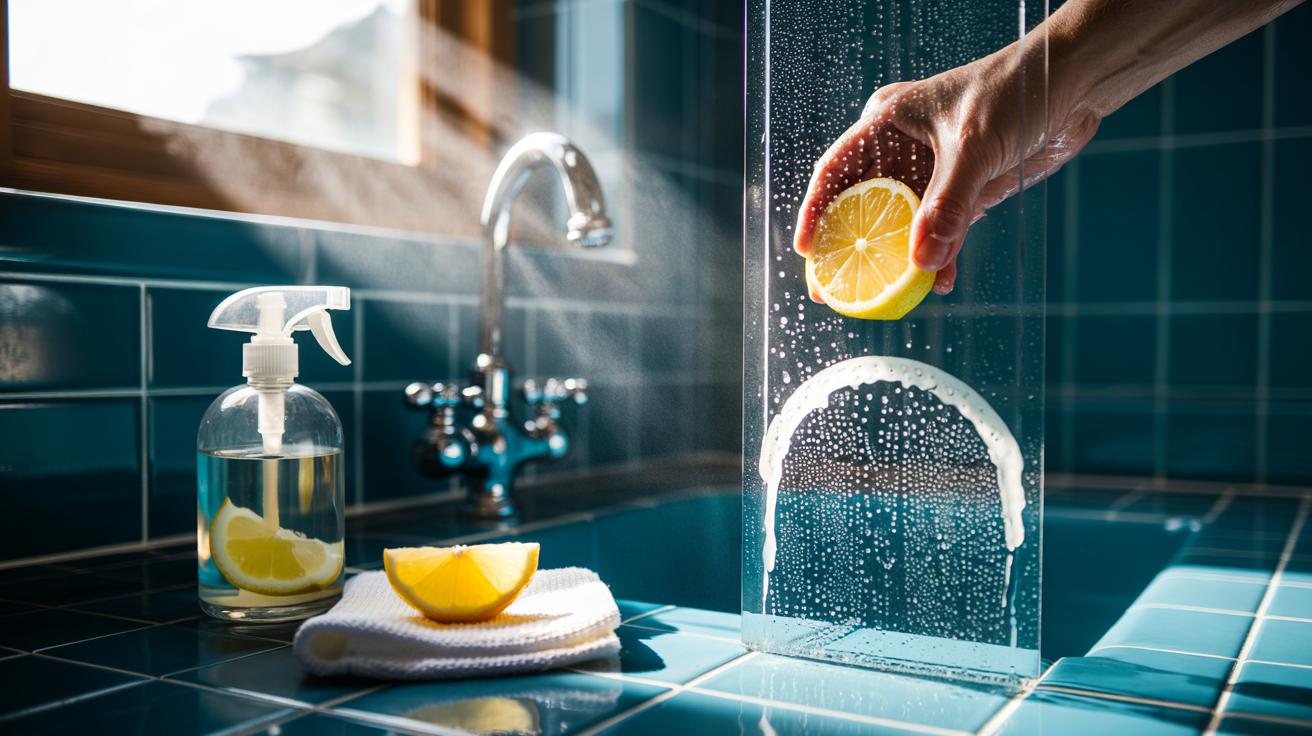
Start with a simple mix: one part fresh lemon juice to one part warm water for routine spots; use it neat for severe rings. Dampen the area to loosen soap residues, then apply the juice with a spray bottle or a cut lemon half. Give it two to five minutes—patience pays. For vertical glass, press a juiced lemon rind onto the surface to “stick” the acid where you need it. Agitate lightly with a soft sponge or an old toothbrush along edges and around fixtures. Rinse thoroughly with warm water. Dry immediately with a clean microfibre cloth, working in overlapping S-strokes to prevent new mineral marks as droplets evaporate. Repeat on stubborn build-up, increasing dwell time rather than pressure.
| Surface | Dilution | Contact Time | Method |
|---|---|---|---|
| Shower glass | 1:1 with water | 3–5 minutes | Spray, wait, wipe, rinse, dry |
| Chrome taps | Neat on spots | 2–3 minutes | Dab with cloth, gentle polish |
| Stainless steel sink | 1:1 with water | 2–4 minutes | Wipe with grain, rinse, dry |
| Ceramic tiles | 1:1 with water | 5 minutes | Sponge on, brush grout lightly |
For kettles and shower heads, remove and soak in warm, diluted juice for 20–30 minutes, then rinse thoroughly. The clarity often returns at once, the shine following after a careful dry-down. Finish with a squeegee on glass to delay the next build-up.
Where It Shines and Where to Avoid
Lemon juice excels on glass, ceramic, chrome, and well-sealed stainless steel. It’s brilliant at lifting the crescent stains that lurk under tap spouts and at the base of shower fittings. On mirrors, work sparingly and buff fast to avoid streaks. For shower doors, a weekly quick spritz keeps haze at bay. Used correctly, you’ll need less elbow grease and fewer proprietary chemicals. On grout, use a gentle brush and rinse well; acids can loosen built-up soap scum and reveal the original colour without harsh bleaches.
But avoid natural stone—marble, limestone, travertine—and concrete. Acids etch these surfaces, dulling the polish irreversibly. Be cautious with anodised aluminium, uncoated brass, and some plated finishes; test an inconspicuous corner first and shorten contact time. Don’t use on TFT screens, lacquered furniture, or car paintwork. For cars, limit lemon juice to glass only and rinse immediately. When in doubt, dilute, test, and dry. If you’re unsure about a tap’s finish, check the manufacturer’s care sheet; many recommend pH-neutral cleaners, with occasional acid use for limescale and immediate rinse-off.
Cost, Sustainability, and Smart Comparisons
A lemon is a tiny powerhouse. One fruit often treats a whole bathroom mirror and tap set, and the peel goes into compost afterwards. Compare with strong descalers: they certainly work, but bring pungent fumes and plastic bottles. Lemon juice offers a low-waste, low-odour option for routine maintenance. For frequent descaling, food-grade citric acid powder dissolved at 5–7% in warm water is a consistent, shelf-stable alternative that mimics lemon’s performance without squeezing. Choose what suits your schedule, not just your cupboard. Vinegar remains a standby, yet its smell lingers and can corrode rubber seals more readily than citric solutions when overused.
Costs vary by season, but in most UK supermarkets lemons are inexpensive and multipurpose—clean, cook, deodorise. Their mildness is also a strength: they’re less likely than stronger acids to damage chrome or stainless when used properly. The trade-off? Severe, long-neglected scale may need several applications or a targeted limescale remover. A smart routine wins: quick post-shower squeegee, weekly lemon wipe, immediate dry-down. Prevention is cheaper than the deepest clean.
Lemon juice won’t change your water chemistry, but its zesty power will restore clarity fast, leaving taps and glass bright without aggressive chemicals. Applied with care, it dissolves scale, breaks soap scum, and adds a clean, sunny scent. For the toughest deposits, you can pair it with a little baking soda paste for gentle abrasion—then rinse, rinse, rinse. Shine is a habit, not a one-off. Ready to swap harsh bottles for a fruit that works as hard as it smells good—what surface will you test first, and how quickly will you measure the difference?
Did you like it?4.5/5 (22)