In a nutshell
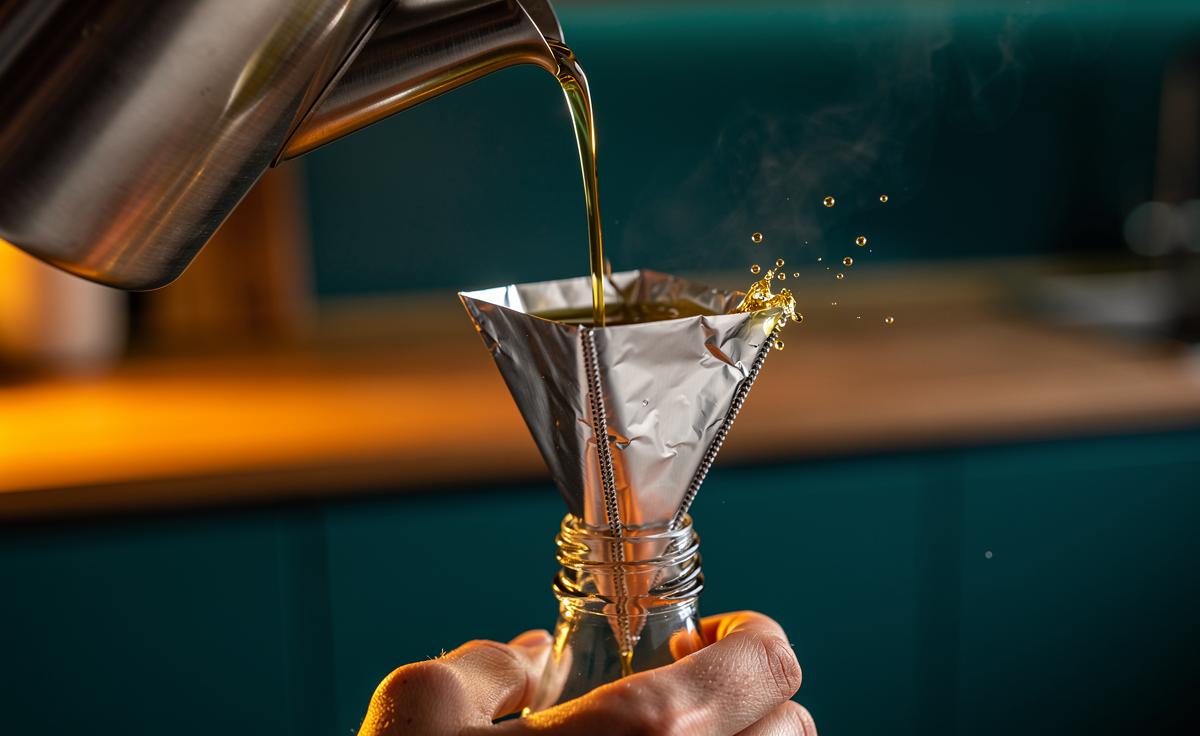
- 🛠️ Turn aluminium foil into a sturdy, custom funnel in seconds using one easy fold that creates a reinforced spine and precise spout.
- ⏱️ Clear steps: size and layer, make the spine, roll the cone, shape the spout, then seat and support for clean, controlled pours into bottles, jars, and pans.
- 📏 Practical sizing: use 25–35 cm squares, adjust tip diameter for water, oils, syrups, or seeds, and double-layer for stiffness; add a foil “gasket” for hands-free stability.
- 🔐 Safety first: suitable for food and household fluids; avoid fuels, strong acids/alkalis, and microwaves; handle brief hot transfers with gloves.
- 🌱 Low-impact hack: stores flat, costs pennies, and is recyclable when clean, reducing reliance on single-use plastic funnels.
Ever faced a wobbly bottle, a sloshing pan, and no funnel to hand? There’s a faster way than rummaging through drawers. With a square of aluminium foil and one easy fold, you can form a rigid, clean spout in seconds. It fits odd necks, tames awkward angles, and directs flow precisely. The trick is a simple crease that stiffens the sheet and shapes the exit. No tools. No mess. Minimal waste. In a kitchen, workshop, or garden shed, this quick hack rescues the pour, protects your surfaces, and keeps your nerves steady. Think controlled stream, not sticky catastrophe.
Why a Foil Funnel Beats the Panic Pour
When liquid needs moving now, control matters. A foil funnel shines because it’s infinitely adjustable: flare the collar for a jam jar, nip the point for a narrow bottle, or widen the exit to speed a slow transfer. The material is thin, yet, when folded, it gains surprising rigidity. A single crease creates a backbone; a crimped rim resists collapse. Result: a neat, laminar stream instead of an unruly glug. It turns chaos into a clean, disciplined pour in under 30 seconds.
Cost is pennies; performance is solid. Double-layering boosts strength for heavier fluids, such as syrups or light oils. For hot—but not boiling—liquids, the metal sheds heat quickly, protecting the neck of a plastic bottle during a brief transfer. Keep contact short, and you’re golden. Food uses? Safe with clean, fresh foil and neutral liquids. Avoid prolonged exposure to highly acidic or salty solutions, where aluminium may react. In the shed, it handles screen-wash, fertiliser solutions, or non-caustic cleaners. For fuels or corrosives, skip the hack; use a rated funnel.
There’s an environmental upside. Because it’s recyclable when clean and unsoiled, foil sidesteps the throwaway pitfall of single-use plastics. And it stores flat, so your “emergency funnel” lives invisibly in a drawer, glovebox, or camping kit. Quick to make. Quick to bin—or to recycle if uncontaminated. The convenience-to-impact ratio is hard to beat.
Step-By-Step: The Easy Fold for a Perfect Spout
Step 1: Size and layer. Tear a square of foil around 30 × 30 cm for most bottles. For gloopy liquids or wider mouths, go larger. Double it: place a second layer on top for stiffness. Step 2: Make the spine. Along one diagonal, fold a 1–1.5 cm strip back on itself twice to form an “S” hem. This reinforced ridge is your structural backbone. That single crease stops buckling and keeps the flow true.
Step 3: Roll and set the cone. Bring the two unhemmed edges together, overlapping until a cone forms with the tip just wider than a matchstick. Pinch the seam firmly along its length; then lightly crimp the rim. Step 4: Shape the spout. Gently pinch the tip into an oval; this controls speed and direction. For very narrow necks, twist the last 5–8 mm to a tiny nozzle. For chunky necks, flare the cone by easing the overlap. You’re sculpting a custom spout in seconds.
Step 5: Seat and support. Press the rim against the vessel to create a shallow collar; fold a small cuff outward to lock it on. Hold the cone near the spine as you pour, not at the tip. Test with a splash of water. Adjust angle to prevent glugging; a slight tilt gives air a return path. Safety note: use a jug for decanting hot liquid and heatproof gloves if needed. Never use foil in a microwave.
Sizing, Stability, and Real-World Uses
Match the funnel to the task, and it performs far beyond its humble origins. For a 500 ml bottle, a 25–30 cm square is ample. For jars or pans, go 35 cm and double-layer. A hemmed rim and a reinforced spine are small touches that transform a flimsy sheet into a reliable, rigid channel. Need a hands-free fit? Twist a thin ring of foil, place it around the bottle neck, and sit the funnel on that “gasket” for extra stability. In practice, you’ll use it for stock, sauces, screen-wash, plant feed, even birdseed. Skip petrol, strong solvents, or caustic solutions.
| Task | Foil Size (cm) | Tip Diameter (mm) | Expected Flow | Note |
|---|---|---|---|---|
| Water / thin juices | 25–30 | 6–8 | Fast, smooth | Single layer often fine |
| Oils / syrups | 30–35 | 4–6 | Steady, controlled | Double layer for stiffness |
| Seeds / dry goods | 30–35 | 8–10 (oval) | Free-flowing | Wider oval reduces jams |
| Hot stock (brief) | 30–35 | 6–8 | Moderate | Use gloves; quick transfer |
Hygiene is simple: use fresh, clean foil for food; bin or recycle if uncontaminated. If the funnel touches oil, paint, or chemicals, treat it as non-recyclable waste. Do not use with strong acids, strong alkalis, or fuels, and keep foil away from live electrical sources. For cleaner pours, wet the receiving neck, not the foil; water can soften creases. Finally, control the angle. A gentle tilt, a firm grip near the spine, and a short, confident pour produce that satisfying, drip-free finish every time.
In a world that overcomplicates simple jobs, this aluminium foil hack stands out: fast, precise, adaptable. The easy fold adds structural smarts, turning a flimsy sheet into a dependable spout you can trust with stock, oil, or seeds. It’s the sort of trick you remember at midnight when the jar is full and the funnel is missing. Low cost. Low clutter. High control. Once you’ve done it twice, it becomes instinct. Where will a quick, made-to-measure foil funnel save your next pour—kitchen clean-up, car boot, or the allotment tap at dusk?
Did you like it?4.4/5 (29)