In a nutshell
- 🪞 Shaving cream creates a thin anti-fog film with surfactants (and often glycerin) that makes condensation sheet, not bead, keeping mirrors clear after steamy showers.
- ⏱️ Quick routine: start with a dry mirror, apply a pea-sized dab via microfibre cloth, spread thinly, then buff to invisible; use the guide for mirror size, amount, buff time, and expected longevity.
- ⚠️ Safety first: apply to the cloth (not sprayed on glass), avoid drips near mirror edges to protect the silvering, wipe spills from stone or wood, and patch-test plastics; choose low-odour formulas if sensitive.
- ⏳ Expected results: clarity typically lasts 2–10 days depending on humidity, ventilation, and cleaning; strong glass cleaners strip the film, so reapply a tiny amount when fog returns.
- ⚖️ Alternatives compared: anti-fog sprays last longer but cost more; dish soap is similar but streak-prone; hairdryers clear fog briefly; car coatings may be harsh indoors—shaving cream wins on convenience and cost.
There’s a surprisingly simple way to clear a steamed-up mirror without reaching for chemicals or electricity. Use shaving cream. Not fancy serum, not a specialist spray. The everyday foam designed for whiskers forms a whisper-thin barrier that stops water droplets from clinging and blooming into fog. It takes seconds, costs pennies, and leaves a streak-free sheen when done properly. The result is visibility right after a hot shower, without frantic towel wiping or blasting the extractor. As a quick hack for busy mornings or shared bathrooms, it’s hard to beat. Here’s how it works, how to do it neatly, and how long you can expect the clarity to last.
Why Shaving Cream Stops Steam From Clinging
Fog forms when warm, damp air hits a cool mirror and condenses into tiny droplets. Those droplets scatter light, so your reflection blurs. Shaving cream interrupts that process. The foam contains surfactants and sometimes glycerin, which spread into a thin, invisible film. That film changes the way water behaves on glass, encouraging condensation to sheet rather than bead. Light passes through a sheeted layer more cleanly, which means a clearer view.
Think of it as a temporary, hydrophobic polish made from bathroom staples rather than lab-grade coatings. The science is simple but effective: a small amount distributes across the surface, reduces surface tension, and quiets down the wild scattering that fog creates. Crucially, it’s not sticky when buffed correctly. Use too much, though, and you’ll get smears. Use the right amount and it’s magic. For households without anti-fog mirrors or those in rentals, this hack offers a low-effort workaround that doesn’t alter the glass permanently.
Step-by-Step: A 60-Second Anti-Fog Routine
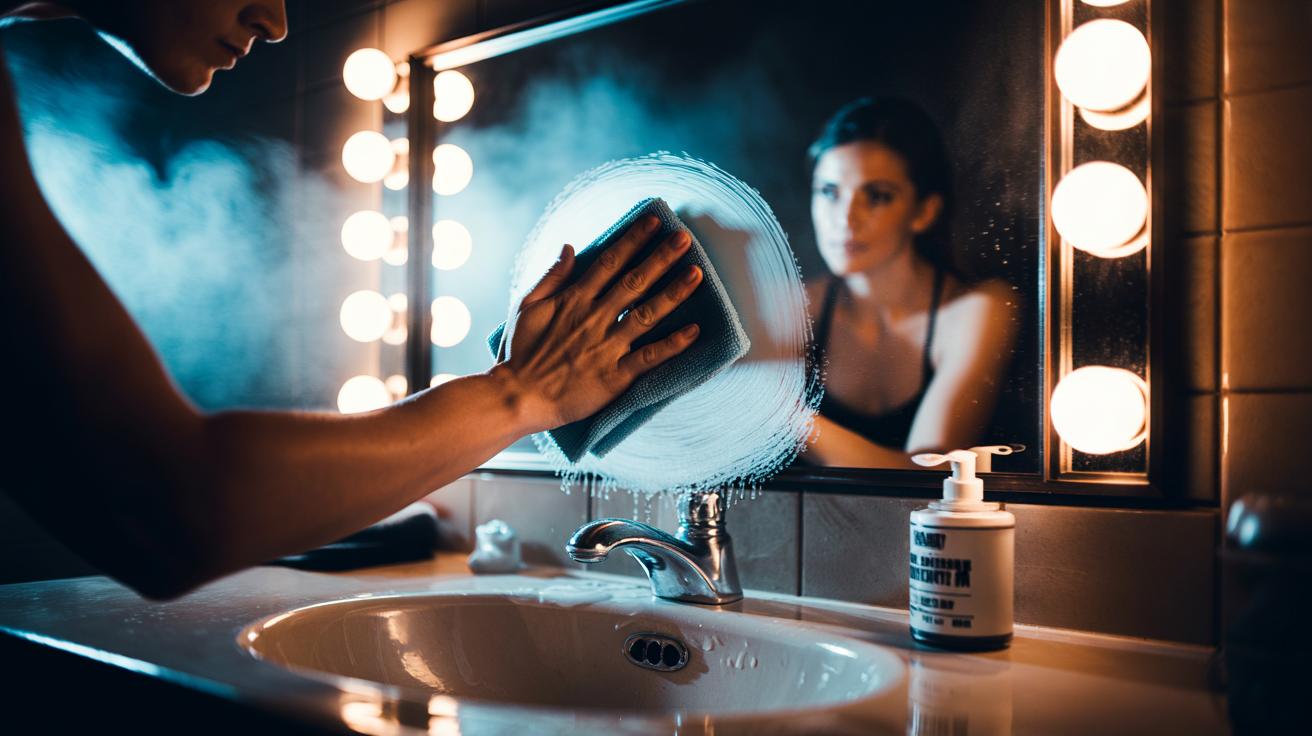
Start with a cool, dry mirror. Place a pea-sized dab of shaving cream on a clean microfibre cloth. Less is more; a marble-sized blob will be too much for most standard mirrors. Dot the cream around the glass—corners, centre, and edges—then massage it across the surface in overlapping circles. You want a very thin, even haze. Finish by buffing with a second, dry microfibre cloth until the mirror looks crystal clear. No visible residue should remain. Turn on a hot shower and test. If you see streaks, you’ve used too much; rebuff lightly. If you spot foggy patches, you missed a zone; reapply a micro-dab there.
Want numbers to make it foolproof? Use the table below as a guide for typical bathrooms. It’s not exact science, but it keeps waste down and finish consistent.
| Mirror Size | Amount of Cream | Buffing Time | Typical Longevity |
|---|---|---|---|
| Small (30x40cm) | Half pea | 30–40 sec | 2–4 days |
| Medium (50x70cm) | Pea-sized | 45–60 sec | 3–7 days |
| Large (70x100cm+) | Pea to marble | 60–90 sec | 4–10 days |
Always buff to invisible—clarity comes from a film you can’t see, not from visible foam. Keep one cloth for application and one for buffing to avoid smears.
Safety, Surfaces, and Longevity: What to Expect
When used sparingly, shaving cream is gentle on glass. But be mindful of surroundings. Overspread foam can slick tile or flooring, so lay a towel on the vanity and keep application controlled. Do not spray aerosol directly at the mirror in a small, steamy room—apply to the cloth first for better control and ventilation. Avoid getting product behind the mirror’s edge where the silvering (the reflective backing) is exposed; repeated wetting there can encourage deterioration over time.
Most users find the anti-fog effect lasts several showers—typically a few days to a week—depending on humidity, ventilation, and cleaning habits. Heavy scrubbing with glass cleaner will strip the film sooner, so if you clean daily, expect more frequent reapplications. Good news: application is quick, and you’re using a tiny amount. Choose unscented or low-odour formulas if perfumes bother you. Foam and gel both work, but foam spreads faster and buffs cleaner for most people. If you have stone splashbacks or timber frames, wipe spills immediately to prevent staining. For acrylic or plastic mirrors, test a corner first—rare, but some plastics can haze with certain surfactants.
How It Compares With Other Anti-Fog Fixes
Dedicated anti-fog sprays deliver longer protection—often weeks—but cost more and may require careful curing. Dish soap works similarly to shaving cream; it’s cheap and clear but can leave faint streaks if overapplied. A quick blast with a hairdryer clears fog instantly yet offers no prevention and wastes energy. Vinegar? Great for cleaning, poor for fog prevention. Car glass coatings like Rain‑X can be effective, but some contain solvents best kept away from indoor mirrors and frames; always check suitability.
Shaving cream lands in a sweet spot: fast, accessible, and forgiving. It’s ideal for renters, guests arriving in an hour, or anyone who wants reliable clarity without buying new products. Sprays win on duration; shaving cream wins on convenience and cost. If you’ve tried the “wipe with a towel” trick, you know the result lasts minutes, not mornings. With a tiny dab and a minute’s buffing, this hack buys you several clear showers. Keep a microfibre cloth in the vanity drawer and reapply the moment fog returns—habit makes it seamless.
In a world of complicated bathroom upgrades, the humble can of shaving cream earns its place by delivering crisp reflections at sprint speed. It’s tidy, thrifty, and remarkably effective when you use just enough and buff to invisible. The trick won’t replace built‑in heated mirrors, but it will keep you on schedule and your glass camera‑ready. Whether you’re prepping for work, shaving with precision, or styling hair, that clarity matters. Will you adopt the one‑minute routine—or experiment with alternatives to see which anti‑fog method fits your bathroom best?
Did you like it?4.6/5 (30)