In a nutshell
- 🧼 Use a baking soda paste to degrease a dirty microwave in about 5 minutes, relying on contact time and a spreadable texture for fast wipe-away results.
- 🔬 It works because the gentle alkali helps saponify fats, fine particles provide non-scratch lift, and it absorbs odours embedded in seals and surfaces.
- 🛠️ Step-by-step: unplug, remove turntable, mix ~3:1 (bicarb:water), apply, dwell 5 minutes, wipe with a microfibre cloth, rinse, dry; use a plastic scraper for edges.
- ⚠️ For stubborn spots, pre-steam, reapply thicker paste up to 10 minutes, avoid vents and the waveguide cover, never mix with bleach; finish with diluted vinegar if desired.
- 📅 Prevention habits: cover food, wipe while warm, weekly seal checks, monthly paste reset, and an overnight dish of bicarbonate to keep odours down.
Microwave doors that feel tacky, walls freckled with splatters, a lingering curry odour—none of it needs harsh chemicals or hours of scrubbing. A simple baking soda paste breaks down greasy build-up fast, and yes, it genuinely works in around five minutes. The trick is contact time and the right texture: spreadable, not runny. Once that mild alkali loosens the grime, a quick wipe restores the shine. This is a low-cost, low-fuss, planet-friendly fix you can deploy between meals. Here’s how the science stacks up, the method that delivers, and the safety pointers to keep your microwave spotless without the faff.
Why Baking Soda Works on Microwave Grease
At its core, baking soda—sodium bicarbonate—is a gentle alkali. Grease is largely fatty acids. When the two meet with a touch of moisture, the alkali helps saponify those fats, loosening their grip on enamel and glass. Add its fine, non-scratching particles and you get mild mechanical lift as you wipe. That’s why paste succeeds where spray-and-pray cleaners sometimes smear. It changes the mess, then helps move it.
Odours are another win. Baking soda doesn’t just mask smells; it absorbs volatile compounds. That matters in a microwave, where heated vapours drive aromas deep into crevices and the door seal. A short dwell lets crystals attract moisture, soften splatters, and neutralise whiffs. Five minutes is often enough to break stubborn bonds while staying gentle on finishes.
Equally important is surface safety. Inside liners are typically enamel or polymer-coated steel, both compatible with bicarbonate. Use a soft microfibre cloth and light pressure. Avoid aggressive scouring pads. Preserve the door’s clear-view coating by wiping in straight lines, not circles, to resist hazing over time. It’s effective chemistry delivered with careful technique.
Five-Minute Paste Method: Step-by-Step
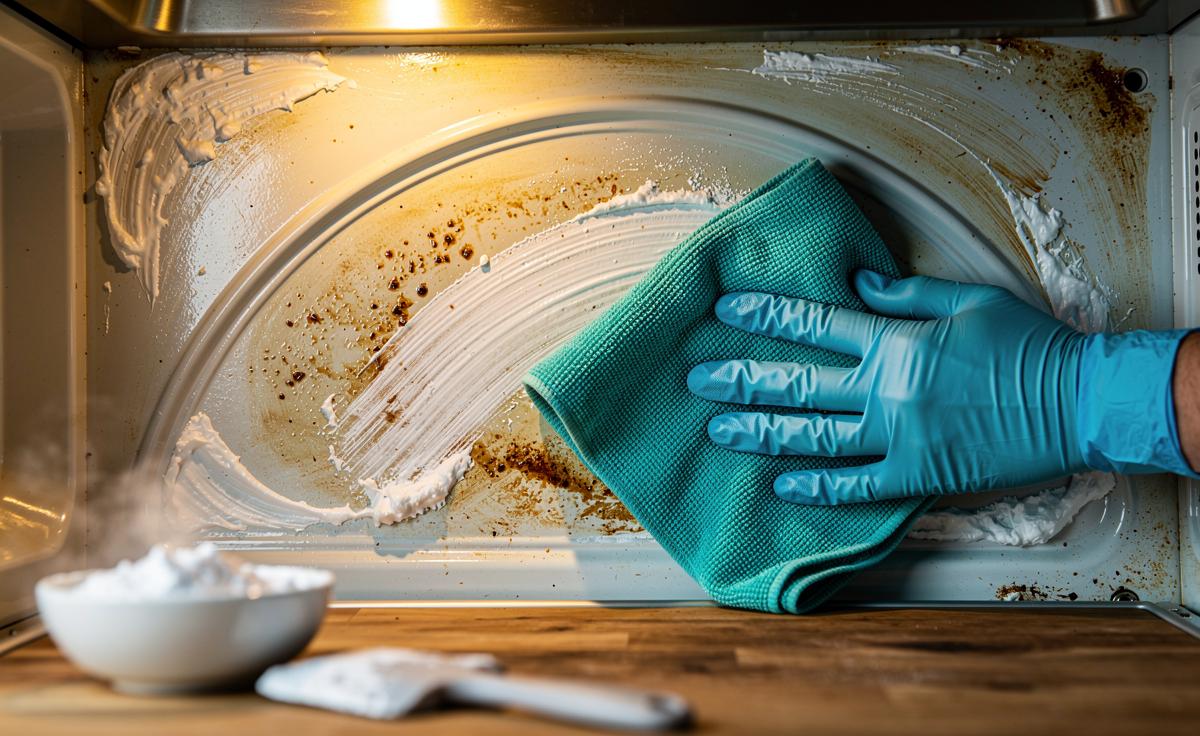
Unplug the microwave. Remove the glass turntable and ring. Mix a spreadable paste: start with 3 tablespoons baking soda to 1 tablespoon warm water, adjusting until it holds peaks. With a cloth or gloved fingers, frost the worst zones—ceiling, back wall, and around the inner perimeter—keeping clear of vents and latch slots. Lay it on thick enough to stay put for five minutes. For the door, apply a thinner veil to avoid drips into seals.
| Key Step | Quick Details |
|---|---|
| Paste Ratio | Approx. 3:1 (baking soda:water), adjust to spreadable |
| Dwell Time | 5 minutes for typical grease; up to 10 for baked-on spots |
| Tools | Soft microfibre, plastic scraper, bowl, gloves |
| Finish | Wipe with damp cloth, then rinse and dry |
After the dwell time, wipe with a wrung-out warm cloth. The paste and grease will lift together. Rinse the cloth often. For corners, a plastic card or spatula nudges residue without scratching. Remove the turntable grime separately: paste, dwell, then rinse under the tap. Finish with a clean damp cloth to remove any film, then dry to a sheen. In most cases, the wipe-down takes less than a minute once the paste has done its job.
Tackling Stubborn Spots and Safety Notes
Baked-on sauces or caramelised sugars may need a two-step approach. Soften first: heat a broad mug of water for 2–3 minutes with a wooden stir stick inside to prevent superheating. Let the steam sit, door closed, for one minute. Then apply the baking soda paste and wait your five. Steam loosens polymers; the alkali finishes the chemistry. For crimson tomato stains, the same method works—stains fade as residues lift.
If residue clings, reapply a slightly thicker paste and extend contact to 10 minutes. Use a plastic scraper at a low angle for edges. Rinse thoroughly to avoid a chalky film. Never use steel wool. Avoid forcing paste into vents, hinges, or the waveguide cover. Those areas should be wiped with a barely damp cloth only, preserving airflow and electronics.
Keep chemistry simple. Don’t mix with bleach or quaternary disinfectants. If you like a sparkling finish, you can wipe over with diluted white vinegar after rinsing; apply to the cloth, not the cavity. Vinegar neutralises any residual alkalinity and leaves glass streak-free. Dry everything, reseat the turntable, and plug back in. Job done, safely.
Keeping It Clean: Quick Prevention Habits
The easiest clean is the one you barely need. Cover bowls with a vented lid or paper towel to stop splatter in the first place. Build a one-minute rule: after any messy reheat, wipe while warm. Warm residues surrender instantly; cold ones harden and demand elbow grease. Keep a small jar of baking soda near the microwave as a visual cue to act early.
Make maintenance routine. Weekly, check corners and the door seal; that’s where crumbs and oils collect. A teaspoon of bicarbonate in a cup of warm water doubles as a quick wipe solution for light soils. Monthly, do a deep once-over with the paste to reset the interior. Consistency beats heroic clean-ups. It’s quicker, cheaper, and kinder to surfaces.
For odours, leave a small open dish of baking soda inside overnight with the door closed, removing before use. Rotate it monthly. Train teens and housemates: cover food, clean spills immediately, reseat the ring correctly. Little rituals, big payoff. Your microwave stays presentable, your kitchen smells fresher, and you spend less time scrubbing.
Baking soda is humble, but in a microwave it’s a minor miracle: safe, inexpensive, and brutally effective on greasy films. The five-minute paste method leverages chemistry, not force, delivering a quick reset without fumes or scratches. It turns a dreaded chore into a predictable, almost effortless routine. Ready to try it tonight—paste, pause, wipe—and wake up to a clean door and clear conscience? What tweaks will you add to make this five-minute reset your household’s go-to ritual?
Did you like it?4.7/5 (24)