In a nutshell
- 🧪 Baking soda neutralises odours by gently neutralising acids (pH ~8.3) and adsorbing moisture and volatile compounds, rather than masking smells with fragrance.
- 🧹 For rapid freshening: pre-vacuum, apply a thin, even sprinkle via a sieve, brush lightly for deep pile, allow a 15–30 minute dwell (longer for tough smells), then vacuum slowly in overlapping lines; light odours lift in minutes.
- 🐶 For stubborn issues: treat the source first (blot urine, use an enzyme cleaner), then apply baking soda once dry; for smoke, repeat cycles and add activated charcoal; don’t mix enzymes with alkalis simultaneously.
- ♻️ Safety and savings: odourless and low-VOC, suitable for allergy-prone homes; if dust-sensitive, wear a mask and use a vacuum with a HEPA filter; it’s low cost and effective with routine upkeep.
- 💡 Know the limits: baking soda isn’t a disinfectant; persistent smells may sit in the underlay and require professional extraction, after which baking soda excels for maintenance.
Forget perfumed sprays that mask yesterday’s curry, damp dog, or a teenager’s trainers. There’s a simpler fix hiding in your baking cupboard. Sprinkle baking soda—also known as sodium bicarbonate—over the carpet, let it sit, then vacuum. That’s it. No harsh solvents. No complicated kit. Within minutes, light odours fade and rooms feel fresher, cleaner, less stuffy. The trick isn’t magic, it’s chemistry and texture: tiny alkaline crystals that capture moisture, bind volatile compounds, and calm the acids behind many smells. Used correctly, this humble powder can neutralise bad odours quickly, cheaply, and with minimal effort. Here’s how to make that “simple sprinkle” deliver newsroom-worthy results in your own home.
How Baking Soda Neutralises Odours
Odours ride on volatile molecules. Many are weak acids generated by food residues, body oils, and pet accidents. Baking soda is mildly alkaline (pH about 8.3), so it can neutralise acids through gentle acid–base reactions, reducing volatility at the source. At the same time, its crystalline powder offers huge surface area. That rough, porous structure adsorbs moisture and traps smell-bearing compounds, preventing them from evaporating into your room. Think of it as a microscopic sponge and buffer in one.
Unlike perfumed deodorants that simply overlay a scent, sodium bicarbonate aims to remove what causes the pong. Results can be fast. Sprinkle, wait 15–30 minutes, vacuum, breathe. Light odours often lift in the time it takes to make tea. Heavy smoke, deep pet odours, or long-neglected spills may need an overnight dwell to give the powder more time to bind compounds that sit deeper in the pile. One caveat: it isn’t a disinfectant. If bacteria are the driving force, pair baking soda with cleaning that actually removes the source before deodorising.
Step-by-Step Method for Rapid Freshening
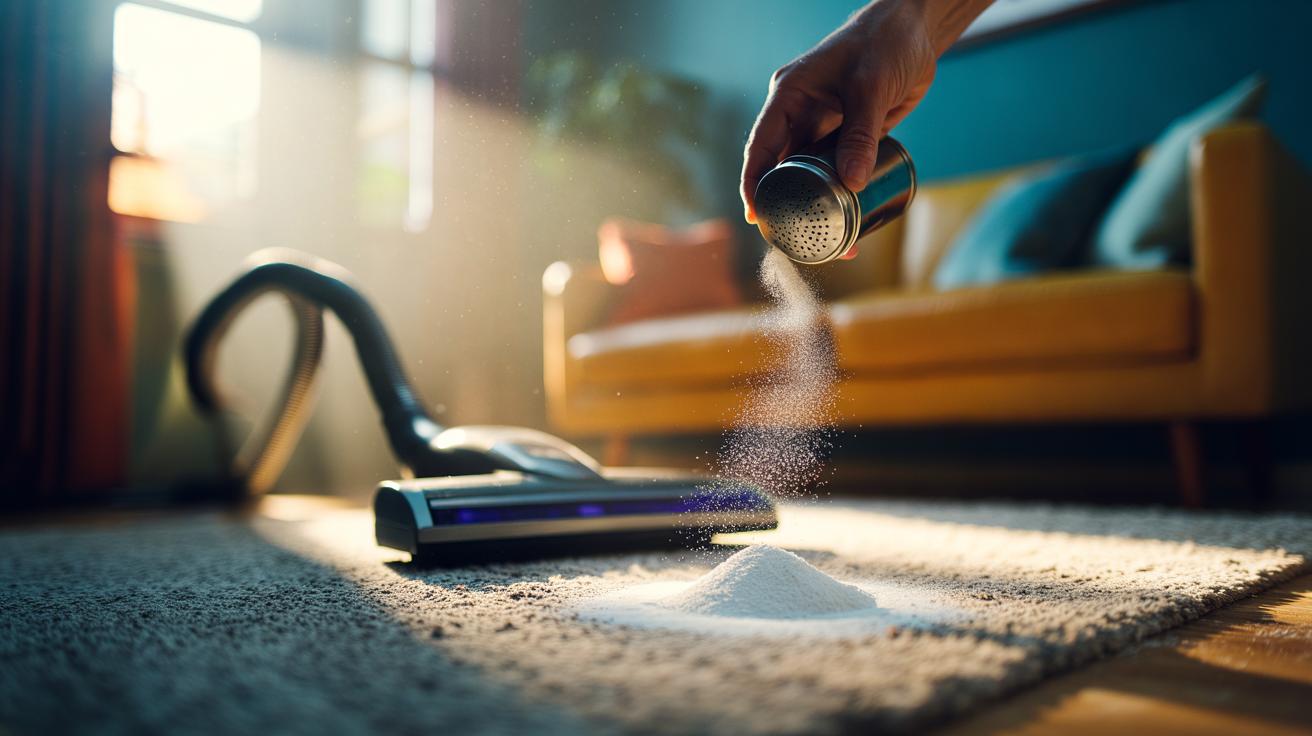
Start with a slow vacuum to remove loose grit; you want the powder reaching fibres, not sitting on fluff. Using a shaker or sieve, distribute a fine, even layer of baking soda across the carpet. Work lightly with a soft brush for deep pile. Aim for thin and thorough, not snowy drifts. For quick refreshes, 15–30 minutes is enough. For stubborn smells, leave it for several hours or overnight with windows cracked for airflow.
Vacuum method matters. Use a clean bag or canister, and pass slowly in overlapping lines to capture fine particles. If your vacuum has a brush bar, lower it for synthetics; raise or switch off for delicate wool to avoid fuzzing. Empty the canister afterwards to prevent odours lingering in the machine. Repeat the entire process weekly in high-traffic zones or before guests arrive for reliable freshness without fragrance.
| Carpet Type | Amount per m² | Dwell Time | Notes |
|---|---|---|---|
| Wool | 15–20 g (2–3 tbsp) | 30–60 mins | Brush gently; avoid paste on fibres |
| Synthetic (nylon, polypropylene) | 20–30 g (3–4 tbsp) | 15–45 mins | Use brush bar for lift |
| Deep pile/shag | 25–35 g (4–5 tbsp) | 1–8 hrs | Work in lightly; vacuum twice |
Dealing With Stubborn Smells and Stains
Pet accidents and smoke can cling. Tackle the source first. Blot fresh urine with white paper towels, pressing hard to wick moisture from the underlay. Avoid scrubbing. If odour persists, apply an enzyme cleaner to digest uric crystals, then allow to dry fully before using baking soda to neutralise lingering acids. Never mix enzyme products and strong alkalis at the same time; sequence them instead.
For greasy spots, sprinkle baking soda generously, press in gently, and leave overnight to adsorb oils before vacuuming. For marks, a tiny paste (bicarbonate plus a few drops of water) can help, but patch-test on an inconspicuous corner, particularly with wool. Rinse paste residue with a barely damp cloth, then dry, then deodorise again dry. Smoke-affected rooms benefit from repeated cycles: ventilate, bake-soda the carpet, vacuum, then wipe skirtings and fabrics. A bowl of activated charcoal placed nearby supports the process. Keep pets and curious toddlers away while powder is on the floor, and always dispose of vacuumed waste promptly to stop smells re-seeding.
Safety, Sustainability, and Cost
Sodium bicarbonate earns green points. It’s odourless, non-flammable, and free from typical fragrance allergens and VOCs found in many aerosol deodorisers. That makes it a friendly option for allergy-prone households. Still, dust is dust. If you’re sensitive, wear a simple mask while applying and choose a vacuum with a HEPA filter to capture fine particles. Always vacuum thoroughly after treatment to minimise residue. For wool and delicate rugs, keep everything dry, avoid heavy brushing, and skip watery pastes unless you’ve patch-tested.
There’s thrift in the tin, too. A 500 g box costs little and stretches far; most living rooms need only a few tablespoons per session. Compare that with branded carpet sprays and you’ll save over a month, never mind a year. As for your vacuum, empty and clean its filters routinely; baking soda can accumulate and reduce suction if neglected. If repeated deodorising doesn’t shift a stubborn smell, the culprit may be in the underlay. In that case, consider professional hot-water extraction and targeted underlay treatment, then return to baking soda for maintenance.
Baking soda won’t remodel your sitting room, but it will change how it smells, fast. A measured sprinkle, a patient pause, a careful vacuum: three steps to a fresher floor and a calmer home without perfumed fog. Keep a shaker by the hoover, treat high-traffic spots regularly, and escalate only when sources demand deeper cleaning. Simple habits beat scented cover-ups every time. Ready to rescue that rug right now—or is there a particular odour you’d like help troubleshooting first?
Did you like it?4.4/5 (23)