In a nutshell
- 🫖 Tea bags act as mini odour magnets: their porous leaf matrix enables adsorption of amines and sulfur compounds, delivering noticeable freshness in about 10 minutes.
- 🔧 Activation and use: dry used, unflavoured bags (oven 90–100°C for 15–25 minutes or microwave in short bursts), cool, then place 1–2 per shelf; tea controls odour, not hygiene.
- 📊 Smart comparisons: tea is fast and cheap; baking soda works slowly on acids; coffee mostly masks; activated charcoal is the heavyweight for persistent VOCs, with different replacement cadences.
- 🧼 Troubleshooting persistent smells: deep clean spills, drip trays, and gaskets; wipe with diluted vinegar; improve airflow and set 3–5°C; keep proteins sealed in airtight containers.
- ♻️ Ongoing maintenance: re-dry or replace tea weekly, store a jar of pre-dried bags, and escalate to charcoal if odours linger—prevention beats cure.
Your fridge smells like last week’s leftovers? You’re not alone. A fast, inexpensive fix sits in your cupboard: tea bags. When gently dried, ordinary tea becomes a highly porous odour adsorber that can tame fishy notes, onion fumes, and that mysterious “fridge funk” with surprising speed. In many kitchens you’ll notice a fresher aroma in about 10 minutes, as volatile compounds are trapped by the leaf’s intricate structure. This isn’t magic. It’s chemistry and capillarity working in your favour. Below, the science, the method, and a fair comparison with the usual suspects—baking soda, coffee, and charcoal—so you can deploy the right tool for your next olfactory emergency.
Why Tea Works like a Mini Odour Magnet
Tea leaves are a natural matrix of cellulose, lignin, and polyphenols. That matrix forms a labyrinth of micro- and meso-pores that welcome small molecules inside via adsorption (surface binding), not absorption (soaking). Those surfaces carry functional groups that interact with amines (from fish and cheese), sulfur compounds (from alliums and eggs), and aldehydes (from oxidised fats), dampening the sharp notes that dominate a smelly fridge. Because these volatiles are tiny and mobile, the effect is rapid—often noticeable within minutes.
There’s more. Tea also moderates humidity. A slightly drier microclimate around the bags suppresses bacterial metabolic rates that amplify odours, while preventing condensation that can spread smells between foods. Tannins in tea—those puckering polyphenols—can chelate and neutralise reactive molecules, lending staying power to the deodorising effect. Used bags, once dried, work brilliantly: spent leaves still retain substantial surface area, now free from excess moisture that would otherwise block the pores.
Think of it as a gentle, plant-based cousin of activated charcoal. Not as potent gram for gram, but safe, cheap, and quick to deploy. For day-to-day freshness, tea hits the sweet spot between speed, cost, and convenience.
How to ‘Activate’ and Use Tea Bags Safely
Start with 4–8 used tea bags (black or green, unflavoured). Squeeze them dry after brewing, then open the tops slightly so leaves can breathe. To “activate,” drive off residual moisture to open the pore structure. Oven method: spread on a tray and dry at 90–100°C for 15–25 minutes until crisp, not toasted. Microwave method: 40–60 seconds on a plate, check, then repeat in 20-second bursts. They should feel dry, light, and aromatic, not scorched. Let them cool before use.
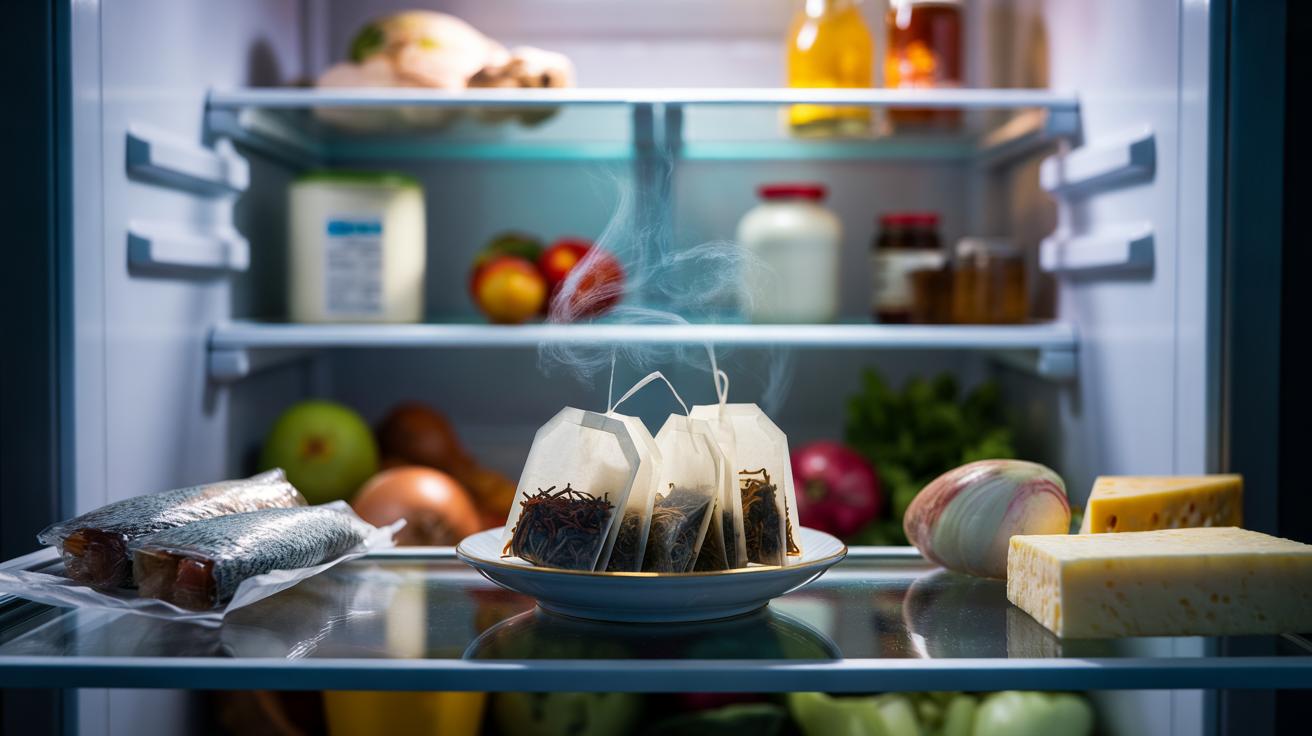
Arrange the bags in a shallow bowl or on a saucer, one cluster per shelf. Close the fridge and give it time. For a quick rescue before guests arrive, fan the door for a few seconds to circulate air over the leaves. You’ll often notice a difference in 10 minutes, with fuller results over 2–4 hours. Replace or re-dry weekly, sooner after strong spills. Avoid flavoured teas with added oils, which can introduce competing aromas. If your fridge housed raw meat or strong fish, prioritise food safety: clean surfaces with warm soapy water, then dilute vinegar, before adding tea. Tea controls odour—it doesn’t replace hygiene.
Speed Test: Tea vs Baking Soda, Coffee, and Charcoal
Different deodorisers shine in different scenarios. Tea wins on rapid deployment and balanced performance. Baking soda buffers acids but is slower on sulfurous, protein-derived smells. Coffee grounds mask and partially adsorb, yet can overpower. Activated charcoal is the heavyweight, though it’s pricier and often overkill for everyday funk. Use the table below to match tool to task and timeline.
| Deodoriser | How It Works | Time to Notice | Best For | Replacement |
|---|---|---|---|---|
| Dried Tea Bags | Porous leaf matrix adsorbs amines/sulfur; light moisture control | ~10–30 minutes | General fridge odours; quick fixes | Re-dry weekly; replace monthly |
| Baking Soda | Acid–base neutralisation; limited adsorption | Several hours to days | Acidic smells; maintenance | Stir monthly; replace 2–3 months |
| Coffee Grounds | Odour masking + moderate adsorption | ~30 minutes | Short-term masking; strong kitchen aromas | Replace weekly |
| Activated Charcoal | High-surface-area adsorption of broad VOCs | Minutes to hours | Persistent, mixed-source odours | Recharge in sun or replace monthly |
For most households, tea delivers the fastest noticeable improvement per penny spent. If odours persist beyond a day, step up to charcoal and audit storage practices.
Troubleshooting Persistent Fridge Smells
If tea can’t tame the stench, there’s likely a source problem. Check drip trays, door seals, vegetable drawers, and under shelves where spills hide. Discard expired foods, especially proteins and soft cheeses that release aggressive amines. Wash removable parts in hot soapy water, then wipe interiors with 1:1 white vinegar and water. Dry thoroughly. Now redeploy dried tea bags—two per shelf—and keep proteins sealed in airtight containers. Add a small jar of baking soda as a background buffer.
Mind airflow. An overloaded fridge traps VOCs near the back wall, slowing deodorisation. Create gaps between items and set temperature to 3–5°C. Replace gaskets if they’re cracked; bad seals drag humid kitchen air inside, amplifying odours. Finally, schedule a five-minute check every Friday: quick tidy, wipe of sticky jars, rotate perishables. Prevention is quieter, cheaper, and kinder to your nose than any cure.
Tea bags won’t replace a deep clean, yet they excel as a rapid, reusable odour control hack. In ten minutes, a handful of dried leaves can turn a whiffy fridge into a neutral canvas, buying time until you scrub and restock. Keep a small jar of pre-dried bags ready; top up after your weekend brews. Then choose your next move—stay with tea for routine freshness, or switch to charcoal for stubborn cases. What’s the smelliest fridge emergency you’ve faced, and which deodoriser are you tempted to test first?
Did you like it?4.4/5 (30)