In a nutshell
- 🐜 Dryer sheets disrupt pheromone trails with volatile fragrances and leave a thin film of cationic surfactants ants dislike, turning busy routes into no-go zones.
- 🏠 Application matters: clean existing trails, place sheets at entry points, behind bins and appliances, and around door thresholds; expect a 48–72 hour peak effect and replace when scent fades.
- 🧾 Choose wisely: strong scents create a wider deterrent halo, “free and clear” rely on softening agents; mind safety for pets, toddlers, and delicate surfaces, and avoid direct food contact.
- 🧰 Know the limits: dryer sheets are a deterrent, not a cure; pair them with integrated pest management (IPM)—seal cracks, remove food/water sources, and use enclosed baits for nests.
- 📈 Best results come from targeted placement, routine replacement, and tidy habits; a simple table of sheet types helps match use cases and replacement intervals.
The humble dryer sheet, that pocket of perfumed softness tossed in with laundry, has a second life that many British households are quietly exploiting: keeping ants at bay. It sounds delightfully simple because it is. Ants navigate by scent, reading the world through chemical messages. Dryer sheets, rich in volatile fragrance molecules and slick softening agents, can scramble those signals and make a route feel hostile. The effect is immediate, low-cost and tidy. It is not a silver bullet, nor a pesticide. But used smartly—at entry points, near bins, behind appliances—it can turn a kitchen from ant motorway to no-go zone. Here’s how the trick works and how to use it well.
Why Dryer Sheets Repel Ants
Ants live by their nose. Colonies organise with pheromone trails, laying invisible roads that workers follow to crumbs, dripping honey, or pet bowls. Dryer sheets introduce a competing fog. Their fragrances, often a cocktail of terpenes and esters, flood the air film along skirting boards and door thresholds. To an ant’s antennae, that means confusion. Routes blur. Confidence collapses. Some species simply turn away.
It’s not just scent. Many dryer sheets deposit a trace of cationic surfactants—the fabric-softening agents that tame static. On smooth surfaces these leave a faint, waxy film. Ants dislike walking over it. The texture interferes with traction and potentially with the deposition of their own trail chemicals. Result: fewer scouts linger long enough to recruit friends. Think of it as gentle crowd control rather than combat.
Evidence is mainly practical and field-based. Pest managers and resourceful homeowners report short-term relief, especially in spring and after rain. That matters because infestations often begin with a handful of curious workers. Break that first chain of communication, and you halt the procession before it becomes a problem. Deterrence buys time to locate and remove the food source those scouts were sniffing out.
How to Use Dryer Sheets Around the Home
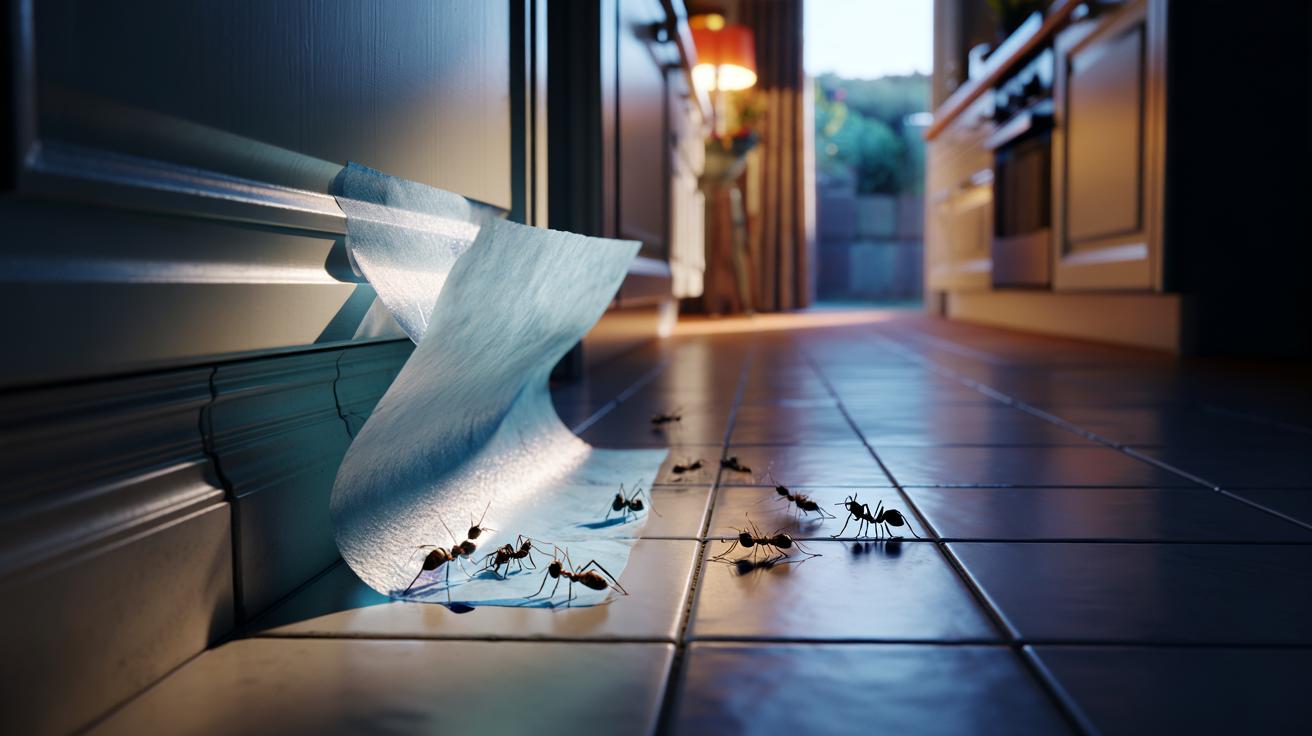
Start by finding the superhighways. Track where ants enter: gaps under back doors, the edge of patio sliders, cable holes, a crack behind the washing machine. Clean the route with hot soapy water to erase existing pheromone cues. Then deploy. Fold a dryer sheet and wedge it into the gap, or tape it flush along the sill so it acts like a scented barrier. Replace when the fragrance fades.
In kitchens, slide a sheet behind the bin, along the rear lip of the worktop, or beneath the toaster. Wipe a tired sheet over plinths and skirting to lay a thin film where ants march. Keep placement dry; moisture dilutes scent and reduces grip. For pet corners, position sheets under bowls but never on eating surfaces. Do not let sheets contact food directly.
Outdoors, tuck them behind drainpipes, under the lip of door thresholds, and around airbrick covers. They’re excellent during barbecues: line the underside of the table edge and the stand of condiment trays to discourage opportunistic trails. Expect a 48–72 hour peak effect, then tapering. Rotate spots weekly and combine with simple housekeeping: wipe sugars, store cereal in sealed tubs, and vacuum crumbs behind appliances. Small habit changes amplify the sheets’ deterrent effect without chemicals or fuss.
Choosing the Right Sheet: Ingredients, Scents, and Safety
Not all dryer sheets are created equal. Heavier sheets with bold fragrances typically produce a stronger, longer deterrent halo, while “free and clear” styles rely more on the slick softening agents than scent. Look on the label for cationic surfactants (common in fabric softeners) and avoid oil-heavy products where residue could stain paint or timber. If you’re sensitive to perfumes, opt for milder scents and focus on barrier placement rather than whole-room diffusion.
| Sheet Type | Key Compounds | Scent Strength | Best Use | Replacement |
|---|---|---|---|---|
| Strongly Scented | Fragrance terpenes + cationic surfactants | High | Door thresholds, bins, patio sliders | Every 2–3 days |
| Lightly Scented | Surfactants + mild perfume | Medium | Worktop edges, skirting, behind appliances | Twice weekly |
| Unscented/“Free” | Softening agents only | Low | Close barriers where odour is a concern | Every 2 days |
| Eco/Plant-Based | Natural esters, lighter surfactants | Variable | Airbricks, window frames, camping gear | Every 1–2 days |
Safety matters. Keep sheets out of reach of pets and toddlers; ingestion can cause gastric upset. Avoid placing them directly on painted furniture or varnished wood without testing a corner. For allergy-prone households, choose reduced-fragrance options and ventilate well. The aim is targeted deterrence, not perfume fog. Balanced with sensible storage—closed sugar jars, crumb-free floors—your chosen sheet becomes a quiet, effective part of the toolkit.
What Dryer Sheets Can’t Do: Limits, Myths, and Backups
Dryer sheets are a deterrent, not a cure. They won’t eliminate a nest in the wall or under patio slabs, and they won’t outcompete a persistent food reward like an open jam jar. The effect is local and temporary. If you stop replacing sheets or you leave a syrup spill, the colony will be back with interest. Do not rely on dryer sheets to eradicate an infestation; they buy you breathing space to act decisively.
That action looks like integrated pest management (IPM). Seal cracks with decorator’s caulk. Fix dripping pipes that feed thirst. Remove outdoor incentives—open compost, overripe windfall fruit, bird seed scatter. Inside, use enclosed bait stations where trails persist; the workers carry the toxicant home, solving the source rather than the symptom. For heavy pressure from species like garden ants, a perimeter treatment by a licensed professional may be the swiftest path to relief.
Myths persist. No, a single sheet on the windowsill won’t protect a whole ground floor. No, stronger scent isn’t always better if it triggers headaches or clings to cookware. The winning formula is simple: targeted placement, routine replacement, and tidy habits. With that trifecta, dryer sheets punch well above their weight in the domestic battle for crumb-free calm.
Used with a light touch and a journalist’s scepticism, dryer sheets deliver quick, visible results while you tackle the real attractants that invite ants indoors. They’re cheap, tidy, and versatile, ideal for renters and homeowners alike who prefer to keep sprays in the cupboard. Pair them with sealing, cleaning, and judicious baiting, and you’ll shift from firefighting to prevention. Will you map your household’s ant routes this week and test where a few well-placed barrier sheets make the biggest difference, then refine your plan from there?
Did you like it?4.4/5 (28)