In a nutshell
- 🍋 Citric acid in lemon lowers surface pH, disrupts bacterial membranes, and helps detach stubborn biofilm in knife grooves for meaningful cutting board sanitising.
- 🧽 Follow a clear method: wash first, rub with lemon (add coarse salt for abrasion), ensure full coverage, keep wet for 5–10 minutes of contact time, then rinse and dry upright.
- ⚠️ For high-risk foods (raw poultry, minced meats, seafood), lemon alone isn’t enough—use a dishwasher-safe board or a food-safe disinfectant and maintain strict cross-contamination controls.
- 🪵 Board material matters: end‑grain hardwood benefits from juice + salt (8–10 min), bamboo needs slightly less, while plastic (HDPE) pairs well with a hot rinse or dishwasher after raw meats.
- 🌿 Make it routine: separate boards for raw and ready‑to‑eat foods, re‑oil wood monthly, and treat lemon as part of a layered defence that’s low cost, effective, and kinder on the home environment.
In British kitchens, the cutting board is a daily workhorse—and a frequent crossroads for microbes. When raw meat juices meet salad leaves, risk rises fast. That’s why a simple lemon can be a smart ally. Its citric acid delivers a low-pH punch, loosening grime and suppressing bacteria that thrive on moist, food-smeared surfaces. It smells fresh. It’s cheap. And it’s easy to apply without special equipment. Used correctly, lemon can significantly reduce bacterial load and improve everyday food safety. But it’s not magic. Understanding how to use it—how long to leave it, when to combine it with salt, and when to choose a stronger disinfectant—turns a folk remedy into a reliable routine.
Why Lemon Works on Cutting Boards
Lemon juice is rich in citric acid, which creates a hostile low-pH environment for many kitchen microbes. The acid interferes with bacterial cell membranes and enzyme activity, slowing growth and helping detach the sticky biofilm that clings to knife-scarred boards. Lemon oils, including limonene in the peel, add mild antimicrobial action and lift greasy residues. Crucially, the liquid phase spreads into micro-grooves, where residues hide. Sanitising depends on concentration, contact time, and mechanical action. Without those three, even a good acid can underperform.
There’s another quiet benefit: chelation. Citric acid binds metal ions that stabilise biofilms, making physical cleaning more effective. Compared with vinegar, lemon is similar in acidity but offers a brighter aroma and better grease-cutting feel. It won’t match a bleach solution for rapid, broad-spectrum kill, yet it can meaningfully reduce bacterial counts when food soils are rinsed first and the juice is left in place long enough. For household boards used for fruit, vegetables, bread, and cooked foods, that can be enough between deeper weekly cleans.
Step-by-Step Method for Safe, Effective Disinfection
Start clean to sanitise well. Rinse the board under hot water to remove crumbs and visible soil. Wash with washing-up liquid and a brush, then rinse again. Sanitising acts on what remains after cleaning, not on dirt itself. Pat mostly dry.
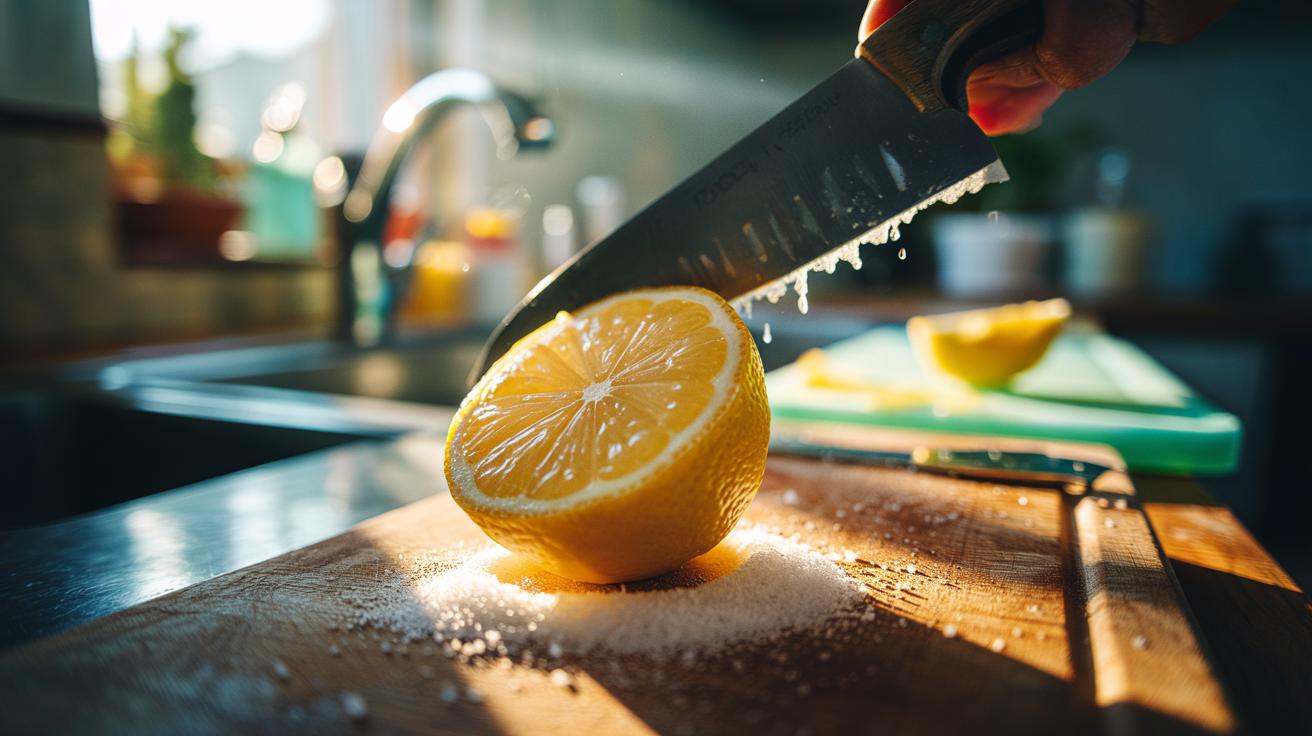
Halve a fresh lemon. Heavily juice it over the surface, rubbing the cut face across the board to flood grooves. For stained or smelly areas, sprinkle coarse salt first; it creates a gentle abrasive that disrupts biofilm while the citric acid soaks in. Aim for full coverage, including the edges and handle cut-outs where moisture lingers.
Leave the surface visibly wet for 5–10 minutes. That contact time matters. Shorter than five minutes often yields smell-improving results but weaker microbial reductions. After the wait, scrub again, then rinse thoroughly with warm water. Stand the board upright to air-dry quickly; stagnation breeds odours. For plastic boards, finish with a kettle splash of very hot water. For wood, avoid prolonged soaking to prevent warping. If the board handled raw poultry or seafood, follow with a stronger sanitiser or the dishwasher (for dishwasher-safe plastic). Natural does not always mean sufficient.
When Lemon Is Enough—and When It Isn’t
For low-risk tasks—slicing bread, chopping fruit, prepping washed vegetables—lemon is typically sufficient between routine washes. Wood boards, especially dense end-grain, naturally trap and dry bacteria, and lemon helps by lowering surface pH and removing odours. It’s an excellent everyday habit that keeps boards fresh, stain-resistant, and pleasant to use.
Higher-risk scenarios are different. Raw poultry, minced meats, shellfish, and unpasteurised juices can carry pathogens that demand more robust control. Do not rely on lemon alone immediately after prepping raw poultry or high-risk meats. In those cases, use a dishwasher-safe plastic board and run it through a hot cycle, or apply a food-safe sanitiser at the correct dilution and contact time. Deep, dark knife grooves also signal a problem: they harbour residues that acid can’t reach. Sand wooden boards to refresh the surface, or retire heavily scarred plastics. Reserve separate boards—colour-coded if possible—for raw animal proteins versus ready-to-eat foods to minimise cross-contamination.
Quick Reference: Contact Times and Board Materials
Contact time and material make the difference between a pleasant scent and meaningful sanitising. The goal is always the same: maximise coverage, keep the surface wet, let the acid work in micro-grooves, then dry rapidly. The table below summarises practical guidance for common household boards and typical uses.
| Board Type | Lemon Method | Suggested Contact Time | Notes |
|---|---|---|---|
| End-Grain Hardwood | Juice + salt rub | 8–10 minutes | Excellent for veg and bread; avoid soaking. |
| Bamboo | Juice only | 6–8 minutes | Lower porosity; dries quickly, resists stains. |
| Edge-Grain Softwood | Juice + light scrub | 7–9 minutes | Sand if grooves deepen. |
| Plastic (HDPE) | Juice, then hot rinse | 5–7 minutes | Dishwasher after raw meats recommended. |
Always clean before you sanitise. Lemon is most effective on surfaces already free from visible debris. Keep a separate board for raw proteins, and rotate boards to allow complete drying between uses. Recondition wood monthly with a light coat of food-grade mineral oil; it repels moisture and makes future cleaning faster. If persistent odours remain after lemon treatment, repeat the process or escalate to a stronger sanitiser that meets label directions for kitchens. The right tool for the job keeps food safety simple and sustainable.
Lemon won’t replace every sanitiser, but it earns a permanent place by combining low cost, ease, and a genuine boost to hygiene between deeper cleans. Used with sound habits—separate boards, proper washing, adequate contact time, and quick drying—it helps keep family meals safer without harsh residues or lingering smells. It’s also a small sustainability win: fewer bottled chemicals for everyday refreshes. Treat it as one layer in a layered defence, not a cure-all. With that mindset, your cutting boards will look better, smell better, and work better. How will you adapt your current cleaning routine to take full advantage of lemon’s natural sanitising power?
Did you like it?4.5/5 (25)