In a nutshell
- 🧂 Salt’s dual action—crystal abrasiveness breaks biofilms while osmotic pressure dehydrates microbes—cuts bacterial loads in about five minutes.
- ⏱️ Five-minute method: scatter coarse salt, lightly wet to form brine, scrub 30–60 seconds, leave for 5 minutes, then hot rinse and air-dry upright.
- 🪵 Wood vs plastic: wood wicks brine into pores for deeper kill; plastic depends on surface abrasion—replace deeply scarred boards to avoid bacterial harborage.
- 🧪 Know the limits: this is disinfection, not sterilisation; boost efficacy with lemon or vinegar acids and a finishing splash of near-boiling water.
- 🌿 Practical and low-waste: no synthetic residues, minimal cost, fast between-task hygiene that strengthens safe food-handling habits.
Kitchen hygiene often hides in plain sight. The humble pot of table salt can be as decisive as any spray bottle when you need to make a chopping board safe, fast. Salt’s power is twofold: physical abrasiveness and chemical minerals that strip moisture from microbes. Used properly, it can drop bacterial counts to safe levels without harsh residues or plastic waste. In five measured minutes, you can clean, scour, and disinfect wood or plastic boards before the next round of prep. Salt is not a laboratory sterilant, but it is an effective, rapid, and kitchen-friendly disinfectant for everyday use.
Why Salt Works in Five Minutes
Salt attacks bacteria on cutting boards with twin forces. First, osmotic pressure: high concentrations of sodium chloride pull water out of microbial cells. That rapid desiccation collapses cell membranes and shuts down essential enzymes. Second, the abrasiveness of coarse crystals scrubs away biofilms—the slimy, protective layers that let bacteria cling inside knife grooves. When you give salt a few minutes on a dampened surface, it dissolves just enough to flood the micro-environment with ions while retaining gritty edges for mechanical removal.
In practical kitchen terms, five minutes is a sweet spot. It’s long enough for a dense saline film to form and dehydrating action to begin, yet short enough to fit between chopping sessions. Those few minutes can destroy or dislodge many common kitchen culprits, including E. coli and Salmonella, when combined with vigorous scrubbing and thorough rinsing. The effect is amplified on wood: hygroscopic fibres move brine into micro-pores that would otherwise shelter microbes, exposing them to lethal salt concentrations.
Some bacteria are salt-tolerant, but cutting-board conditions are unforgiving. Low water activity, sharp edges, and repeated friction tip the balance. Applied correctly, salt reduces microbial load quickly, returning the board to a hygienic baseline without tainting flavour or leaving synthetic residues.
Step-by-Step: The Five-Minute Salt Disinfection Method
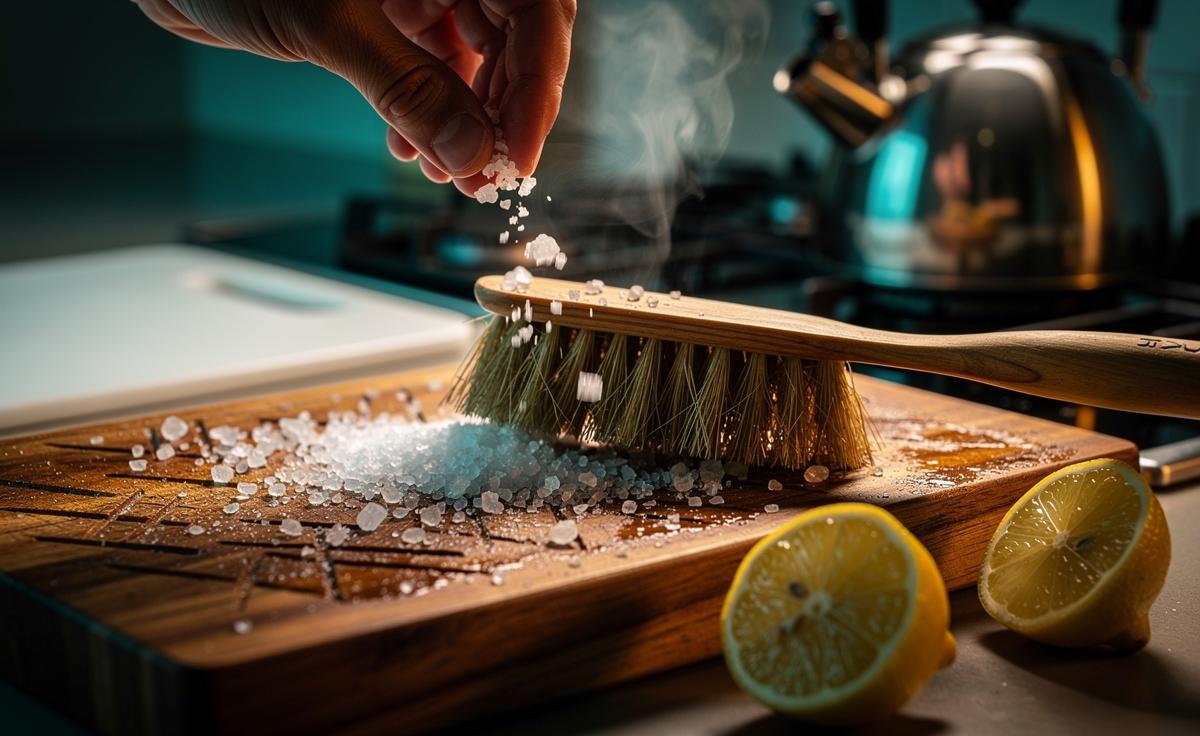
Start with a scraped, debris-free board. Sprinkle a generous layer—about 1–2 tablespoons—of coarse salt across the surface. Lightly wet the board or mist it; you want a thin brine, not puddles. Scrub in tight circles with a clean brush or half a lemon (optional, for added acidity) for 30–60 seconds. Let the salted surface stand for five minutes. Rinse with hot water, then dry upright. Do not leave wood submerged; prolonged soaking warps fibres and invites cracks. For raw poultry residues or heavy odours, repeat once or follow with a quick pass of boiling water and immediate drying.
| Step | Amount/Action | Time | Purpose |
|---|---|---|---|
| Apply salt | 1–2 tbsp coarse crystals | — | Create abrasive and saline layer |
| Lightly wet | Mist or splash | — | Form brine to boost osmotic action |
| Scrub | Brush or lemon half | 30–60 sec | Break biofilm, drive salt into grooves |
| Contact | Leave brine on surface | 5 min | Desiccate and inactivate bacteria |
| Rinse & dry | Hot water, vertical air-dry | 2–5 min | Flush residues, prevent warping |
Reserve separate boards for raw meat and ready-to-eat foods. Salt helps rapidly, but good habits prevent cross-contamination. Refresh brushes, replace deeply scarred plastic, and oil wooden boards occasionally with food-safe oil to keep fibres sealed and better able to resist microbial harbourage.
Wood vs Plastic: What Works Best and Why
Both surfaces benefit from salt, yet they differ in how they trap and release microbes. Wooden boards possess capillary networks that wick moisture away from the surface. That natural “thirst” carries brine into micro-pores, subjecting hidden bacteria to a punishing ionic environment. As the board dries, water activity drops, and microbes struggle to survive. Salt complements this by drawing out residual moisture and scouring away surface films. End-grain boards, with their vertical fibres, welcome brine deeply and often recover well from scrubbing.
Plastic boards don’t absorb; they rely entirely on surface cleaning. Knife scars form narrow grooves where bacteria nest. Coarse salt excels here because crystals lodge into those grooves, creating micro-abrasion that a soft sponge can’t match. After the five-minute contact, hot-water rinsing flushes brine and debris efficiently. Where gouges are severe, no disinfectant is a miracle cure; replacement is the safer route. For dishwashers, plastic boards can take a periodic high-heat cycle, but salt offers a fast, between-task solution at the counter.
For bamboo, which is harder and less porous, the method still works; just avoid excessive water and finish with careful drying. In every case, salt restores a hygienic surface quickly while avoiding fragrance residues that can cling to food.
Limits, Safety, and Smart Pairings
Salt is potent, not perfect. It reduces microbial loads dramatically, yet it is not certified sterilisation. Think “make safe for cooking,” not “surgical theatre.” Spore-formers and some halotolerant species resist better than typical kitchen bacteria. That’s why the technique hinges on synergy: abrasion to remove, osmotic stress to inactivate, and hot rinsing to carry contaminants away. For raw poultry or mince, a double cycle or a finishing splash of near-boiling water is prudent on both wood and plastic, followed by prompt drying.
Smart pairings help. Lemon halves add citric acid, lowering pH; vinegar contributes acetic acid, a proven antimicrobial—both evaporate without synthetic scents. Avoid prolonged acid exposure on soft stones or decorative wood inlays. Keep salt dry between uses; clumping reduces the cutting edges that make abrasion effective. Metal-handled boards? Rinse promptly to limit corrosion. And remember storage: vertical racks promote airflow, which deprives microbes of the moisture they need to rebound after cleaning.
Ultimately, the method is simple, frugal, and low-footprint. It relies on a pantry staple, demands no plastics, and builds a habit of immediate cleanup that breaks contamination chains before they start.
Salt’s appeal is its speed and simplicity: a handful of crystals, five patient minutes, and a hot rinse later, you have a chopping surface you can trust for tonight’s prep. The technique scales from weekday dinners to busy batch-cooking sessions without adding chemicals or cost. As a newsroom adage goes, clarity beats complexity; the same holds true here. Ready to trial it this week—on both your wood and plastic boards—and note how the routine changes your kitchen rhythm, your confidence, and your food safety?
Did you like it?4.4/5 (20)