In a nutshell
- 🎨 Paint Smart: Use trade emulsion, test colours in UK light, and prioritise prep (stain-blocking primer, recaulk). Quick wins include painted arches, satin trim, and heat-resistant radiator paint—small paint decisions compound into big impact.
- ♻️ Upcycling Wins: Source solid timber on Marketplace/Freecycle, revive with sugar soap, 120–240 grit, and Danish oil; upgrade with new pulls or cane webbing. Pros: cheaper, greener, unique; Cons: transport and repairs. Case study: scaffold-board coffee table for ~£44.
- 🏠 Renter-Friendly Fixes: Removable wallpaper, Command hooks, tension rods, LED strips, and tile stickers (test adhesion). Keep a reinstatement kit (screws, filler, paint codes). Design boldly, but plan your exit to protect deposits.
- 💡 Energy-Saving DIY: Draught strips, letterbox brushes, radiator reflector foil, thermal curtains, and LED swaps (10 bulbs: £20–£35; save £30–£60/yr). Typical paybacks range from one season to a year—comfort that pays back.
- 🧰 Strategy That Scales: Start small, stack wins, and reinvest savings; blend aesthetics with function using data-led choices and reversible tweaks—DIY as creative problem-solving tailored to UK homes.
Britain’s booming love affair with DIY isn’t just a TikTok trend—it’s a practical response to tight budgets and rising living costs. With a few shrewd hacks, you can refresh rooms, boost comfort, and add value without calling in a contractor. You don’t need a full renovation to feel at home. From clever paint strategies to renter‑friendly fixes and energy savers that pay for themselves, the projects below are realistic weekend wins. I’ve tested many of them in small UK homes and rentals, where every centimetre and every pound must work hard. Ready to transform your home on a budget—and enjoy the process?
Paint Smart: High-Impact Colour on a Low Budget
A fresh coat is the cheapest way to reset a room. Prioritise high-traffic areas—hallways, skirting boards, and doors—where visual uplift is immediate. Trade emulsions often outperform “designer” paints at half the price, and a 2.5L tin can be had for under £20, enough for a modest feature wall or “colour drench” on woodwork. Start with sample pots and check the shade across the day; the UK’s grey light can deaden certain hues. A 10–15% water “mist coat” helps bare plaster, while a stain-blocking primer saves you from redoing nicotine or damp marks. Precision cutting-in and good surface prep matter more than brand.
Quick wins that deliver outsized results:
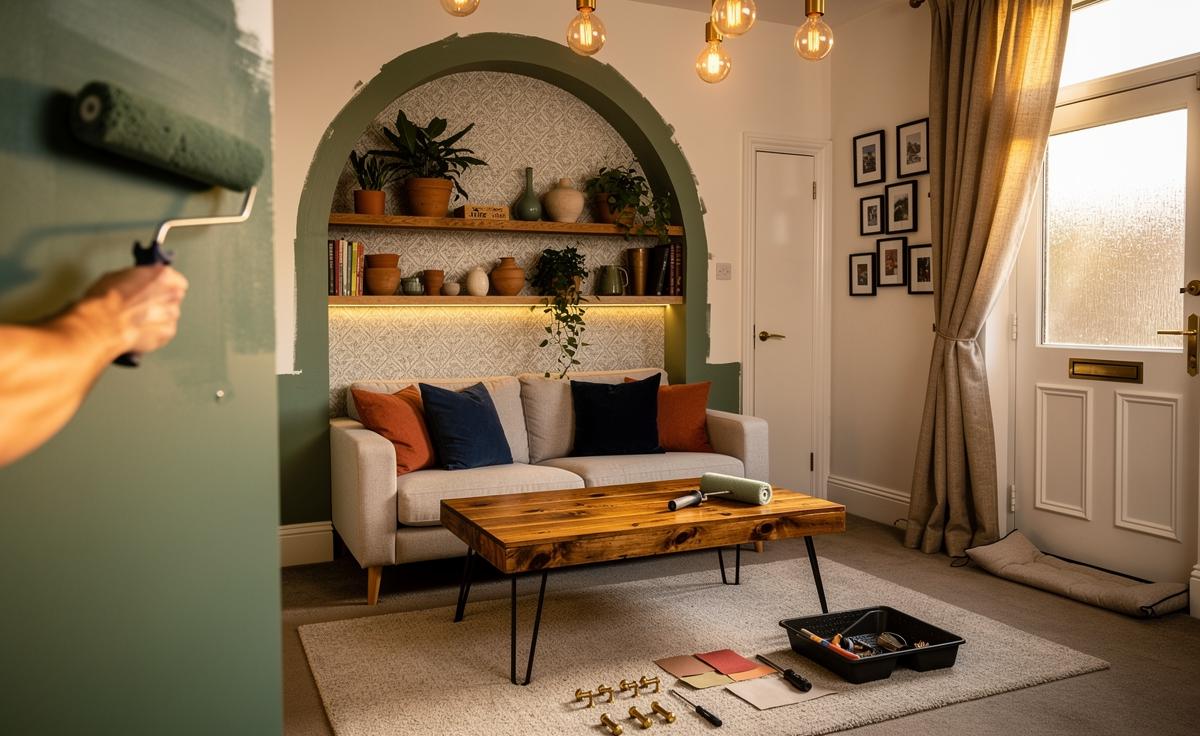
- Zone space with a painted arch behind a desk or bed; it’s cheaper than buying a new headboard.
- Refresh yellowed radiators using heat-resistant metal paint for a crisp, gallery feel.
- Switch gloss to satin on trim to hide imperfections and modernise period details.
Case in point: in my Stockport terrace, a £14 tester bundle helped me pick a muted sage for the hallway. One weekend later—after filling hairline cracks and recaulking the skirting—the space felt broader and brighter. I skipped pricey wallpaper and used a £6 frog tape roll to craft a clean dado line. Small paint decisions compound into big perceived value.
Upcycling and Free Finds: Turn Waste Into Wow
Why buy new when the UK’s second-hand ecosystem—Facebook Marketplace, Gumtree, Freecycle, charity warehouses—overflows with potential? Look for solid timber, simple lines, and fixable faults. A wobbly oak table is often one bolt and a clamp away from beautiful. With sugar soap, 120–240 grit sandpaper, and a tin of Danish oil, you can revive tired pieces for under £25. Swap dated knobs for brushed brass pulls, add cane webbing to cupboard doors, or wrap shelves in iron-on edging for a crisp finish. Reclaimed materials aren’t just cheaper; they add character you can’t fake.
Pros vs. Cons for second-hand sourcing:
- Pros: Lower cost, eco-friendly, higher-quality timber, unique patina.
- Cons: Transport faff, occasional repairs, mismatched sizes, time spent hunting.
Personal anecdote: in a Lewisham flat, I built a coffee table from two reclaimed scaffold boards (£10 each), planed and oiled, perched on £24 hairpin legs. Total outlay: ~£44, plus an evening’s labour. The result looked boutique and survived three house moves. For upholstered treasures, learn basic staple-gun re-covering; a metre of upholstery fabric can transform a dated chair. If you’re nervous, start small: a lamp revamp with fabric glue and bias tape is near fool-proof. Upcycling is the most budget-friendly way to make a home unmistakably yours.
Renter-Friendly Fixes: Style Without Sacrificing Deposits
Landlords love magnolia; you don’t have to. Modern renter‑friendly products let you personalise without permanent change. Removable wallpaper offers pattern with a future peel-off, while Command hooks and picture rails create gallery walls without carnage. Tension rods turn alcoves into wardrobes; stick-on LED strips add task light to shadowy kitchens. For splash zones, consider tile stickers—but test for adhesion and heat tolerance near cookers. Always keep surfaces clean and dry, and photograph conditions before you start.
Why peel-and-stick isn’t always better:
- Cheaper adhesives can curl in humidity or leave residue, risking deposit deductions.
- In steamy bathrooms, poorly sealed edges invite moisture and mould.
Safer alternatives include fabric wall panels fixed with Velcro, renter’s caulk for hairline gaps, and vinyl floor rugs that sit floating atop tired lino. In my Bristol rental, a £30 vinyl rug “zoned” the living area, and a £15 tension rod plus curtain hid an unsightly meter cupboard—both instantly reversible. Keep a small “reinstatement kit”: original screws, paint codes, filler, and fine sandpaper. Design boldly, but plan your exit strategy from day one.
Energy-Saving DIY: Comfort That Pays You Back
Comfort is the ultimate luxury, and some of the best upgrades actually lower bills. Focus on draught‑proofing, heat retention, and efficient lighting. Letterbox brushes, door seals, and chimney balloons curb cold gusts. Radiator reflector foil bounces heat into rooms; thermal curtains trap warmth at night. Switch halogens to LED bulbs and add motion sensors in halls. These are quick, landlord-friendly wins that feel immediate in a British winter. Energy efficiency is where “budget” meets “dividend”.
Typical weekend paybacks for a small UK home:
| Hack | Approx. Cost | Time | Typical Annual Saving | Estimated Payback |
|---|---|---|---|---|
| Draught strips + letterbox brush | £18–£30 | 1–2 hrs | £25–£50 | 1 season |
| Radiator reflector foil | £12–£20 | 1 hr | £10–£25 | 1 year |
| LED bulb swap (10 bulbs) | £20–£35 | 1 hr | £30–£60 | 6–12 months |
Reality check: don’t block ventilation—bathrooms and kitchens need airflow to avoid condensation. In my Manchester terrace, sealing the front door and adding a chimney draught excluder made the lounge feel warmer at a lower thermostat setting. Paired with smart scheduling, the gas bill dipped through winter without sacrificing comfort. The cheapest kilowatt-hour is the one you never use.
DIY on a budget isn’t penny-pinching; it’s creative problem-solving that lets you prioritise joy and comfort. Start small, stack the wins, and bank the savings for bigger projects later. Whether you’re painting smart, upcycling a future heirloom, safeguarding your deposit with renter-friendly moves, or outwitting winter with energy savers, the payoff is a home that reflects you. Your toolkit is a lever; your time is the investment. Which room or corner in your place could deliver the biggest transformation this month with just one well-chosen weekend project?
Did you like it?4.6/5 (22)