In a nutshell
- 🍋 Lemon’s citric acid lowers pH and chelates minerals, dissolving limescale and soap scum from grout in about 3–5 minutes for fast, visible brightening.
- 🧰 Quick prep: gather a fresh lemon or juice, a soft toothbrush, optional fine salt for mild abrasion, ventilate, wear gloves, and lightly dampen grout for even coverage.
- ⏱️ Five-minute method: Apply–Wait–Scrub–Rinse—coat grout, let chemistry work for 2 minutes, scrub briskly, then rinse and dry; spot-treat any stubborn patches with a short second pass.
- ⚠️ Safety first: Never mix acids and bleach; avoid lemon on marble, limestone, travertine, cement tiles, or cracked grout; keep contact time short and rinse thoroughly to prevent etching.
- 🧪 Stain tactics: after rinsing lemon, use 3% hydrogen peroxide for organic stains; neutralise any residual sourness later with a weak bicarbonate solution (not during the acid step).
Spattered grout lines dragging your bathroom down? A halved lemon might be the most effective five-minute fix hiding in your fruit bowl. Its secret weapon is citric acid, a gentle yet potent cleaner that cuts through limescale, soap scum, and greasy film without harsh fumes. In tight, porous grout, where dirt clings like a stubborn shadow, lemon juice seeps in, reacts, and lifts residues fast. The scent is fresh. The method is simple. In many cases, visible brightening appears within three to five minutes. You’ll still need a quick scrub. But not a marathon. This is everyday cleaning, not a renovation project.
Why Citric Acid Melts Grout Grime
Citric acid, naturally abundant in lemon juice, is a weak organic acid with strong cleaning credentials. It lowers surface pH, disrupting the bonds that hold mineral deposits and soap scum to tile edges and grout pores. It also chelates calcium and magnesium ions, the metals that make hard-water marks cling so tenaciously. The result is a gentle ungluing of everyday grime from the grout matrix. This is chemistry doing the heavy lifting before your brush even moves.
Unlike bleach, which whitens by oxidation but doesn’t dissolve minerals, lemon’s citric acid targets the chalky build-up that makes grout look grey and tired. It’s kind to most ceramic and porcelain tiles, yet powerful enough to cut through a week’s worth of shower residue. That said, grout is partly cementitious. Leave acid on too long and you risk surface etching over time. Keep contact short. Rinse thoroughly. Never use lemon on marble, limestone, or travertine—any calcareous stone will etch. On safe surfaces, the sweet spot is three to five minutes, giving you speed and sparkle without collateral damage.
What You Need and the Two-Minute Prep
You don’t need a trolley-load of products. A fresh lemon, a small bowl, and a soft toothbrush or grout brush will do. For extra bite, add a pinch of fine table salt as a mild abrasive; it increases friction without scratching glaze. Cut the lemon and squeeze enough juice to wet the lines you’re tackling. Strain out pips to keep application tidy. If you prefer, bottled pure lemon juice or food-grade powdered citric acid dissolved in warm water works just as well. Always ventilate and pull on washing-up gloves—acids are gentle, but skin is gentler.
Prepping the surface is quick. Run the shower briefly or mist the grout so it’s lightly damp; this helps the acid spread evenly and penetrate micro-pores. Remove loose dust or fluff with a dry cloth. Protect adjacent natural stone thresholds if your bathroom is mixed-material; one stray drip can leave a dull ring. Keep a jug of clean water nearby for a brisk rinse the moment you’re done. For light mould shadowing, plan a secondary pass with 3% hydrogen peroxide—after you’ve rinsed away the acid—to brighten safely.
| Item | Role | Notes |
|---|---|---|
| Fresh lemon or lemon juice | Source of citric acid | Approx. pH 2; fast at dissolving mineral film |
| Soft toothbrush/grout brush | Agitation | Fine bristles reach pore edges |
| Pinch of table salt | Mild abrasive | Optional boost on stubborn lines |
| Clean water | Rinse | Stops residual acid from lingering |
Five-Minute Method: Step-by-Step
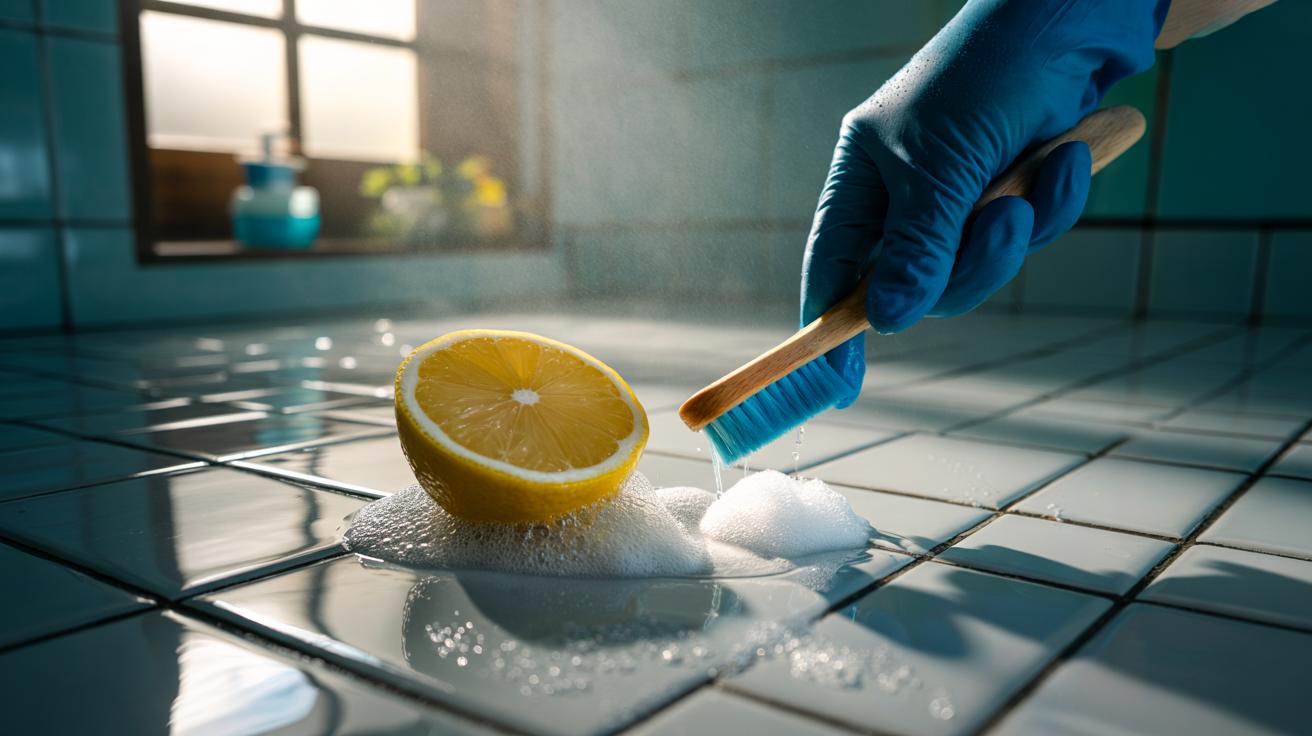
Minute 0–1: Apply lemon juice directly along the grout lines. A squeezy bottle gives precision, but a halved lemon pressed and twisted along the joint works beautifully. Aim for a glossy, not dripping, coat. For glossy tiles, keep it in the grout channel to avoid unnecessary etching on poor-quality glazes.
Minute 1–3: Let chemistry work. Those two minutes count. The citric acid is loosening limescale bonds and softening soap scum. Sprinkle a touch of salt only on the cloudiest sections. Resist the urge to scrub immediately—the wait increases the lift.
Minute 3–4: Scrub with short, brisk strokes. A soft toothbrush is nimble, reaching corners where grime hides. You’ll see greyish slurry; that’s the loosened residue. Wipe it away with a damp cloth to avoid redepositing it further along the joint.
Minute 4–5: Rinse thoroughly with clean water. Wipe dry with a microfibre cloth to prevent new mineral spots forming as water evaporates. Stand back, assess, and spot-treat any stubborn patch with a second 60–90 second pass. This entire cycle, done right, refreshes light-coloured grout in under 5 minutes. For weekly upkeep, a 60-second lemon swipe after showers keeps build-up at bay.
Safety, Stains, and When Not to Use Lemon
Acids and bleach do not mix. Ever. If you’ve used bleach recently on the same surface, rinse thoroughly and wait before introducing citric acid. The reverse is also true. Keep your cleaning chemistry simple to keep it safe. On normal ceramic or porcelain installations, short contact and a solid rinse protect both grout and tile. Where you must not use lemon: natural stone (marble, limestone, travertine, terrazzo with marble chips), cement tiles with unfinished faces, or cracked grout where acid could seep behind tiles.
Deeper staining—old mildew shadows or dye transfer from cosmetics—may need a different tactic. After rinsing away lemon, dab 3% hydrogen peroxide onto the dry grout and let it rest for five minutes to lift organic staining, then rinse again. For severe hard-water scale, repeat the lemon treatment twice rather than leaving it to sit too long in one go. If a faint sour smell lingers, a quick wipe with a weak bicarbonate solution will neutralise residues—just don’t sprinkle bicarb during the initial clean, as it neutralises the acid’s power. Always test a discreet spot first, then proceed with confidence.
A lemon’s not just garnish; it’s a compact cleaning lab that makes grout bright, fast, and eco-friendly. In minutes, citric acid dissolves the mineral fog that dulls your lines, while a quick scrub completes the polish. The method is frugal. The results are visible. And the ritual, once learned, becomes a simple habit that keeps bathrooms photo-ready without harsh chemistries. Ready to swap costly bottles for a fruit bowl fix, or do you have a specific grout problem you’d like a tailored plan for?
Did you like it?4.5/5 (23)