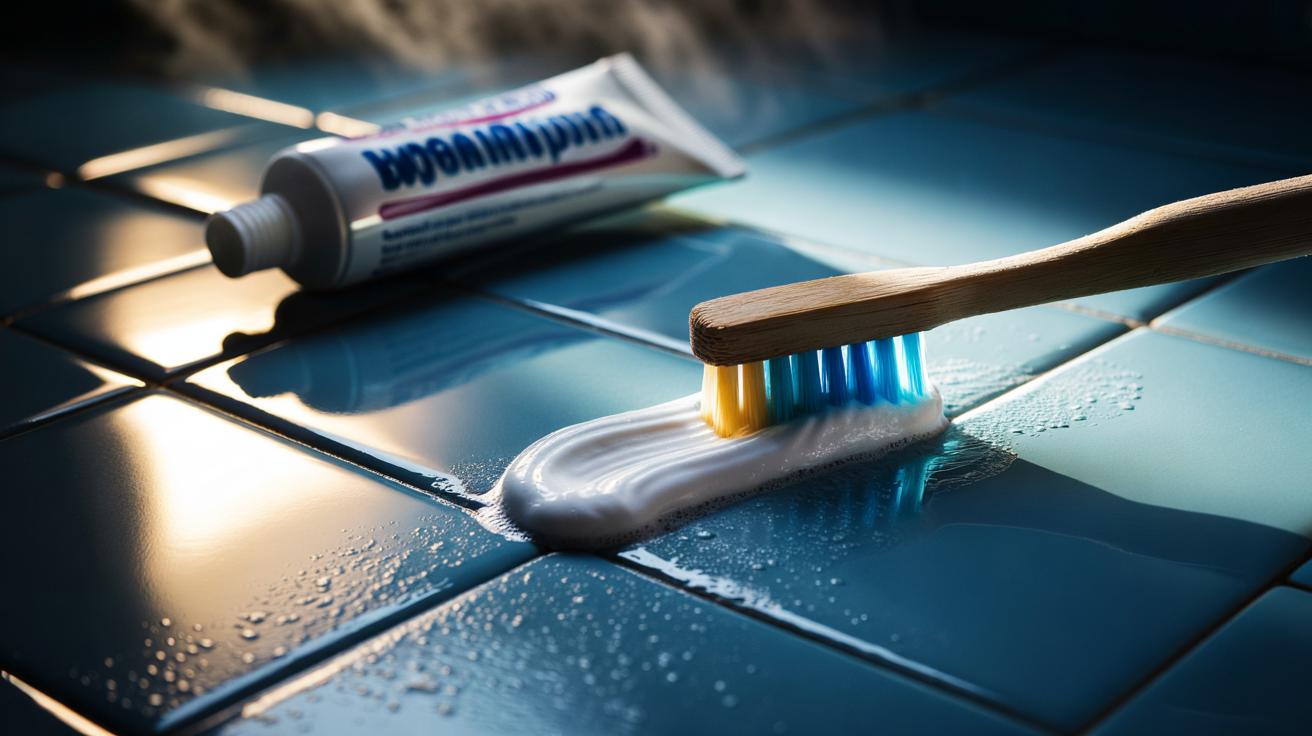
In a nutshell
- ✨ Why it works: toothpaste combines mild abrasives and surfactants (often with hydrogen peroxide) to lift grime from porous grout, delivering visible results in seconds without harsh scraping.
- 🧽 Method: Choose a white non-gel paste, apply thin dabs, allow a dwell time of 20–60 seconds, scrub crosswise with a soft brush, then wipe and rinse; repeat lightly for stubborn shadows and consider a protective sealer once dry.
- 🧴 Picking products and tools: Opt for a fluoride white paste with hydrated silica; use a soft toothbrush or grout brush for control; avoid underpowered gels, metal tools, and aggressive scouring pads that can scar edges.
- ⚠️ Safety and surfaces: Always patch test, avoid use on marble or limestone, be cautious on coloured grout, and rinse thoroughly to prevent sticky residue that re-attracts dirt.
- ✅ Practical wins: Low-cost, low-odour, and fast—ideal for renters and busy households—this trick provides quick results and a brighter finish without bleach fumes or marathon scrubbing sessions.
There’s a humble product sitting by your sink that can cut through dingy grout haze faster than many specialist sprays: toothpaste. Short on time, big on results, this everyday paste leverages gentle abrasives and stain-lifting chemistry to make tiled lines pop again. It’s simple. It’s safe on most ceramic and porcelain. And it’s surprisingly quick. In a matter of seconds, you can see grime soften, lift, and wipe away. For renters, busy families, or anyone dodging harsh bleach fumes, the appeal is obvious. Below, we unpack why it works, how to do it properly, and which formulas deliver the sharpest clean without risking your grout or surrounding finishes.
Why Toothpaste Works on Grout
Grout discolours because porous cement lines trap body oils, soap scum, and mineral-laced moisture. Toothpaste is engineered to break up tough biofilms on enamel without scratching delicate surfaces, and that translates neatly to grout. Inside the tube you’ll find mild abrasives such as hydrated silica or calcium carbonate that perform controlled micro-polishing. You’ll also encounter surfactants like sodium lauryl sulfate, which reduce surface tension so grime can be swept free, and, in some variants, hydrogen peroxide or bicarbonate that tackle stains at a chemical level.
The magic lies in balance. The paste’s viscosity clings to vertical lines, giving ingredients contact time. Abrasives are fine enough to avoid gouging, yet gritty enough to lift embedded dirt. Because the formulation is pre-mixed and stable, stain softening often begins within seconds of contact. That quick action means less scrubbing and less risk of eroding grout. Add a soft brush and a little patience, and you gain a low-odour, low-cost method that outperforms many improvised hacks.
Step-by-Step Method for Sparkling Grout
Start with the right base. Choose a white, non-gel toothpaste without added colourants. Clear gels look neat in the bathroom but underperform on grout because they lack robust abrasives. For tools, reach for a soft toothbrush or a narrow detailing brush. A damp microfibre cloth is your finisher. Always test on an inconspicuous corner first.
Dampen the grout line lightly. Apply a pea-sized dab every few centimetres and spread into a thin film. Let it sit for 20–60 seconds; that dwell time lets surfactants and any peroxide loosen the soil. Using the brush, scrub in short, brisk strokes across the line rather than along it. Pressure should be moderate, not forceful. You’re polishing, not sanding. For stubborn patches, reapply a speck more paste and repeat. You’ll often see the paste grey as it lifts grime. That’s your cue that it’s working.
Wipe away the residue with a damp cloth, then rinse the area with clean water to remove remaining film. Buff dry to discourage new water marks. If the grout line brightens but a shadow remains, a second light pass typically finishes the job. Finally, consider a simple silicone-free sealer once the area is completely dry; it keeps future clean-ups swift and reduces staining from daily splashes.
Choosing the Right Toothpaste and Tools
Not all pastes are equal. For most grout, a fluoride white paste with hydrated silica is the safest, most reliable bet. Whitening blends containing hydrogen peroxide can speed up stain removal, but be cautious with coloured or tinted grout. Strong flavours and dyes are unnecessary; look for plain formulations. The brush matters too. A soft-bristled toothbrush or grout brush delivers control in tight lines without scouring adjacent tiles. Avoid metal scrapers and aggressive scouring pads on cementitious grout and natural stone edges.
| Toothpaste Type | Key Actives | Best For | Avoid If | Notes |
|---|---|---|---|---|
| White Non-Gel | Hydrated silica, surfactants | Routine refresh, light grime | — | First choice for most grout |
| Whitening Paste | Hydrogen peroxide, silica | Tea, mould shadow stains | Coloured grout, delicate stone | Patch test; quick results |
| Gel Toothpaste | Minimal abrasives | Very light film only | Embedded grime | Often underpowered |
Do not use toothpaste on marble or soft limestone tiles where even mild abrasives can dull the finish. If in doubt, mask the tile edge with low-tack tape and keep strokes confined to the grout. Finish every session with a clean-water rinse to prevent a sticky residue that could re-attract dirt.
Toothpaste won’t replace deep restoration, but it is a nimble, low-fuss fix for grubby grout lines that need a quick lift before guests arrive or when a weekly clean slips. The formula’s mild abrasives and surfactants do the heavy lifting while you keep effort modest and damage risk small. In seconds you’ll often see that satisfying shift from sallow to bright. With the right paste, a light touch, and a proper rinse, your grout will look fresher without chemical fog or long scrubbing sessions. Ready to raid your bathroom cabinet and put this simple trick to the test, or will you try a side-by-side comparison with your usual cleaner to see which wins?
Did you like it?4.5/5 (21)