In a nutshell
- 🍋 Natural acidity works: lemon’s citric acid dissolves limescale (calcium carbonate) by reacting and chelating calcium, softening deposits so taps wipe clean without harsh chemicals.
- 🛠️ How to use: press a halved lemon onto crusted areas or wrap with juice-soaked cloth for 10–30 minutes, then gently scrub, rinse, and buff; test delicate finishes and do not mix with bleach.
- ⚖️ Lemon vs. vinegar vs. descalers: lemon clings and smells fresher; vinegar is great for soaking; stronger commercial acids act faster but raise corrosion risk—start with the least aggressive that works.
- 🛡️ Prevention tips: wipe taps dry daily, clean aerators monthly with lemon, keep a 1:1 lemon-water spray for quick touch-ups, and buff with microfibre to deter future scale.
- 🌿 Eco-friendly and budget-wise: low-waste, compostable, and affordable for weekly maintenance—ideal for UK hard water households seeking shine without chemical haze.
Hard water leaves its calling card everywhere in Britain: crusty kettle elements, streaked shower screens, and taps dulled by chalky rings. That stubborn film is limescale, a build-up of calcium carbonate, and it resists casual wiping. Enter the humble lemon. Its natural citric acid loosens and dissolves mineral deposits without biting into most finishes or choking your lungs with fumes. No harsh chemicals. No plastic-heavy products. Just a kitchen staple doing elegant chemistry. Used correctly, lemon restores the gleam to chrome and stainless steel, tackles tight corners around aerators, and leaves a fresh scent that says “clean” rather than “chemical.” Let’s explore why it works and how to make it work better.
Why Lemon’s Natural Acidity Dissolves Limescale
Limescale is primarily calcium carbonate (CaCO3). Citric acid in lemon juice—typically around 5–8%—reacts with that alkaline mineral, converting it into soluble calcium citrate and releasing a whisper of carbon dioxide. In simple terms, acid meets carbonate and the crust yields. This is chemistry you can see: fizzing along edges, a softening of the chalky rim, and a surface that wipes clean rather than fighting back.
Lemon’s prowess goes beyond low pH (around 2–2.5). Citric acid acts as a light chelating agent, binding calcium ions so they can be rinsed away. The juice also carries natural oils that help it cling for just long enough to penetrate deposits. Warmth accelerates the reaction, so a slightly warmed tap body responds faster than a cold one. Importantly, the acid is mild compared with industrial descalers, so it’s gentler on common bathroom metals. Used patiently, lemon removes scale without stripping the finish, making it ideal for regular maintenance, not just rescue jobs.
How to Use Lemon on Taps and Fixtures
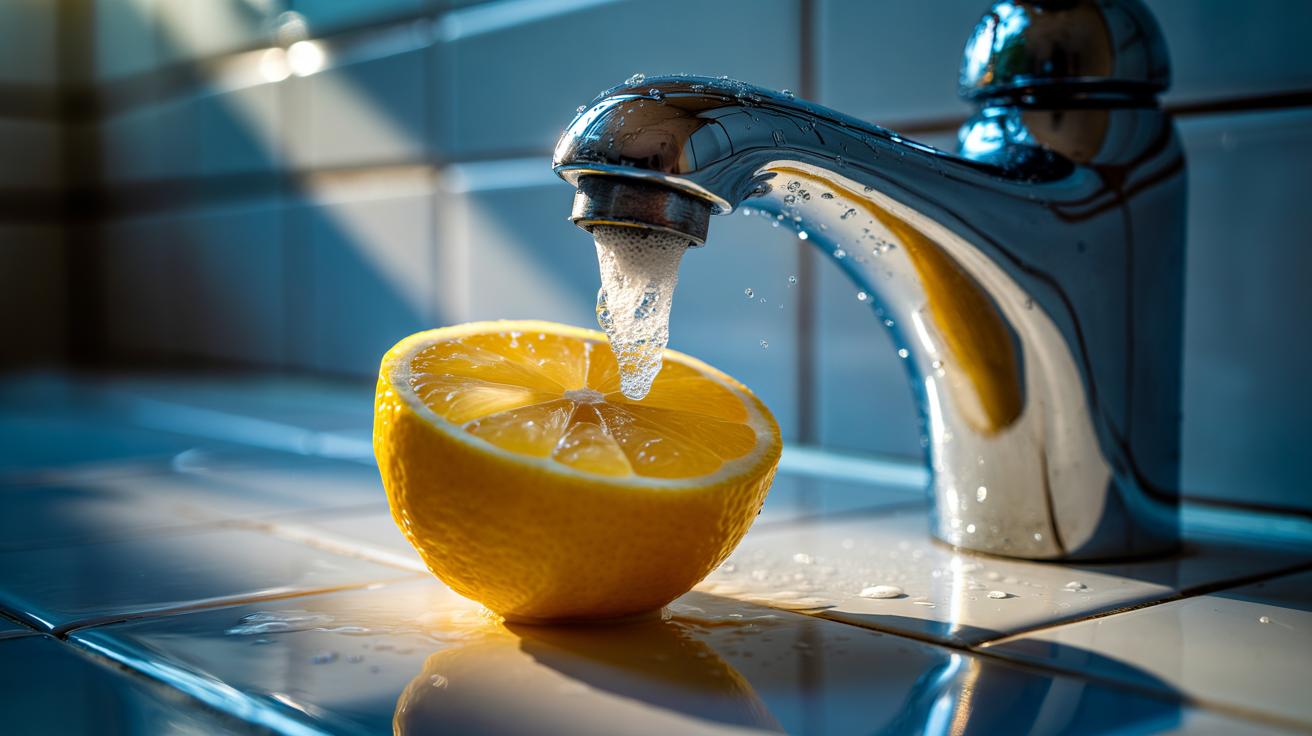
Cut a lemon in half and press it onto the spout or around the base where white crust forms. Twist to flood the area with juice. For awkward shapes, soak a microfibre cloth in lemon juice and wrap it tightly, or hold a juice-filled cotton pad against the target zone. Leave for 10–30 minutes, checking progress. Then scrub lightly with a soft brush, rinse with warm water, and buff dry for a mirror finish. Let contact time do the heavy lifting; scrubbing should be gentle.
Mind the materials. Chrome, stainless steel, and most modern finishes are compatible with lemon. Nickel or unlacquered brass may patinate if left too long. Avoid natural stone surrounds, including marble and limestone, as acid etches them. Always test first on an inconspicuous spot. And one golden rule: do not mix lemon (or any acid) with bleach; the reaction can release hazardous gases. If scale is heavy, repeat the wrap-and-wait method rather than reaching for abrasive pads.
| Surface | Safe with Lemon? | Contact Time | Notes |
|---|---|---|---|
| Chrome/Steel Taps | Yes | 10–30 mins | Rinse and buff dry to avoid water spots. |
| Nickel/Brushed Nickel | With care | 5–10 mins | Test first; prolonged exposure may dull. |
| Unlacquered Brass | With care | 5–10 mins | May darken; neutralise and wax after. |
| Marble/Limestone | No | — | Acid etches stone; use pH-neutral methods. |
Comparing Lemon With Vinegar and Commercial Descalers
All three attack limescale, but they differ in speed, scent, and risk. Lemon and vinegar sit in the same league of mild acids—citric and acetic—both effective and inexpensive. Lemon brings a cleaner fragrance and, thanks to pulp and natural oils, clings better to curved tap bodies. Vinegar’s edge is availability in volume for soaking aerators and shower heads. Commercial descalers often use stronger acids like sulphamic or phosphoric, punching through thick deposits fast but raising corrosion risk if misused.
Think strategy. Start with the least aggressive option that works. For light to moderate scale, lemon usually suffices with two passes and a polish. For heavy, crusted build-up around neglected fixtures, a staged approach helps: lemon wrap, gentle scrape with a plastic tool, then a second lemon application. Reserve industrial descalers for worst-case scenarios and always follow manufacturer guidance. Cost-wise, a single lemon handles multiple taps; it’s low-waste and compostable, an eco-friendly tick many households want. And because citric acid residues rinse cleanly, your tap finish gleams without sticky after-feel.
Pro Tips to Prevent Limescale Buildup
Prevention saves time. Wipe taps dry after each use; it’s simple and brutally effective. Fit an aerator with a fine mesh and clean it monthly—unscrew, soak in lemon juice for 15 minutes, brush, refit. Keep a small spray bottle of diluted lemon juice (1:1 with water) under the sink and mist vulnerable edges midweek. Regular attention beats weekend marathons.
Hard-water postcode? Consider a water softener or cartridge filter for the bathroom line. It reduces the minerals that cause scale while making soaps lather better. Watch the hidden traps: the joint behind the tap base, the underside of the spout, and around the O-ring. These zones collect droplets that dry into crust. Little and often is the winning tactic. Finish every clean with a microfibre buff to remove residual droplets and fingerprints. The result is not just shine today, but less scale tomorrow—making lemon your quiet, consistent ally.
Lemon’s appeal is simple: practical chemistry, friendly to lungs and finishes, and cheap enough to use weekly without thinking. It chelates, it dissolves, it leaves a crisp scent rather than a chemical hangover. For most British bathrooms, that’s a compelling proposition. If you want speed, patience gives it; if you want protection, gentleness delivers it. A bright tap can be your new normal. So, will you give the half-lemon wrap a try tonight—or is there another natural trick you swear by for banishing limescale from your taps?
Did you like it?4.5/5 (26)