In a nutshell
- 🕒 Fast relief: baking soda delivers fast-acting absorption that noticeably freshens rooms in about 10 minutes, knocking down pet odours rather than masking them.
- 🧪 Why it works: sodium bicarbonate is amphoteric and its fine, porous particles both adsorb and neutralise volatile compounds, cutting the smell at source.
- 🧹 Quick method: blot the source, improve ventilation, sprinkle a light dusting, wait 10–30 minutes, then vacuum (ideally HEPA); repeat or extend dwell for stubborn whiffs.
- 🗺️ Where and how much: follow surface-specific guidance (carpets, pet beds, sofas, hard floors, litter trays) with measured amounts and contact times; always patch-test delicate fabrics.
- 🛡️ Smart safety and limits: keep dust low, avoid leather/suede, store powder dry, and use an enzymatic cleaner for deep urine while relying on baking soda for rapid odour control.
Pet odours can ambush even the cleanest home, especially after a rainy walk or a litter-box misfire. The quickest fix rarely involves expensive sprays. It’s the humble box in your cupboard: baking soda. Also known as sodium bicarbonate, this pantry staple delivers fast-acting absorption that can soften harsh smells in minutes. Sprinkle, wait, vacuum. That’s the rhythm. In typical conditions you’ll notice a fresher room in about 10 minutes, with deeper neutralisation continuing over the next hour. It’s low-cost, gentle on most fabrics, and kinder to indoor air than heavy fragrances. For renters, pet parents, and anyone nose-weary of “wet dog”, this is the reliable reset.
Why Baking Soda Works in Minutes
Sodium bicarbonate is amphoteric, meaning it can react with both acids and bases. Pet odours are a cocktail of volatile compounds—from acidic fatty acids to basic ammonia. Baking soda buffers those extremes, reducing volatility so fewer smell molecules reach your nose. Its fine, porous particles increase surface area, so airborne odours are physically adsorbed while surface smells are chemically neutralised. That dual action is why rooms feel fresher quickly.
Conditions matter. A little humidity accelerates adsorption, while a gentle airflow helps pull odour molecules towards the powder. Expect a perceptible knockdown of smell within roughly 10 minutes, then a steadier improvement as the powder keeps working. Unlike perfumes that mask, baking soda targets the causes. It’s also inert enough to sit safely on most carpets, pet beds, and hard floors. Quick science, faster relief. For stubborn, soaked-in incidents, combine with blotting and an enzymatic cleaner later. But as an immediate intervention, this is the speediest home fix in the book.
Step-by-Step: Rapid Room Refresh
Start with the source. Blot fresh accidents with paper towels, pressing firmly to lift moisture; avoid scrubbing, which spreads the stain. Crack a window and switch on extraction or a fan to improve airflow. Ventilation turbocharges that crucial first 10 minutes.
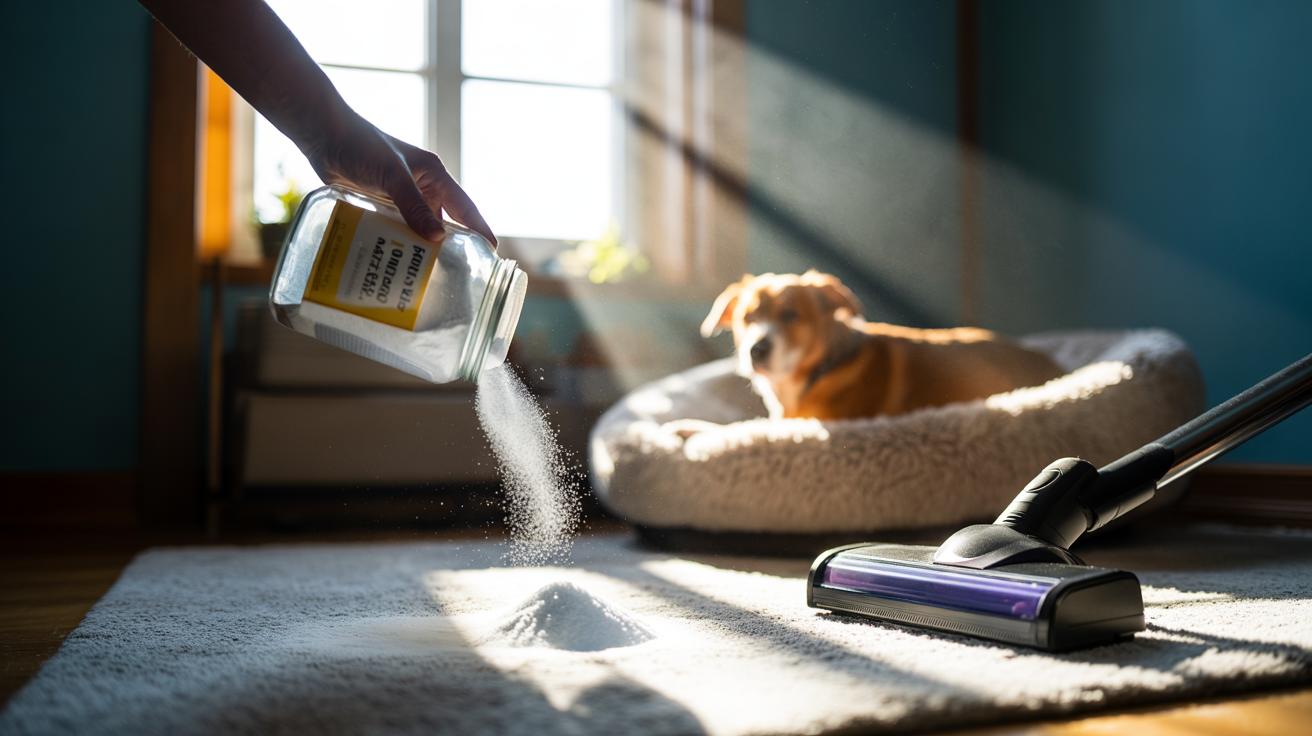
Shake a light, even dusting of baking soda over the affected area and nearby soft furnishings. Think a fine snow, not a dune—about 30–50 g per square metre is enough. On fabric or carpet, massage gently with fingertips or a soft brush so powder contacts fibres where odours cling. Leave undisturbed for 10–30 minutes depending on intensity. For a whole-room refresh, place shallow dishes of baking soda on shelves or by the litter tray to catch airborne whiffs.
Vacuum slowly using a clean brush head and, ideally, a HEPA filter. That removes odour-laden powder, not just redistributes it. If smells persist, repeat with a fresh sprinkle and extend the dwell to an hour. Finish with routine laundering of pet blankets at 60°C when fabric care labels allow. The combination—blot, sprinkle, wait, vacuum—delivers a swift reset without heavy fragrance.
Where and How Much to Use
Different surfaces need slightly different treatment. The goal is contact time without overloading the material. Use the guide below as a quick reference, then adjust by nose and common sense.
| Surface | Amount | Contact Time | Notes |
|---|---|---|---|
| Carpet/rug | 30–50 g/m² | 10–30 minutes | Work in lightly; vacuum thoroughly. |
| Pet bed/blanket | 1–2 tbsp per item | 10–20 minutes | Shake off, then launder if possible. |
| Litter tray base | Thin layer under litter | Continuous | Refresh with each change. |
| Sofa cushions | 1 tsp per cushion | 15–30 minutes | Patch-test; avoid silk/velvet. |
| Hard floors | Light sprinkle | 10–15 minutes | Sweep, then damp-mop. |
Always patch-test delicate fabrics, avoid leather and suede, and keep dust clouds minimal—especially around asthmatics. Store powder dry; clumps reduce efficacy. For deep urine in underlay or cushions, you still need an enzymatic cleaner after the quick 10-minute knockdown. If you’ve recently used vinegar, let the area dry before applying baking soda to avoid messy fizzing. Used thoughtfully, this method becomes a quiet, dependable ally against pet odours that overstay their welcome.
Baking soda won’t train your dog or refresh the cat’s litter by itself, but it will buy you time—and cleaner air—when life gets pungent. In minutes, not hours, a room can smell liveable again, ready for guests or just a calmer evening. The method is simple, the science sound, and the cost tiny compared with scented sprays. For households with pets, keeping a tub within reach is a practical habit worth adopting. What’s your go-to routine for those inevitable “oops” moments, and where do you find baking soda works best in your home?
Did you like it?4.5/5 (23)