In a nutshell
- 🫖 Tea bags freshen air fast as tannins and other polyphenols bind odorous volatile compounds, while dry paper and leaves boost adsorption and wick moisture.
- 🐾 Use dried (not damp) bags in dishes near odour hotspots; notice results in 30–60 minutes, refresh weekly, and keep out of pets’ reach due to caffeine.
- 🍃 Choose black tea for strong neutralising, green tea for balanced effects, and mild herbal options for fragrance-light homes; prefer unscented bags and test placements.
- ⚠️ Tea bags aren’t a cure-all: tackle accidents first with an enzymatic cleaner, avoid citrus/menthol blends, prevent mould by fully drying, and watch for staining on porous fabrics.
- ♻️ A frugal, eco-lean, perfume-free layer in your odour management routine that pairs with regular cleaning, ventilation, and litter/bedding care for consistently fresher rooms.
Pet odours linger in ways guests notice before you do. Wet dog, litter-box tang, that faint musk in soft furnishings — they’re stubborn. A quick, frugal fix is hiding in your cupboard: tea bags. When dried and set strategically, they trap smells rather than simply masking them with perfume. The effect is gentle and fast because the plant compounds in tea bond with odour molecules while the papery bag wicks moisture from the air. It’s a low-tech solution that respects sensitive noses and tight schedules. Here’s how and why this simple trick freshens your home air with surprising speed, and how to keep it pet-safe.
Why Tea Bags Neutralise Pet Odours Quickly
The secret lies in chemistry and texture. Tea leaves are rich in tannins and other polyphenols, plant compounds that can bind with sulphurous and nitrogen-based volatile compounds responsible for “doggy” or litter-box smells. The paper sachet and the crinkled leaf structure add enormous surface area, encouraging adsorption, a process where odour molecules cling to a surface rather than dissolving into it. That’s why the air seems clearer near a bag within an hour. Used, fully dried tea bags act like miniature odour sponges.
Speed matters. Pet odours are often heaviest at source — near bedding, entry mats, and litter trays. Tea bags work fastest when placed in that scent plume. As air drifts past, volatile molecules hitch to the dry fibres and polyphenols, lowering the overall odour load without overpowering fragrance. Unlike sprays, there’s no wet mist to settle on fur or fabrics. Green and black tea both help; black tea’s higher tannin levels often give it an edge for pungent whiffs. For sensitive households, unscented blends keep things neutral.
Moisture control is a bonus. Damp air amplifies smells, especially in small UK bathrooms and utility rooms. A desiccated tea bag draws a touch of humidity from the microclimate around it, which subtly reduces bacterial activity in that zone. The drier the bag, the faster the initial impact. Rotate fresh ones in weekly, then drop spent bags into your food-waste caddy.
How to Use Tea Bags Around Your Home
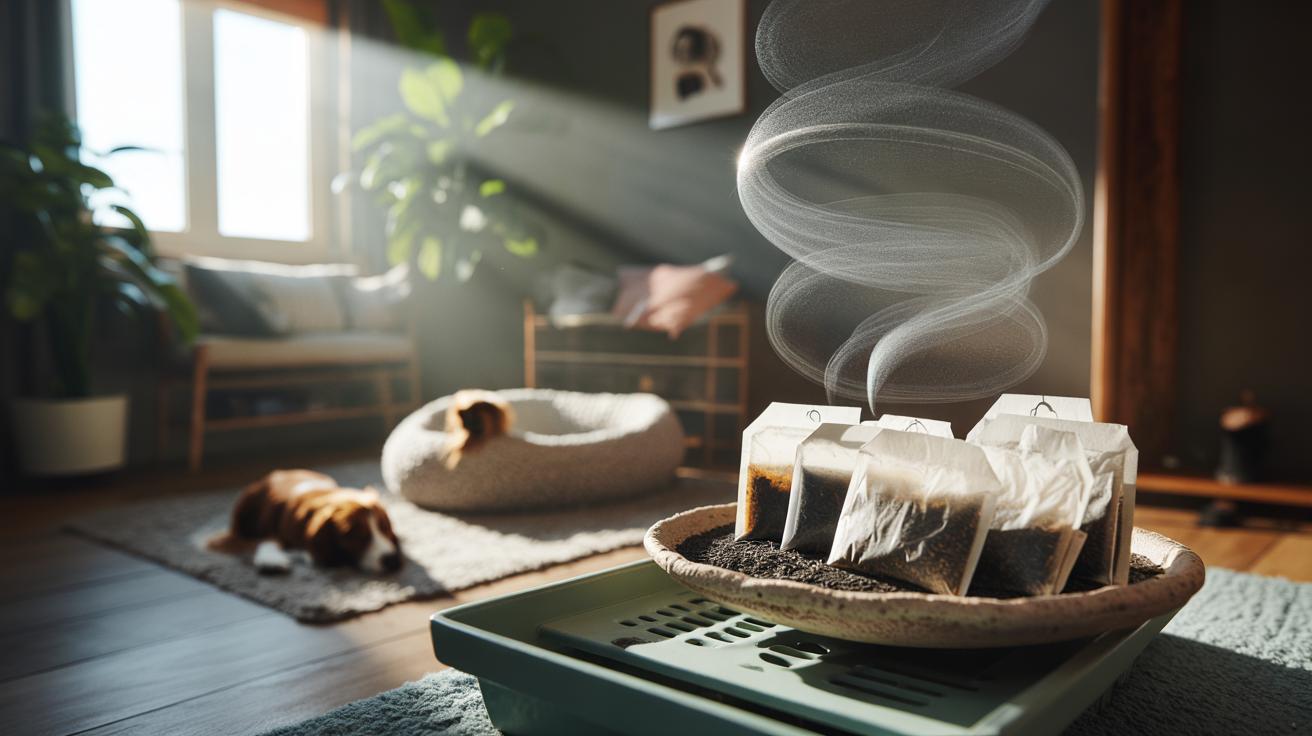
Start with what you already have. Brew your cuppa, squeeze the bag gently, then let it dry completely on a radiator, a sunny sill, or in a low oven (80–90°C) for 15–20 minutes. The goal is crisp-dry, not toasted. Never place damp bags near fabrics; moisture plus warmth invites mould. Once dry, tuck a couple into a shallow dish or open jar — this keeps fibres contained and looks tidy.
Target the hotspots. Slide dishes behind the litter tray, beneath a shoe rack, or under the hall console where the dog’s lead hangs. For soft furnishings, place a dish beneath the sofa or behind curtains rather than directly on textiles to avoid tea dust stains. In pet bedding zones, position them on a shelf above, close enough to intercept the odour plume yet out of paws’ reach. You’ll typically notice a calmer scent profile within 30–60 minutes, and a clearer room by the evening. Keep bags away from curious pets — tea contains caffeine, which they should not ingest.
Refresh routinely. Replace weekly for busy, high-odour corners; fortnightly for calmer spots. If you cook with strong spices or your cat has had a “territorial” moment, double up temporarily. Pairing with regular hygiene — scooping litter daily, washing pet blankets at 40–60°C, vacuuming fur traps — multiplies the benefit. Think of tea bags as the quiet, continuous layer in your odour management plan, not the only layer.
Choosing the Right Tea: Black, Green, or Herbal?
Different teas bring different strengths. Black tea offers robust tannins that excel at gripping stubborn smells. Green tea carries catechins with mild antimicrobial properties that can help in stuffy corners. Caffeine-free herbals reduce risk if a pet manages to nab a bag, yet many contain aromatic oils that add scent rather than neutralise. That can be pleasant — or clash with your space. When in doubt, go unscented and simple.
| Tea Type | Key Compounds | Best Use | Notes for Pet Homes |
|---|---|---|---|
| Black | Tannins, theaflavins | Litter zones, dog bedding areas | Strong neutralising; keep far from pets due to caffeine |
| Green | Catechins, mild polyphenols | Closets, shoe racks, small rooms | Balanced effect; still caffeinated |
| Herbal (e.g., Rooibos) | Low tannin, aromatic terpenes | Freshening rather than heavy neutralising | Caffeine-free; choose unscented to avoid overwhelming pets |
Consider bag construction too. Unbleached paper bags with a string are easy to hang in discrete nooks. Pyramid-style nylon sachets dry well and maximise airflow, but keep them strictly inaccessible to pets. Select according to the odour strength, not just what’s in your caddy. Testing one room at a time helps you calibrate quantity and placement without wasting supplies.
Safety, Hygiene, and Limits
Tea bags are helpful, not magical. They won’t erase a urine-soaked carpet or a soiled cushion. For accidents, blot, rinse, then use an enzymatic cleaner to break down uric compounds before you deploy tea bags for background control. Odour neutralising works best once the original source is properly cleaned. If stains persist, professional treatment may be necessary — especially with cat ammonia set into underlay.
Prioritise safety. Keep all tea bags out of reach; caffeine and other alkaloids are not pet-friendly if ingested. Ensure bags are bone-dry to prevent mould, and avoid placing them directly on porous fabrics that could stain. Scented blends with citrus or strong menthol can irritate some animals; stick to mild or unscented options. Replace any bag that softens or smells “stale.” For households with respiratory sensitivities, the fragrance-light approach is a relief compared with perfumed sprays.
Build a routine. Scoop the litter daily, wash bowls and mats weekly, ventilate rooms, and then let tea bags handle the slow, steady background work. That combination cuts odour spikes and keeps peace with neighbours in flats where aromas travel. Consistency beats intensity: small, regular steps keep indoor air calmer and kinder. You’ll spend pennies, reduce synthetic fragrances, and gain a fresher, more relaxed home.
Used wisely, tea bags are a thrifty, eco-lean way to tame pet odours without drowning your rooms in perfume. They exploit plant chemistry and simple physics, acting fast near problem spots and quietly maintaining balance between cleans. When teamed with sensible hygiene, the results feel immediate and enduring. Your nose — and your guests — will notice. Which rooms in your home would benefit most from a discreet, tea-powered odour reset, and where will you place your first “mini odour sponge” today?
Did you like it?4.6/5 (23)