In a nutshell
- 🧪 The science: activated charcoal captures odours via adsorption onto vast microporous surfaces, using van der Waals forces to trap VOCs like hydrogen sulphide and ammonia.
- ⏱️ Fast relief: enclosed spaces often smell fresher in about 10 minutes, driven by concentration and contact; airflow, granule size, and temperature speed results—yet hygiene still matters.
- 🏠 Best uses: fridge shelves, shoes and lockers, kitchen bins, car cabins, wardrobes, and pet areas—especially where air volume is small; address moisture first if mould is the source.
- 🧰 Practical tips: choose breathable pouches, place near the source, use several small bags for wider coverage, avoid dust-heavy powders, and boost uptake with gentle ventilation.
- 🔄 Care and safety: “recharge” in sun or a warm airing cupboard, don’t wash with detergents, replace when saturated, keep from kids and pets, and note it won’t remove carbon monoxide.
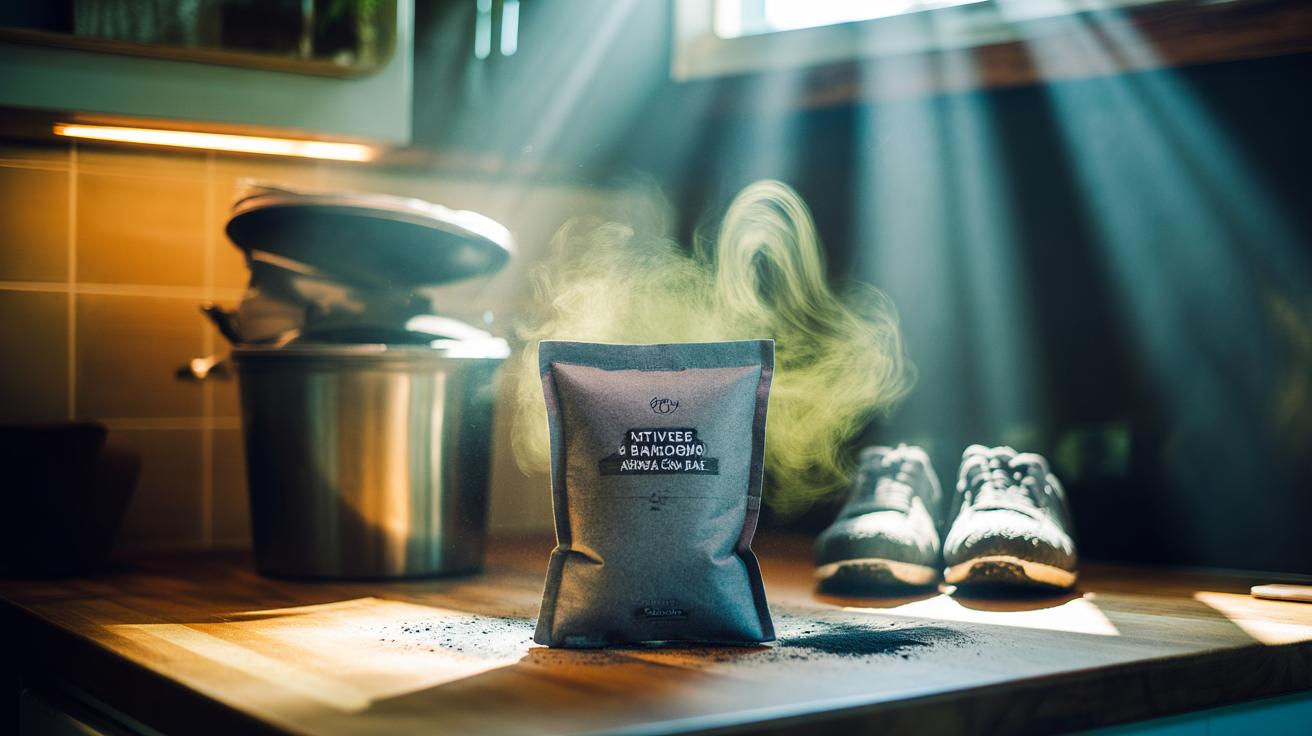
Open your bin and the pong hits you. Trainers after a commute smell like a locker room. The fridge carries yesterday’s curry into today’s yoghurt. There’s a fast, low-tech fix hiding in plain sight: charcoal. Not the soot from last summer’s barbecue, but porous activated carbon that drinks in whiffs before they spread. In many tight spaces you can cut the stench in roughly ten minutes, buying your nose some peace while the deeper clean waits. Here’s how this natural material works, why speed matters, and the simple ways to deploy it in homes, cars, and offices without fragrances, propellants, or plug sockets.
How Natural Charcoal Captures Odours: The Science of Adsorption
Charcoal doesn’t mask smells; it seizes them. The mechanism is adsorption—molecules stick to a surface rather than being absorbed into a bulk material. Activated charcoal is processed to open up an intricate labyrinth of micropores and mesopores. Think coral reef, but made of carbon. A single teaspoon can present a surface area measured in hundreds of square metres. Those open pores behave like molecular parking bays for odour compounds, especially the small, volatile molecules responsible for kitchen and shoe-cupboard funk.
The capture force comes from weak intermolecular attractions, called van der Waals interactions. They’re not bonds, yet in aggregate they’re potent. Compounds such as hydrogen sulphide, ammonia, and various VOCs are drawn to the pore walls and held there. Humidity matters: water vapour competes for the same sites, which is why results are quickest in relatively dry air and enclosed volumes. The process is passive. No electricity, no noise, no sprays. Just carbon and time. Because there’s no chemical reaction, saturation is the only real limit—when sites fill up, performance tails off.
Why Ten Minutes Can Be Enough
Speed comes down to two things: concentration and contact. In a closed shoebox, fridge, or car footwell, odour molecules bounce around in a small volume. A pouch of activated charcoal presents immense surface area right where those molecules roam. As air flows past and through the pores, a chunk of the most pungent fraction gets snapped up quickly. That’s why people often notice a meaningful dip in smell inside ten minutes, with further improvement over the next hour as diffusion continues.
Granule size and placement play a role. Finer granules mean more surface area exposed at once, though they need breathable fabric to avoid dust. Air movement accelerates uptake; cracked windows or a nearby fan can halve the time to first relief. Temperature helps, too: warmer air carries more volatiles to the carbon. If the source keeps emitting—think damp towels or a bin—charcoal acts as a steady sink, levelling peaks between clean-ups. Importantly, short-term gains don’t replace hygiene; they buy time to launder, empty, or scrub.
| Space | Charcoal Needed (g) | Noticeable Change | Tip |
|---|---|---|---|
| Fridge (150 L) | 50–100 | 5–15 minutes | Use an open dish on middle shelf |
| Shoes (pair) | 20–40 | 10–20 minutes | Slip small sachets into each shoe |
| Kitchen bin | 40–80 | 10–30 minutes | Attach a vented pouch under the lid |
| Car cabin | 100–200 | 10–30 minutes | Place near airflow; recirculate |
Where Charcoal Works Best Indoors
Choose enclosed or semi-enclosed zones for the quickest wins. A fridge is textbook: odour sources vary, airflow is gentle, and volume is small. A shallow tray or a breathable pouch tames leftover garlic and fish without perfuming your fruit. In shoe cupboards, gym bags, and lockers, charcoal shines because the stink is concentrated and persistent. Tuck a pair of sachets in trainers after a run and you’ll blunt that sharp, sweaty note before it greets the hallway.
Bins and pet areas are trickier but still responsive. Fix a vented pouch under the bin lid to catch headspace whiffs between empties. Place a larger bag near a litter tray to reduce peaks after use; it won’t replace scooping, yet it softens the hit. Cars benefit too—especially after food spills or wet-weather damp. Position a pouch on the dashboard or in a door pocket to meet the airflow. For wardrobes, use hanging bags to avoid mustiness during wet months. If the source is mould, tackle moisture first; charcoal won’t cure damp.
Practical Use, Regeneration, and Safety
Pick activated charcoal or bamboo charcoal sold for air purification. Look for breathable fabric pouches, not sealed plastic tubs. For DIY, fill a cotton bag or muslin sachet with granules; avoid fine powder that escapes. Place close to the source but out of the spill zone. For rapid relief, use multiple small pouches rather than one big lump to spread surface area throughout the space. Even distribution beats sheer mass in corners.
When performance fades, refresh. Many products can be “recharged” by setting them in direct sunlight or a warm, dry airing cupboard for a few hours—gentle heat drives off trapped volatiles. After several cycles, or if smells linger, replace. Do not wash with detergent; surfactants clog pores. Keep away from children and pets; despite its natural tag, this is not food. Charcoal won’t remove carbon monoxide, and it does not oxygenate rooms. Pair with cleaning: empty bins, dry shoes, wipe spills. Ventilation is your ally, and a dehumidifier in damp rooms can boost results. Think of charcoal as a silent partner to good housekeeping.
Charcoal’s appeal is timeless: cheap, quiet, effective. You set it down and it gets on with the job, stripping sharp notes from the air while you put on the kettle. In compact spaces the improvement can be startlingly fast, especially when you size the pouches well and give them air to breathe. No fragrances, no cover-ups, just physics in a bag. Ready to try it on the week’s worst whiff—fridge, footwear, or the family car—and see how much fresher your space can smell in ten minutes flat?
Did you like it?4.6/5 (21)