In a nutshell
- 🧂 Salt’s hygroscopic power rapidly absorbs moisture and lifts pigments, offers gentle micro‑abrasion, and helps prevent wicking—but always patch-test on sensitive fibres.
- ⏱️ The under‑five‑minute method: blot, don’t rub; blanket with table salt; wait 2–5 minutes; lift and re‑blot; finish with a light white vinegar mist and vacuum once dry.
- 🎯 Works best on fresh, water‑based spills like red wine, coffee/tea, juice, and mud; limited on grease, inks, and old set stains; consider fibre type—wool is forgiving, viscose can watermark.
- 🧼 For aftercare, ventilate, groom the pile, and deodorise with a light sprinkle of bicarbonate of soda; aim for minimal moisture to avoid halos and residue.
- ✅ Treat salt as a swift, safe first responder that halts spread, controls odour, and buys time—call in targeted cleaners or a pro for stubborn or solvent‑based marks.
It’s the quiet miracle in your cupboard. Salt, that everyday seasoning, can blitz carpet stains with surprising speed. No need for harsh chemicals or a frantic shop run; just a quick sprinkle and a little patience. In busy British homes, where spills happen between the kettle boiling and the doorbell ringing, speed matters. Salt delivers. It absorbs, it lifts, it locks down odours. Best of all, it buys you time before a mark sets. Act fast, keep it simple, and let the crystals do the heavy lifting. Here’s the science, the method, and the smart tweaks that make it work in under five minutes.
Why Salt Lifts Stains So Quickly
Salt is more than a seasoning; it’s a clever little machine. As a hygroscopic mineral, it draws moisture out of spills, dragging pigments with it through capillary action. Think of thousands of tiny sponges pulling liquid up and away from carpet fibres. Those same crystals provide micro-abrasion, loosening residue without shredding the pile. There’s chemistry at play, too. Dissolved sodium and chloride ions can disrupt some colour compounds, dulling their intensity on contact. The faster you create a dry zone with salt, the less chance a stain has to spread or sink.
Salt also helps tame odours. By reducing available moisture, it denies the bacteria behind bad smells the damp they crave. On wool and many synthetics, this rapid moisture control prevents wicking—that frustrating halo that appears as liquid climbs back to the surface while drying. Importantly, salt is inert compared with many cleaners, so it’s kinder to dyes and backings. That doesn’t mean reckless use. Always test on a hidden patch for colourfastness, especially with richly dyed or antique rugs. But for fresh spills, salt’s speed and simplicity are hard to beat.
The Under-Five-Minute Method, Step by Step
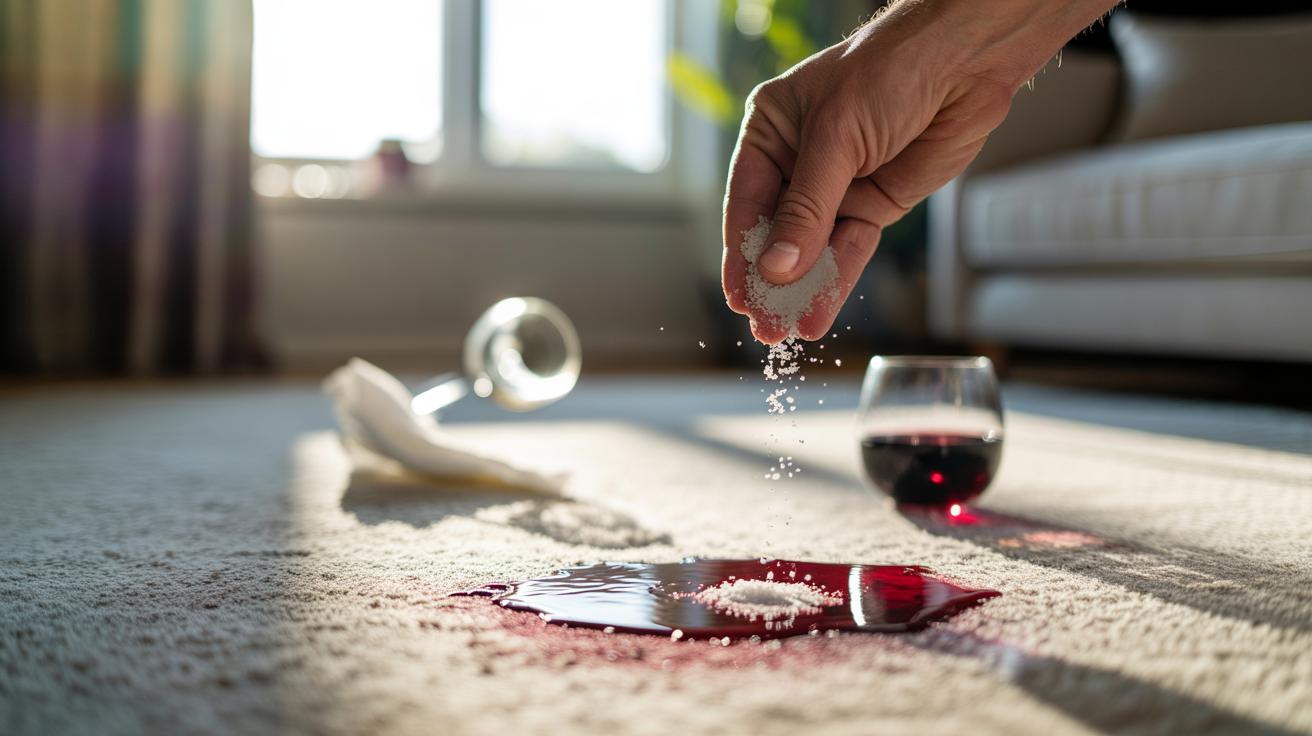
First, blot—not rub—the spill with plain white kitchen towel. Rubbing drives pigment deeper and frays fibres. If it’s a protein-based stain like blood or milk, use cold water on the towel; heat will set it. For wine, coffee or juice, a dry blot is fine to start. Now, shower on table salt (coarse grains grip well). Build a thin, even crust across the damp area, extending a centimetre beyond the edge so you catch lateral seepage. Press lightly with the back of a spoon to seat the crystals among the fibres.
Wait 2–5 minutes. Watch it change: the salt takes on colour as it pulls up liquid. Lift the spent layer with a card or spoon, then blot again with fresh towel. If needed, repeat with a lighter sprinkle. For a smart finish, mist the area with a 1:4 white vinegar to water solution (or fizzy water for tannin spills) and dab dry. Groom the pile with your fingers, then vacuum once fully dry to collect strays. Keep the room ventilated and avoid over-wetting; minimal moisture equals minimal residue. In most cases, you’re done in minutes with no sticky detergent trail.
Where It Works Best—and Where It Doesn’t
Salt shines on fresh, water-based spills: red wine, beer, tea, coffee, fruit juice, muddy footprints. The goal is interruption—stop the spread before pigments set. It’s less effective on oily stains, solvent dyes, and long-set marks. Grease needs a degreaser or bicarbonate of soda; ink often needs alcohol. Fibre type matters. Wool tolerates salt well when handled gently, while some viscose blends are fussy with moisture and prone to watermarking. Always address the spill’s chemistry first: tannins like wine and tea respond rapidly; proteins demand cold; synthetics dislike heat. Use the salt as a first responder, not a magic wand for every disaster.
| Stain | Why Salt Helps | Wait Time | Extra Tip |
|---|---|---|---|
| Red wine | Absorbs liquid, reduces wicking | 3–5 mins | Finish with fizzy water dab |
| Coffee/tea | Draws out tannins quickly | 2–4 mins | Vinegar-water mist, then blot |
| Mud | Wicks moisture, loosens silt | 2–3 mins | Let dry, vacuum thoroughly |
| Grease | Limited effect | — | Use bicarbonate, then mild detergent |
| Blood (fresh) | Controls spread | 2–3 mins | Cold water only; no heat |
Old, set stains may require professional treatment. Consider the rug’s construction: deep pile traps liquids below the surface, so apply, wait, lift, and repeat to reach the base. On dark, richly dyed carpets, keep contact time short and test first to avoid any lightening.
Smart Add-Ons and Aftercare for a Flawless Finish
Two simple allies elevate salt from quick fix to near-professional. First, a finishing spritz: dilute white vinegar (1:4) calms tannins and helps prevent ring marks, especially on wool. Second, odour control: once dry, sprinkle a light veil of bicarbonate of soda, leave 30 minutes, vacuum. The bicarb neutralises lingering smells without perfumes. For pale, robust fibres, a drop of mild washing-up liquid in your rinse can chase traces—just avoid foaming the pile. Less product, more blotting: that’s the golden rule.
Aftercare matters. Ventilate to speed evaporation and reduce watermark risk. Brush the nap to restore texture and disguise any disturbance. If the area feels crunchy, you used too much salt or left residue; vacuum slowly in crossing passes. Guard against halos by extending every step slightly beyond the spill’s edge. And note the exception list: oils, tar, heavy makeup, printer inks. These call for targeted solvents or a pro. When in doubt, test discreetly and stop at the first sign of colour transfer. Quick thinking, minimal moisture, immaculate results.
Salt won’t replace a professional clean, but as a first responder it’s brilliant—cheap, fast, and surprisingly technical. Deploy it to halt spread, extract moisture, and keep odours at bay while you decide if more is needed. That’s the power of a simple mineral doing precise work, right where the spill lands. Next time a glass wobbles or the dog traipses in, you’ll know exactly what to grab. Will you try the five-minute salt fix on your next carpet mishap, and what tricky stains are you most curious to test it on?
Did you like it?4.3/5 (21)