In a nutshell
- 🧪 Toothpaste works because its mild abrasives (hydrated silica/calcium carbonate), gentle surfactants (SLS), and humectants soften wax, lift pigment, and protect paint thanks to a near-neutral pH.
- 🧴 Choose plain, non-gel white toothpaste; avoid coloured gels, charcoal, or gritty “whitening” pastes that can stain or scratch delicate finishes.
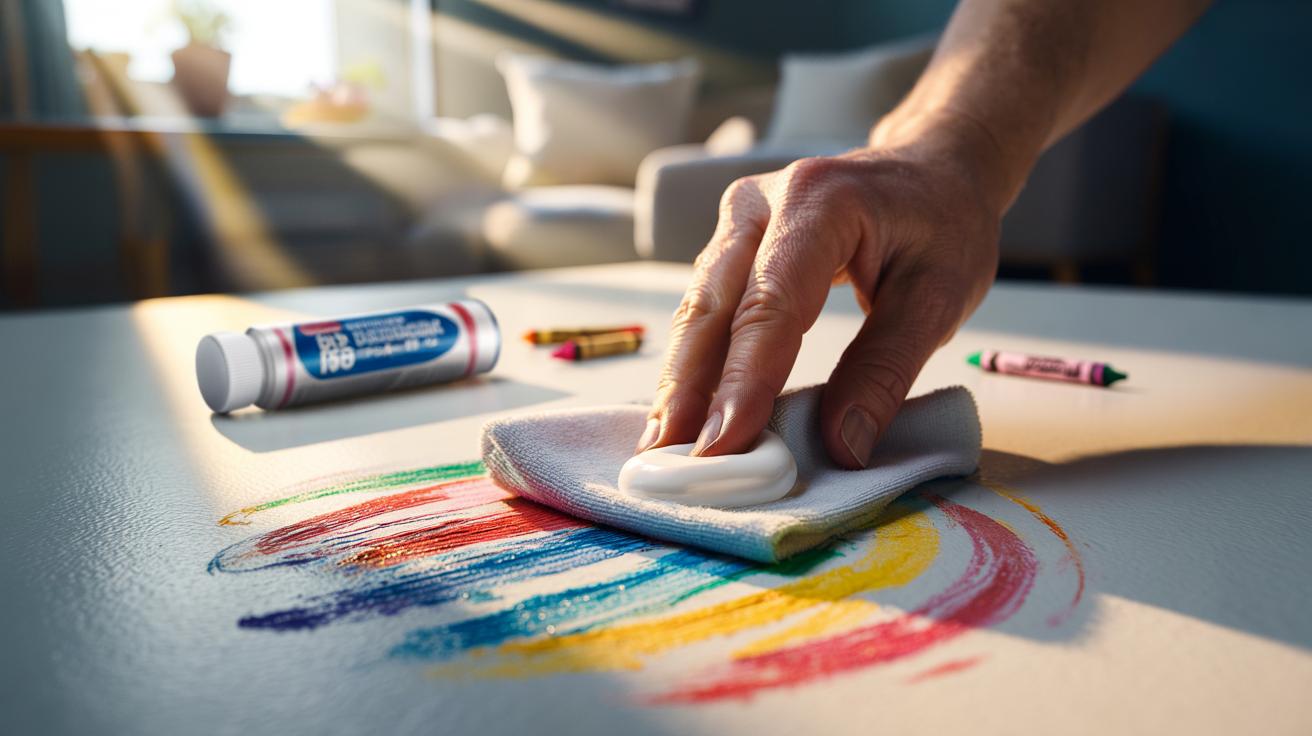
- 🧼 Method: spot test, apply a pea-sized dab to a damp microfiber, use small circles with light pressure for 10–20 seconds, then wipe, rinse, and dry—repeat gently if needed.
- 🎨 Surface savvy: satin and semi-gloss tolerate a micro-polish; matte walls risk burnishing—if the cloth picks up paint colour, stop immediately.
- ⚠️ Pitfalls: skip paper towels, refresh cloth to prevent smearing, and rinse thoroughly or residue may attract dust; two light passes beat one aggressive scrub.
Every parent knows the dread: a flourish of bright crayon across a once-pristine wall. Before you reach for harsh solvents, consider a bathroom staple. Ordinary non‑gel white toothpaste can lift waxy colour without scarring paint. The trick isn’t magic; it’s chemistry in a tube. Toothpaste blends mild abrasives, gentle surfactants, and humectants into a paste that loosens pigment, softens wax, and carries the mess away. Used correctly, it leaves surfaces intact and your dignity restored. Always test on an inconspicuous patch first. Done wrong, it can burnish matte paint; done right, it’s a quiet miracle.
What Makes Toothpaste a Gentle Cleaner
Toothpaste is engineered to rub away plaque without scratching enamel. That design translates neatly to walls. It contains finely ground hydrated silica or calcium carbonate that act as micro-abrasives, polishing at a microscopic scale rather than gouging. A small dose of surfactant—commonly sodium lauryl sulfate (SLS)—helps detach oily residues. Humectants like glycerin keep the paste moist and slightly tacky, improving contact with uneven paint films. Crucially, most family pastes sit near neutral pH, so they don’t etch common household finishes.
The goal is not to scrape the wall, but to glide over it, loosening wax and pigment so they rinse away. Choose a plain, white, non‑gel toothpaste. Fancy gels typically lack abrasives; charcoal varieties may be too scratchy; tinted pastes can leave tint. A pea-sized dab delivers a controlled polish, letting chemistry do the heavy lifting while you apply only modest pressure.
Think of it as a mini detailer for your paintwork: enough bite to shift grime, not enough to damage the finish. On glossier emulsions it works beautifully. On dead-flat matte, a feather-light touch is essential to avoid sheen changes.
| Toothpaste Component | Role in Cleaning Crayon |
|---|---|
| Hydrated silica / calcium carbonate | Micro-polish that loosens wax and abrades pigment gently |
| SLS (surfactant) | Emulsifies waxy residues so they wipe away |
| Glycerin / sorbitol | Softens crayon matrix and keeps paste workable |
| Water + binders | Controls viscosity and contact time on the wall |
How Toothpaste Lifts Wax and Pigment from Walls
Crayons are essentially a blend of paraffin wax and colour pigments. The wax binds pigment particles, letting them smear and set into tiny surface pores. Toothpaste breaks that union in three coordinated moves. First, humectants slightly plasticise the wax film—softening it just enough to release its grip. Next, surfactants lower surface tension, so the paste wets the crayon layer and creeps under edges. Then the mild abrasives shear across the surface, disrupting the wax matrix and freeing embedded pigment without cutting into the paint beneath.
Because the abrasives are tightly controlled in size and hardness, they remove the contaminant, not the coating. Neutral pH helps too: there’s no chemical attack on latex paint binders, so you avoid dull patches or swelling. On semi-gloss and satin, the film stands up well to this micro-polish. Matte emulsions are more delicate; they burnish easily, which is why you should keep strokes short and pressure feather-light. If the paste turns the cloth the paint’s colour, stop immediately. That signal means you’re abrading the wall, not just the crayon.
Finish by dispersing the loosened wax. A damp microfiber lifts the emulsion of pigment and surfactant-laden residue in one wipe, leaving a clean, unscarred surface.
Step-by-Step Method and Common Pitfalls
Begin with a spot test behind a frame or near the skirting. Dab a pea-sized amount of non‑gel white toothpaste onto a soft, slightly damp microfiber cloth. Work in small circles over the crayon, 10–20 seconds at a time. Gentle pressure only; think polishing a lens, not scrubbing a pan. You’ll feel the drag ease as the wax softens and lifts. Wipe away residue with a clean damp section of the cloth, then dry with a towel. Repeat once if faint shadows remain. Two light passes are safer than one aggressive scrub.
Avoid these trip hazards. Don’t use coloured gels or whitening pastes with visible granules—both can stain or scratch. Skip paper towels; they’re too coarse and can scuff paint. On flat/matte walls, keep strokes minimal to prevent shiny halos known as burnishing. For textured paint, move across the grain to reach pigment lurking in recesses, but reduce pressure. If residue smears, refresh the cloth; a saturated wiper only spreads the mess. Finally, rinse thoroughly. Any leftover surfactant can attract dust, leaving a dull patch over time.
When in doubt, slow down: less paste, less pressure, more patience. The combination preserves the finish while coaxing colour away cleanly and predictably.
Used judiciously, toothpaste is a smart, frugal fix for crayon calamities. Its mild abrasives and surfactants unpick the wax–pigment bond while leaving paint intact, especially on satin and semi-gloss finishes. Choose a plain white paste, test first, and keep your touch light. For stubborn marks on delicate matte walls, you may still need specialist cleaners or a careful repaint, but you’ll be surprised how far a tube from the bathroom cabinet can go. Next time your corridor becomes an impromptu gallery, will you try the toothpaste trick—and what surface will you test it on first?
Did you like it?4.6/5 (20)