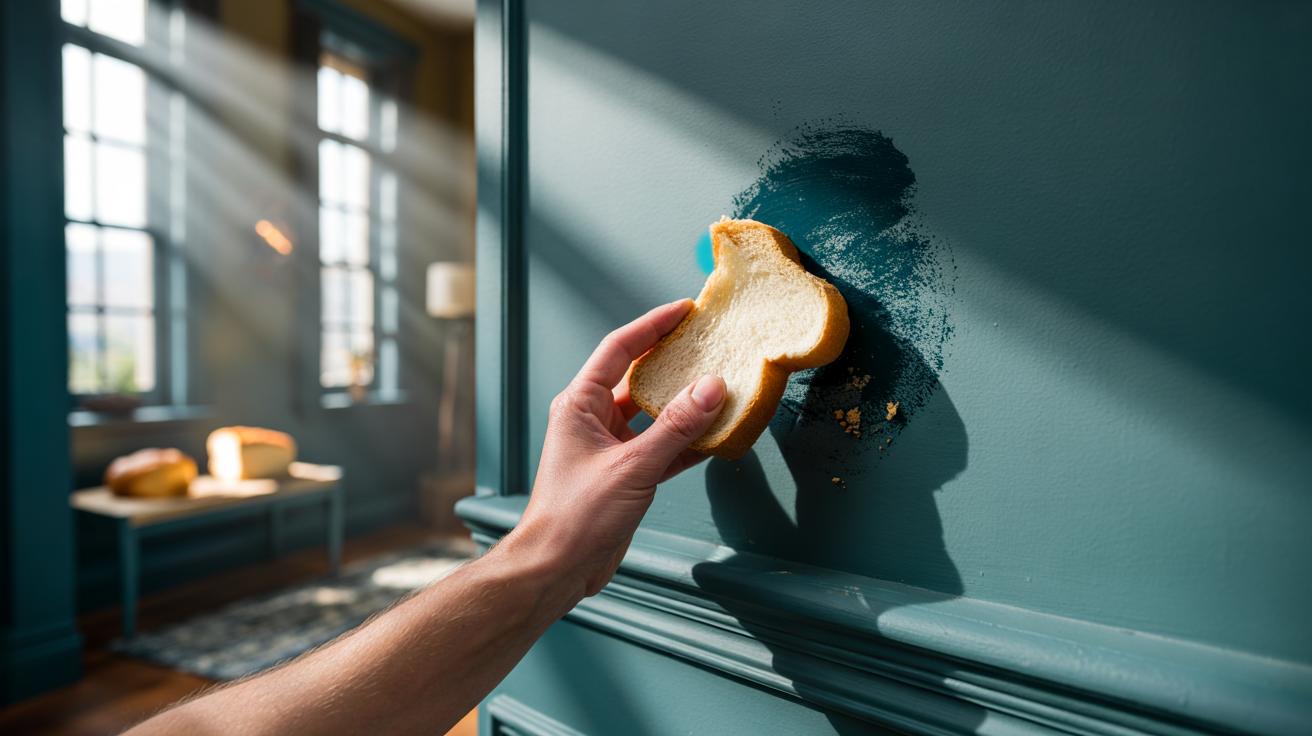
In a nutshell
- 💡 The science: a slice of white bread uses starch granules for gentle micro-abrasion, lifting rubbery scuffs and fingerprints from emulsion paint without harsh chemicals.
- 🧰 Method: remove crusts, fold into a pad, dab—not scrub, rotate to clean crumb, add only a whisper of moisture if needed, then wipe crumbs and lightly buff with a microfibre cloth.
- 🍞 Best loaf: day-old white bread is ideal; gluten-free can work with extra care; avoid wholemeal/seeded slices that may scratch delicate finishes.
- ⚠️ Pitfalls: test first, keep pressure low to avoid burnishing ultra-matte or polishing silk/satin; don’t attempt on freshly painted walls; discard crumbs to maintain hygiene.
- 🔄 When to switch: if marks persist after two passes, move to a soft art eraser for graphite or diluted washing-up liquid for grease—bread excels at light, fresh scuffs, not set-in stains.
It sounds implausible until you try it: a slice of bread, held like a sponge, lifting grey heel trails and smudgy fingerprints from painted walls. In busy homes, scrapes appear overnight; landlords fear them, renters dread them, parents accept them. Yet this humble fix is fast, gentle, and oddly satisfying. Press, dab, rotate, and the mark fades. No harsh chemicals. No chipped paint. For quick touch-ups on emulsion, bread can behave like a soft eraser with surprising precision. Here’s the science, the method, and the gotchas—plus how to choose the right loaf for the job.
Why Bread Works on Scuffs
Scuff marks sit on the surface. They’re usually rubbery debris from shoe soles, bag straps, or pushchair wheels, smeared over the top layer of emulsion paint. Bread helps because the crumb is a web of starch granules and tiny air pockets. Those granules offer micro-abrasion—enough to snag and lift loose grime, not enough to scratch sound paint. As you press, the crumb compresses, boosts contact, and traps pigment and soot within its spongey matrix. This trick works because starch behaves like an ultra-fine eraser rather than a solvent. No colour stripping, no sheen burns, just gentle pickup.
Moisture matters. A slightly stale white bread slice has less surface stickiness, so it doesn’t smear residue; it blots it. Fresh bread has more pull and can leave gummy bits. A light dampening—truly a whisper of water—can help with greasy fingerprints by softening oils so the crumb can absorb them. Yet too much water collapses the structure and encourages smearing. If your wall has a very flat, deep colour, test first: ultra-matte paints can burnish if you rub too hard. Keep the pressure low, use short dabs, and rotate to clean crumb every few taps.
Step-by-Step: From Loaf to Clean Wall
Start simple. Tear off crusts; the crust is abrasive and can scuff. Fold a half-slice into a thick pad, crumb-side out. Always test on an inconspicuous patch first. Tap the mark gently. Don’t scrub. Dabbing loosens the deposit while the crumb traps it, especially on standard UK vinyl matt emulsion. Rotate the pad frequently so you’re always using a clean area of bread. For pencil or light shoe marks, you should see fading within seconds. If nothing shifts after eight to ten dabs, pause. Overworking can burnish the paint sheen.
For tacky fingerprints, breathe lightly onto the wall or mist the bread once, then blot immediately. Wipe away crumbs with a dry microfibre cloth. Finish by buffing lightly with a clean cloth to even the sheen. If the mark resists after two passes, stop and switch methods to avoid polishing the paint. Consider alternatives for stubborn stains: a soft art rubber for graphite, or a barely damp cloth with diluted washing-up liquid for greasy splashes. Here’s a quick loaf guide for best results.
| Bread Type | Best For | Notes |
|---|---|---|
| White, day-old | General scuffs, pencil | Ideal crumb; low residue |
| Fresh white | Light dust marks | May shed; dab gently |
| Gluten-free | Fingerprints, light grime | Softer crumb; compress more |
| Wholemeal/seeded | Not recommended | Seeds and bran can scratch |
Choosing the Right Bread and Avoiding Pitfalls
White bread wins because its fine, uniform crumb lifts residue without dragging grit across the surface. Day-old is best: it’s firm enough to hold shape, not so brittle that it sheds everywhere. Gluten-free slices can also work thanks to dense starch, though they compress more quickly and may need frequent refolding. Never rub a gritty or seeded crumb over delicate paint. Bran flecks and seeds behave like tiny sanding discs, especially on eggshell or soft, recently painted walls. Check for loose plaster or flaking paint; bread won’t fix those and might worsen the area.
Mind the finish. Silk and satin emulsions are more resistant, but they can show shiny patches if polished too hard. Ultra-matte walls can “burnish”, revealing a slightly smoother patch under bright light. Keep the motion minimal and stop early if sheen changes. Watch hygiene as well. Discard the used bread immediately; don’t leave crumbs on skirting boards, which can attract pests. If you’ve painted within the last fortnight, avoid any friction cleaning until the paint fully cures. And remember: if you need elbow grease, bread is the wrong tool—switch to a specialist cleaner or plan a quick touch-up coat.
In a world of pricey sprays and aggressive sponges, bread is a charmingly low-tech fix that often works in under a minute. It’s quiet, cheap, and kinder to wall finishes than many “miracle” products, especially for light, fresh scuffs in hallways or rented flats. Keep a slice back when you notice a mark, try the dab test, and save repainting for genuine stains. Your walls will thank you, and your deposit might too. What mark on your wall are you most curious to attempt with the bread trick—an ankle-height shoe scuff, a rogue crayon flourish, or something altogether stranger?
Did you like it?4.3/5 (23)